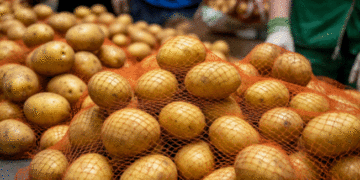


The Mogilev Regional Agricultural Experimental Station in Dashkovka, Belarus, is experiencing unprecedented demand for seed potatoes this season. After an unusually frosty winter that damaged seed stocks stored in poorly adapted clamps and buries, gardeners, farmers, and agricultural enterprises are buying elite seed potatoes by the bag and by the ton. The station opened sales on March 9 and has seen constant high activity, with customers arriving even from other regions. According to Viktor Panfilovich, a local gardener, seed material should be renewed every 3–4 years, otherwise viruses accumulate in the tubers, leading to degeneration and reduced yields. This year, the station plans to sell 900 tons of super-superelite seed potatoes — nearly sterile, virus-free material grown from laboratory test-tube plants that guarantees maximum varietal purity and high productivity.
Among the top-selling varieties are “Vektor”, “Breeze”, “Mastak”, and the limited-edition “Garantiya” (released in 2023), which sold out quickly. The station also announced new Belarusian-bred varieties for 2025: “Krasavik” (early table potato), “Karsan” (mid-early with excellent storage life), and “Nara” (mid-late). A key piece of advice from the experts: never sprout seed potatoes in mesh nets, because the sprouts will break off when you pour them out for planting. Instead, place the tubers in boxes in 2–3 layers and keep them at room temperature in a dark room. And the golden rule for planting timing — don’t rely on the calendar, but on the soil itself. As one specialist noted, the neighbor who planted in early May often gets earlier shoots than the one who rushed to plant in early April.