Variety Choice Is a Nitrogen Strategy: Why Some Potato Cultivars Need Far Less Fertilizer
Growers often treat nitrogen rate as a field-level decision. Trial data show it is just as much a varietal one — early-maturing cultivars plateau on far less nitrogen than late-season types, and some varieties simply tolerate a shortfall better than others.
Nitrogen is the single most expensive and most closely watched input in potato production, and growers spend real money finding the right rate for their soil and climate. What gets less attention is that the “right rate” is not one number for the whole farm — it depends heavily on which variety is in the ground.
Early varieties plateau sooner
Trial work comparing maturity groups found that early cultivars such as Rubino and Sieglinde stop responding to added nitrogen once application reaches roughly 100 kg N/ha, while late-maturing types such as Daytona, Ninfa and Spunta keep converting nitrogen into yield up to around 200 kg N/ha. In practical terms, a farm growing an early variety on a late-variety nitrogen program is not getting a bigger crop for the extra fertilizer — it is paying for nitrogen the plant cannot use, with the surplus at risk of leaching once uptake slows in the second half of the season.
Some varieties tolerate a shortfall better than others
Variety differences go beyond the optimum rate — they extend to how much a crop loses when nitrogen falls short. In comparative nitrogen-stress trials, Kennebec lost close to 29% of yield under deficiency, Monalisa lost around 27%, while Agria’s decline was closer to 16%, alongside markedly better chlorophyll retention under stress (a SPAD reading of roughly 48 in well-fed plants against 40 under deficiency). A variety with that kind of buffer gives an agronomist more room to manage a wet spring, a late top-dress, or a tight fertilizer budget without losing as much yield.
Weekdays. Unsubscribe in one click.
What this means at the fertilizer plan stage
Wider agronomic guidance already treats variety as a variable in nitrogen planning, not an afterthought: recommended pre-plant shares differ by maturity type, with short-season varieties typically taking 60–100% of total nitrogen at planting because they take up nitrogen earlier and tolerate less early-season restriction, while long-season types are usually split closer to 50/50 across the season. Total crop demand for a strong yield still runs in the range of 160–240 lb N/acre from all sources under good management, with efficiency of applied nitrogen around 60–80% — but where a farm lands inside that range should be set variety by variety, not as one blanket number across the whole rotation.
Why it matters
For a mixed-variety operation, splitting the fertilizer program by maturity group and known nitrogen response is a way to cut input cost without cutting yield on the varieties that do not need the extra nitrogen — while protecting the varieties that respond to it. It also reduces the surplus nitrogen sitting in the soil late in the season, which is the fraction most likely to leach or run off rather than end up in a tuber.
The topic was raised by practitioners in the MAX messenger chat «КАРТОФЕЛЬ И Т.Д. (Potato etc.)», a community of more than 1,100 potato growers and industry specialists. Participants are not named. Join the discussion.
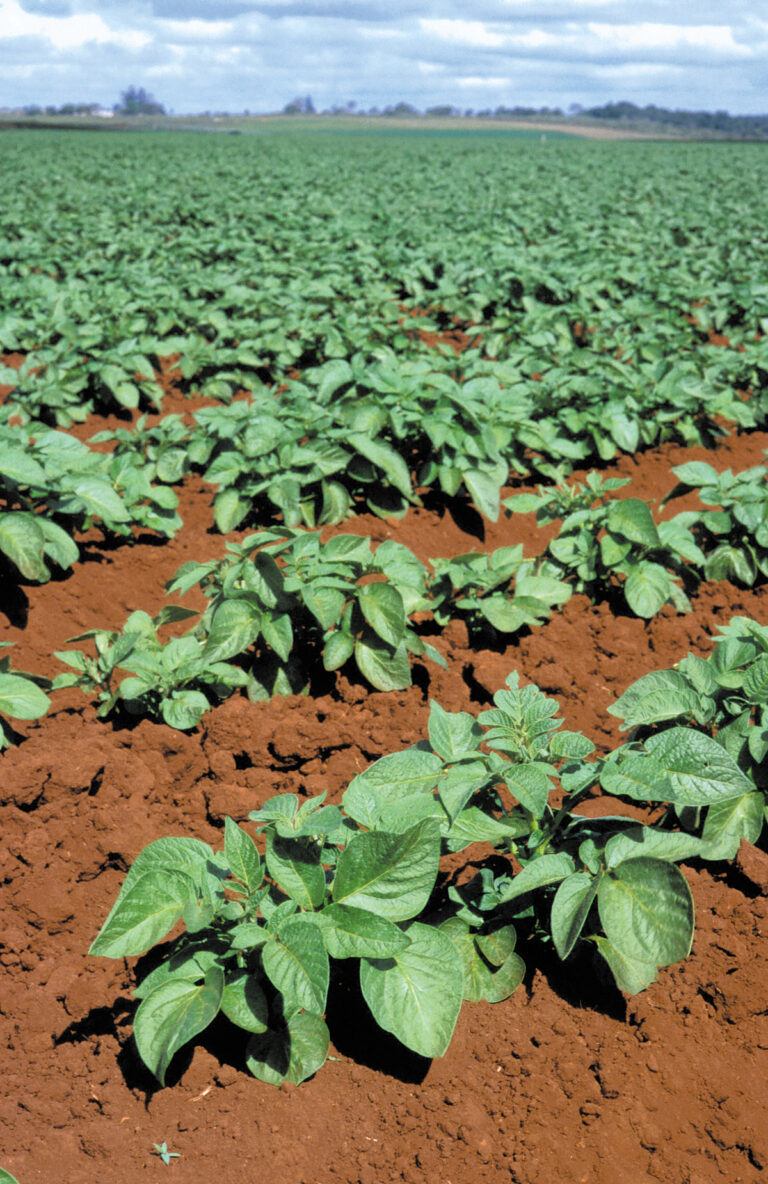
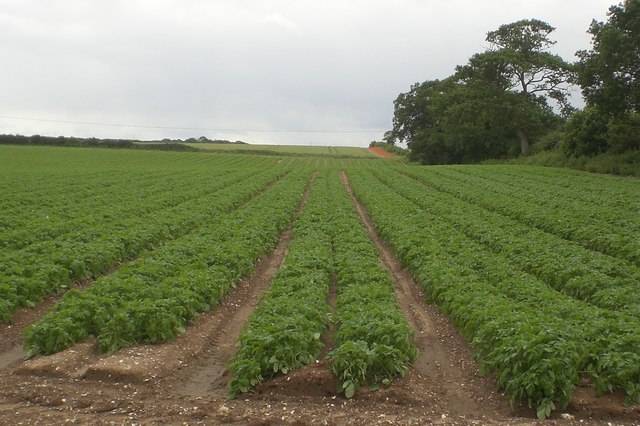
Photo: Potato field during the growing season (illustrative).