Tolsma-Grisnich Moves Optical Sorting to the Front of Storage with New Optica S
Dutch storage-technology specialist Tolsma-Grisnich has introduced the Optica S, an optical sorter that removes stones, clods, rot and defective produce before potatoes and onions enter storage, with throughput of up to 80 tonnes per hour.
Tolsma-Grisnich has introduced the Optica S, a new optical sorting machine designed to improve crop quality, maximise storage capacity and make store loading more efficient. By identifying and removing unwanted materials and quality defects before crops enter storage, the machine aims to help growers store cleaner potatoes and onions, reduce waste and improve returns from every batch.
A shift in timing. The Optica S represents a change in when optical sorting happens: the process moves from a later stage of crop handling to the very beginning of storage. Instead of waiting until after storage to remove stones, soil, clods and defective produce, growers can address these issues during store loading. According to the company, the result is cleaner produce entering storage, more efficient use of available storage space and the potential for higher returns from marketable crops. The machine can be integrated into an existing potato or onion store-loading line to sort crops before storage.
Weekdays. Unsubscribe in one click.
Why early sorting matters. Every load entering a store can contain more than marketable produce: soil, stones, clods and hidden quality defects occupy valuable storage space and can affect the quality of the stored crop. The Optica S uses optical detection technology to identify and automatically reject unwanted material and selected quality defects before the crop enters the store. Its detection capabilities include stones, clods, rot, Fusarium in onions, major external surface defects and foreign objects. Tolsma-Grisnich positions this as a broader improvement in storage management rather than simply an upgrade to sorting equipment.
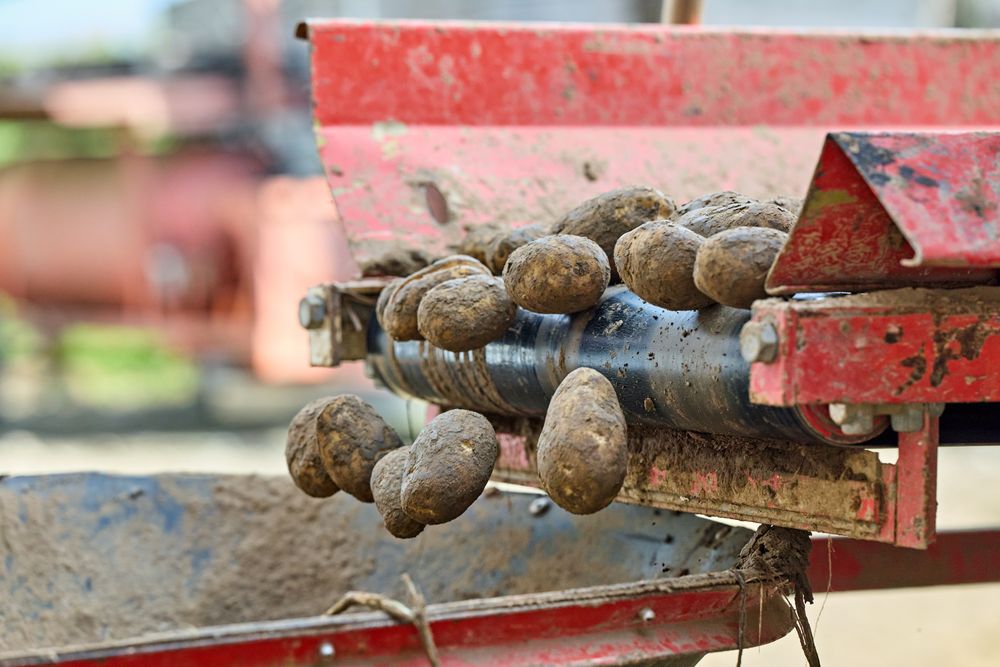
Built for demanding conditions. The machine is designed for everyday agricultural operation. It can be integrated directly into a store-loading line and connected to the receiving hopper. A key component is its screening web, which removes loose soil before the crop reaches the optical sorting stage, creating a cleaner product flow and supporting accurate sorting. The screening web is also designed to handle batches containing stones more effectively than a flat PVC belt, which can be vulnerable to damage from sharp stones — a construction feature intended to improve suitability for demanding intake conditions and support reliable daily operation.
Optical detection with simple operation. The Optica S integrates optical quality sorting with an intuitive touchscreen interface, and a dedicated setup assistant guides operators through configuring the machine. By combining detection functions with size grading and product separation, the machine brings several sorting operations together in one solution, with throughput of up to 80 tonnes per hour.
The launch lands in a season when storage quality has moved to the centre of growers’ economics across north-western Europe: with harvests down and prices firm, the value lost to defects and poorly used storage space is higher than it has been for years. Tolsma-Grisnich’s central message — that sorting should begin before storage, not only after it — is a direct response to that arithmetic. For growers holding crop into winter in anticipation of firmer prices, every tonne of stones, soil and rot kept out of the store is capacity and quality preserved for marketable produce.
Sources: PotatoPro; ICO Optics.