Ecuador: Potato Prices at the Ambato Wholesale Market Rise About US$5 per Quintal in September as Supply Falls
Two potato varieties at the Ambato wholesale market, Pera and Única, rose by about US$5 per quintal in September. Traders blame frost, drought and higher input costs, which reduced production in the supply areas.
Potato prices are rising at the wholesale market of Ambato, in the central highlands of Ecuador. The varieties Pera and Única rose by about US$5 per quintal during September. For the variety Superchola, the increase was close to US$2. A quintal is about 45 kg. The daily newspaper La Hora reported the figures, and the Argentine potato portal Argenpapa republished them on 24 September.
Compared with March, the rise is larger. According to the report, Pera went from US$16 to US$25 per quintal. Única went from US$18 to US$24, and Superchola from US$23 to US$28.
Traders at the market name three causes: higher prices for farm inputs, frost and drought. According to them, these factors reduced production in several supply areas. The potatoes sold in Ambato come mainly from the cantons of Tisaleo, Quero, Mocha and Pelileo, and from the provinces of Imbabura and Carchi.
Weekdays. Unsubscribe in one click.
The official price list of the Ambato market authority (EP-EMA) for 23 September confirms the level. It shows Superchola at US$28 per quintal, local Pera at US$25 and local Única at US$24. Other varieties on the list include Cecilia at US$28, Fripapa at US$22 and Gabriela at US$20.
These market prices differ from the national figures. The national agricultural information system reported an average wholesale price of US$38.33 for Superchola in September. The two figures measure different markets and should not be compared directly. Our report on the national price rise for Superchola potatoes was published on 23 September.
Why it matters
The rise at Ambato shows that the national price increase also reaches regional wholesale markets in the highlands. Frost and drought reduce the crop, and costly inputs make the next planting more expensive. For consumers, potatoes are a basic food. For growers, higher prices help only those who still have potatoes to sell. Growers whose fields were hit by frost or drought may not gain enough to cover the lost volume.
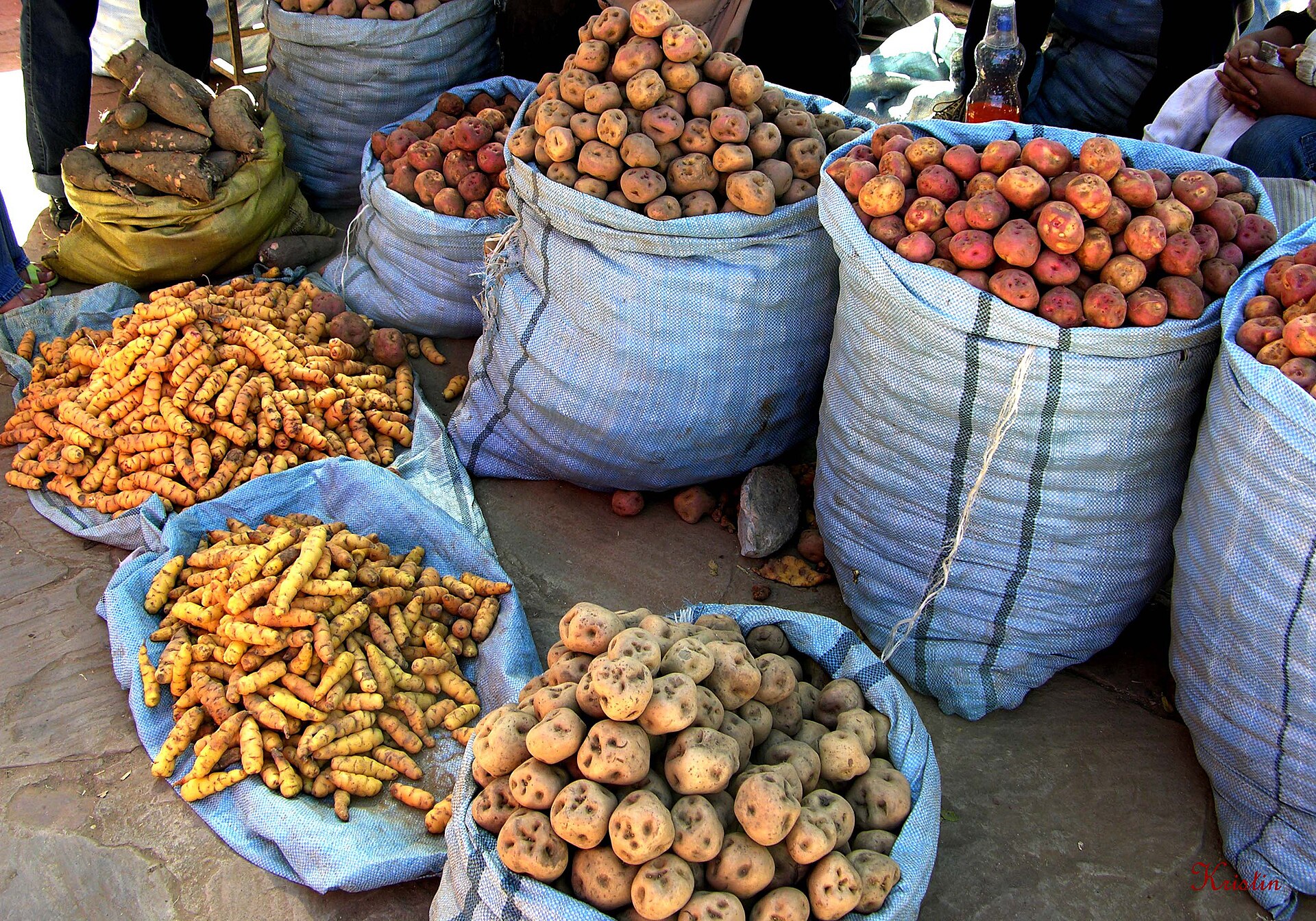
Photo: Native potatoes at the weekly market in Cochabamba, Bolivia (not Ecuador) (illustrative). kiki-bolivien / Wikimedia Commons, CC BY-SA 2.0