Agronomy
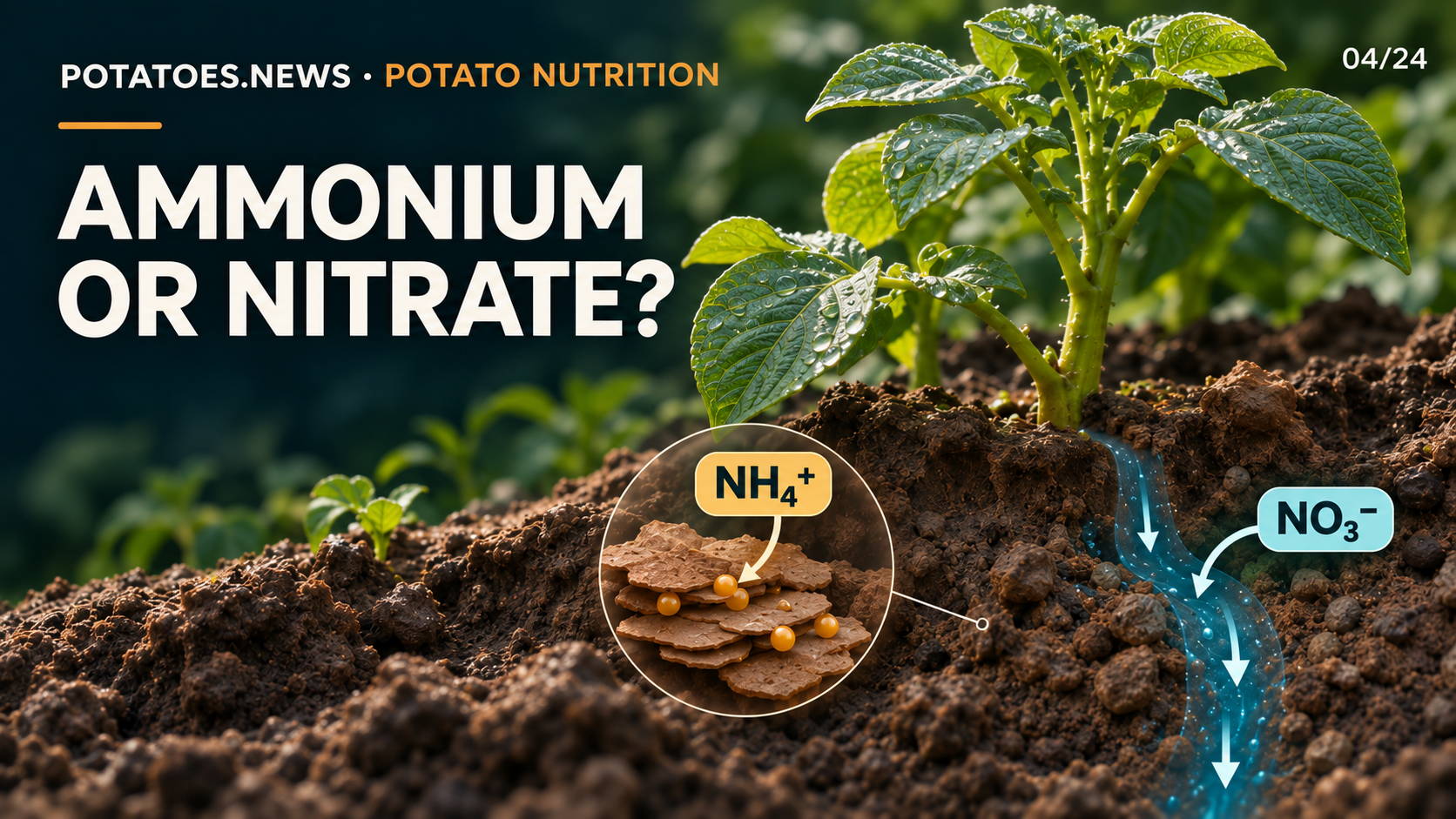
Ammonium or nitrate: nitrogen forms in potato nutrition
The question “which nitrogen is better?” has no answer without soil conditions — and too much available N can delay tuber set and cut dry matter.
 POTATOES.NEWSGlobal potato industry intelligence
The project’s potato nutrition coverage and its published partner profile.
The project’s potato nutrition coverage and its published partner profile.
Explore
The question “which nitrogen is better?” has no answer without soil conditions — and too much available N can delay tuber set and cut dry matter.
Read the material →Potato tubers remove about 5.8 kg K₂O per tonne, according to the PDA — but multiplying yield by that figure gives offtake, not a fertilizer rate.
Read the material →Moderately acidic soil helps suppress common scab, but there is no single pH target for every farm — it is a trade-off between disease and nutrient availability.
Read the material →Potato yields are decided long before harvest — they are built phase by phase, from the moment a sprout pushes through the soil to the last weeks of tuber bulking. A fertiliser programme that ignores the crop's…
Read the material →The question “which nitrogen is better?” has no answer without soil conditions — and too much available N can delay tuber set and cut dry matter.
Potato tubers remove about 5.8 kg K₂O per tonne, according to the PDA — but multiplying yield by that figure gives offtake, not a fertilizer rate.
Moderately acidic soil helps suppress common scab, but there is no single pH target for every farm — it is a trade-off between disease and nutrient availability.
Potato yields are decided long before harvest — they are built phase by phase, from the moment a sprout pushes through the soil to the last weeks of tuber bulking. A fertiliser programme that ignores the crop's…