

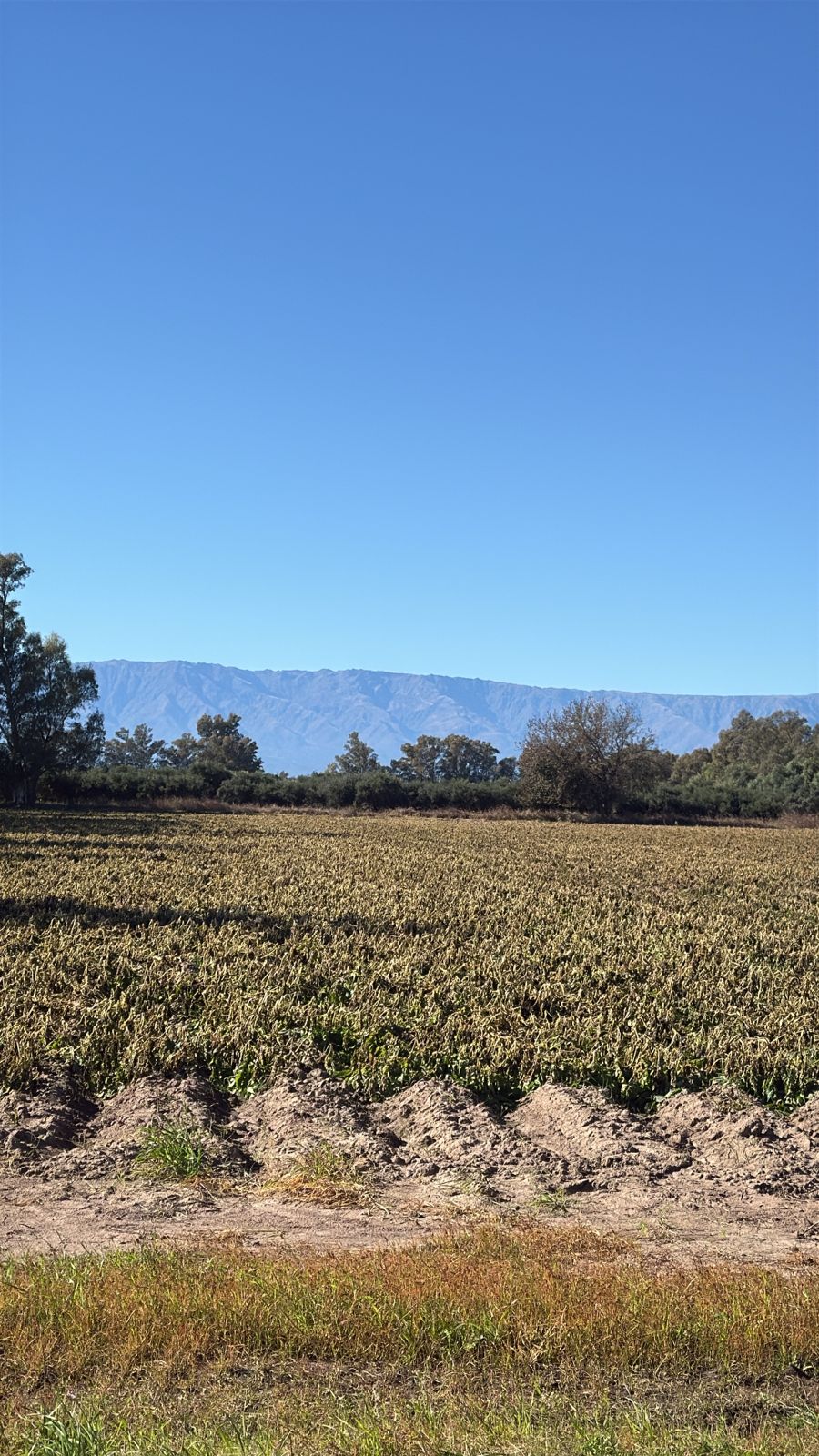
Severe Frost Devastates Potato Cultivation in Central Argentina: A Comprehensive Analysis of Agronomic Impacts, Economic Fallout, and Systemic Climate Vulnerability
Introduction to the May 2026 Agricultural Crisis
The agricultural landscape of central Argentina, a critical and highly dynamic node in South American horticultural production, has recently been subjected to a severe and devastating meteorological anomaly. In mid-May 2026, an intense polar front swept across the central productive region, bringing deep, unseasonal freezes that plunged temperatures significantly below the critical thresholds for active crop development.1 The ensuing sub-zero conditions, characterized by temperatures plummeting well below the -3°C threshold in numerous vital agricultural pockets, have inflicted catastrophic damage on the regional potato (Solanum tuberosum) crops.1 The epicenter of this destructive climatic event spans across the “green belt” (cordón verde) surrounding the capital of Córdoba province, the agriculturally dense Traslasierra valley encompassing Villa Dolores, and expansive horticultural tracts within the neighboring province of San Luis.1
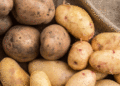
For the commercial agricultural sector, and specifically for the global audience and stakeholders of the Potatoes News project, this event represents a critical juncture that seamlessly merges climate volatility with profound economic vulnerability.1 The geographic epicenters of this climatic event are not merely peripheral farming zones; they are foundational to the domestic supply of early and medium-early potato varieties in the Argentine Republic.6 The sudden manifestation of thick white frost across these fields has not merely halted plant growth temporarily; it has fundamentally destroyed vast swaths of photosynthetic foliage, arrested critical developmental phases, and guaranteed a sharp, irreversible contraction in overall tuber yield for the upcoming harvest cycle.1
This comprehensive research report provides an exhaustive diagnostic of the May 2026 frost event. By synthesizing localized meteorological data, advanced agronomic principles regarding cold stress physiology, and regional macroeconomic indicators, the subsequent sections will detail the physiological cascade of frost damage on potato plants. Furthermore, the analysis evaluates the immediate and secondary economic repercussions on local producers, the structural deficits in post-harvest infrastructure, and the systemic vulnerabilities that continue to plague Argentine potato cultivation in an era defined by increasing and unpredictable climatic instability. The objective is to provide professional peers, agronomists, and market analysts with a definitive understanding of how a single severe weather event can destabilize a critical segment of the national food supply chain.
Climatological Diagnostics: The Architecture of the May 2026 Polar Front
To fully comprehend the magnitude of the agricultural devastation in Córdoba and San Luis, it is absolutely essential to first analyze the meteorological architecture of the event. The autumn of 2026 in Argentina has been characterized by extreme atmospheric oscillations, vacillating between periods of unusual, late-season warmth and abrupt, extreme cold fronts.8 Climatological models generated earlier in the year by national and regional exchanges had indicated a transitional climate phase, with the equatorial Pacific exhibiting cooling patterns consistent with a weak La Niña state, subsequently moving toward neutral conditions with high probability.10 While such macro-level oceanic phenomena typically forecast a general decrease in the intensity and frequency of regional rainfall across the Southern Cone, they also pre-condition the continental atmosphere for the unhindered intrusion of polar air masses originating from the deep south.10
During the second week of May, a dominant high-pressure system mobilized a massive block of Antarctic air northward, funneling it directly through the central Argentine plains and into the valleys of the Sierras Pampeanas.2 This phenomenon, often colloquially referred to by regional forecasters as a “meteorological bomb” (bomba meteorológica) due to its rapid onset, resulted in the rapid consolidation of freezing air at surface levels across the central provinces.12 The meteorological scenario was highly heterogeneous in its geographic distribution but universally damaging where it settled, driven by topographical depressions that trapped the dense, freezing air in critical agricultural basins overnight.2
The combination of clear skies, an absolute lack of surface wind, and extremely dry air maximized the effects of radiational cooling over the open fields.13 During a radiational frost, the earth’s surface continuously emits longwave radiation into space. Without cloud cover to reflect this heat back to the surface, and without wind to mix the colder surface air with warmer air aloft, the temperature at the canopy level drops precipitously.14 This stripped away any residual heat radiating from the soil, leaving the vegetative canopies of the potato crops entirely defenseless against the descending cold.1
Regional Meteorological Data Analysis: Thermal Depths in San Luis and Córdoba
The specific thermal registers obtained from provincial meteorological networks underline the profound severity of the May 2026 event. In the province of San Luis, the Red de Estaciones Meteorológicas (REM) recorded absolute minimums that far exceeded standard autumn frost parameters, creating lethal conditions for horticultural production.4
The locality of Bajada Nueva experienced an extreme, staggering minimum of -6.9°C.4 This temperature establishes a lethal thermodynamic environment for any exposed biological tissue of non-hardy crops. This localized extreme was closely followed by several other stations documenting profound freezes: Navia at -6.6°C, Valle de Pancanta at -5.5°C, Martín de Loyola at -5.1°C, and El Trapiche at -4.2°C.4 Even in slightly more temperate or transitional zones like Juana Koslay, Las Chacras, and Alto Pelado, temperatures descended to -3.9°C and -3.7°C, respectively.4 Across the central and southern sectors of the province, average minimums stabilized between -2°C and -3°C, ensuring that the frost was not merely an isolated geographic anomaly restricted to a single valley, but a systemic, regional freeze that blanketed the majority of the province’s arable land.4

Simultaneously, the neighboring province of Córdoba endured a parallel, albeit slightly less extreme in absolute numerical terms, thermal shock. Agricultural and meteorological databases documented widespread frost across the entire provincial territory, directly hitting the “green belt” of the capital and the western valleys.1 High-altitude and valley stations reported freezing parameters that guaranteed agricultural damage across the board. The station at La Posta-Altas Cumbres reached -2.5°C, Villa El Chacay fell to -2.1°C, and San Antonio de Arredondo recorded -1.9°C.2 Further measurements indicated temperatures of -1.6°C at Escuela Namuncurá, -1.5°C in Los Reartes, and -1.4°C in Serrezuela.2
While some meteorological consultants characterized the event in Córdoba broadly as “soft to medium” intensity when viewed through a purely climatological lens comparing historical winter minimums, agronomic definitions classify any prolonged period below 0°C at the canopy level as a severe risk event for non-hardy crops.2 For the potato plant, the difference between -2.5°C and -6.9°C is functionally irrelevant; both temperatures are well below the threshold required to induce catastrophic cellular death in the foliage.1
To provide a structured overview of the thermal shock, the following table summarizes the key temperature minimums recorded during the May 2026 event across both provinces.
| Province | Locality / Station | Minimum Temperature (°C) |
| San Luis | Bajada Nueva | -6.9 |
| San Luis | Navia | -6.6 |
| San Luis | Valle de Pancanta | -5.5 |
| San Luis | Martín de Loyola | -5.1 |
| San Luis | El Trapiche | -4.2 |
| San Luis | Las Chacras (Juana Koslay) | -3.9 |
| San Luis | Alto Pelado | -3.7 |
| San Luis | Paso Grande | -3.7 |
| San Luis | Villa Larca | -2.8 |
| San Luis | Donovan | -2.6 |
| San Luis | Concarán | -2.5 |
| Córdoba | La Posta-Altas Cumbres | -2.5 |
| Córdoba | Villa El Chacay | -2.1 |
| Córdoba | San Antonio de Arredondo | -1.9 |
| Córdoba | Escuela Namuncurá | -1.6 |
| Córdoba | Los Reartes | -1.5 |
| Córdoba | Serrezuela | -1.4 |
The empirical data presented above unequivocally confirms the presence of lethal freezing conditions across the primary medium-early potato cultivation zones, setting the stage for the subsequent biological collapse observed in the fields.
Physiological Pathology: Frost Interaction with Solanum tuberosum
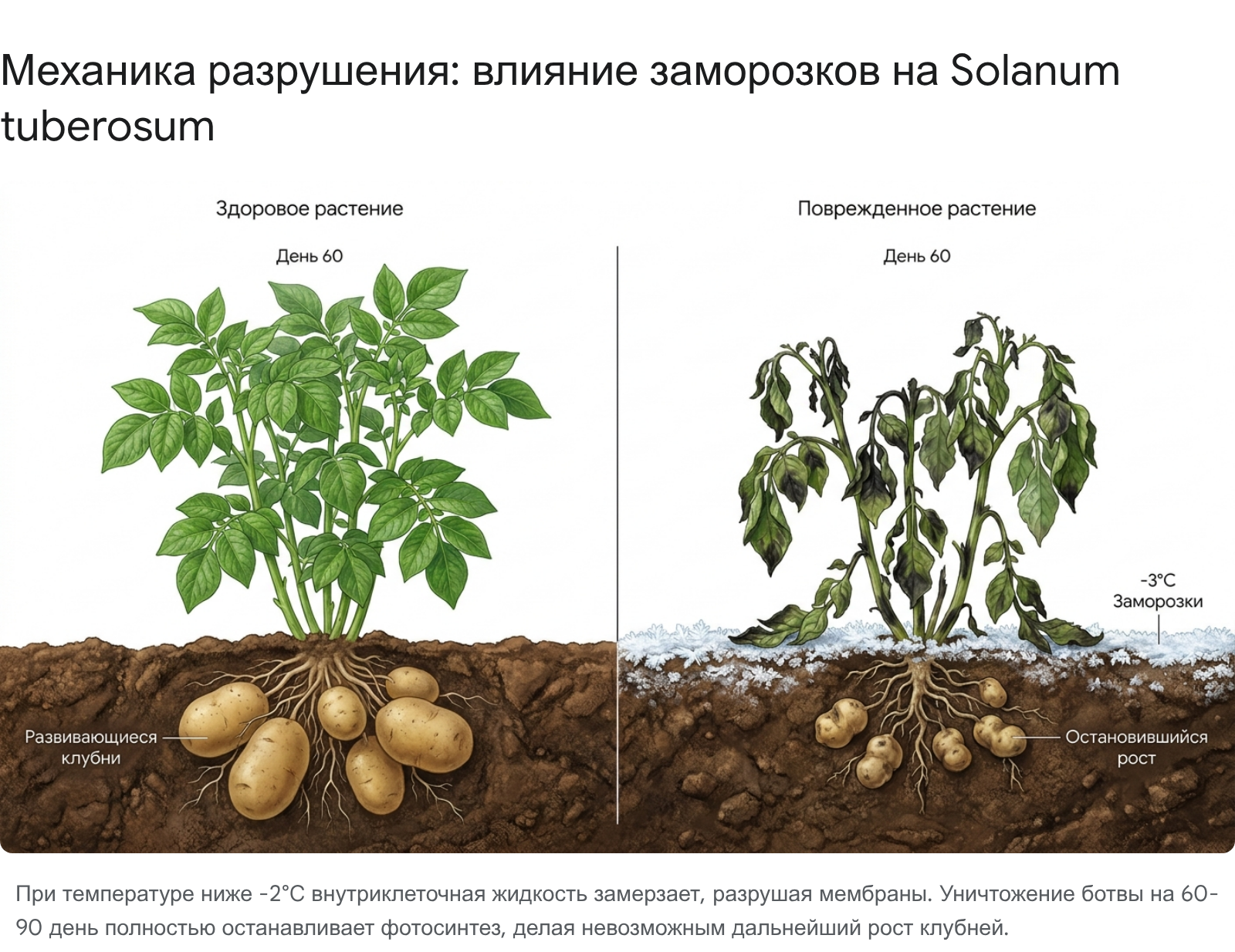
To fully appreciate the severity and irreversibility of the May 2026 event, one must evaluate the microscopic biological interactions between sub-zero temperatures and the cellular structure of the potato plant. Solanum tuberosum is an inherently tender, frost-sensitive species, fundamentally lacking the complex genetic mechanisms required to undergo deep cold acclimation or to supercool its cellular fluids effectively.1 When ambient air temperatures drop below a critical threshold of approximately -1.5°C to -2.0°C, a catastrophic and highly destructive sequence of biophysical events is initiated within the plant’s delicate tissues.1
Cellular Thermodynamics and Extracellular Ice Nucleation
The pathology of frost damage begins at the boundary layer of the leaf. As the temperature of the leaf surface falls below freezing, ice crystals begin to nucleate in the intercellular spaces—the apoplast—of the plant tissue.1 Because the chemical potential of solid ice is significantly lower than that of liquid water at the identical temperature, this extracellular ice formation creates a steep, immediate vapor pressure gradient across the cell membrane.1 Consequently, liquid water from inside the plant cells—the symplast—is rapidly and forcefully drawn out through the plasma membrane to join the growing extracellular ice crystals.1
This process induces severe cellular dehydration. As the cells lose critical water volume, their internal solute concentration skyrockets, reaching toxic levels that disrupt normal biochemical functions. Concurrently, the structural integrity of the cell membrane is compromised by the mechanical stress of shrinking and the extreme cold.1 The plasma membrane undergoes dangerous phase transitions, shifting from a healthy fluid state to a rigid, gel-like state, causing it to micro-fracture and entirely lose its semi-permeability.1
When the morning sun subsequently crests the horizon and its radiation hits the frosted canopy, the extracellular ice thaws rapidly.1 However, because the cell membranes have been irreparably damaged during the freezing phase, they are entirely unable to reabsorb the resulting meltwater.1 The cellular contents simply leak out into the intercellular spaces, leading to immediate loss of turgor pressure, flaccidity, widespread necrosis, and ultimate tissue death.1
Visual and Agronomic Symptoms in the Field
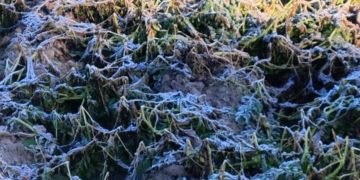
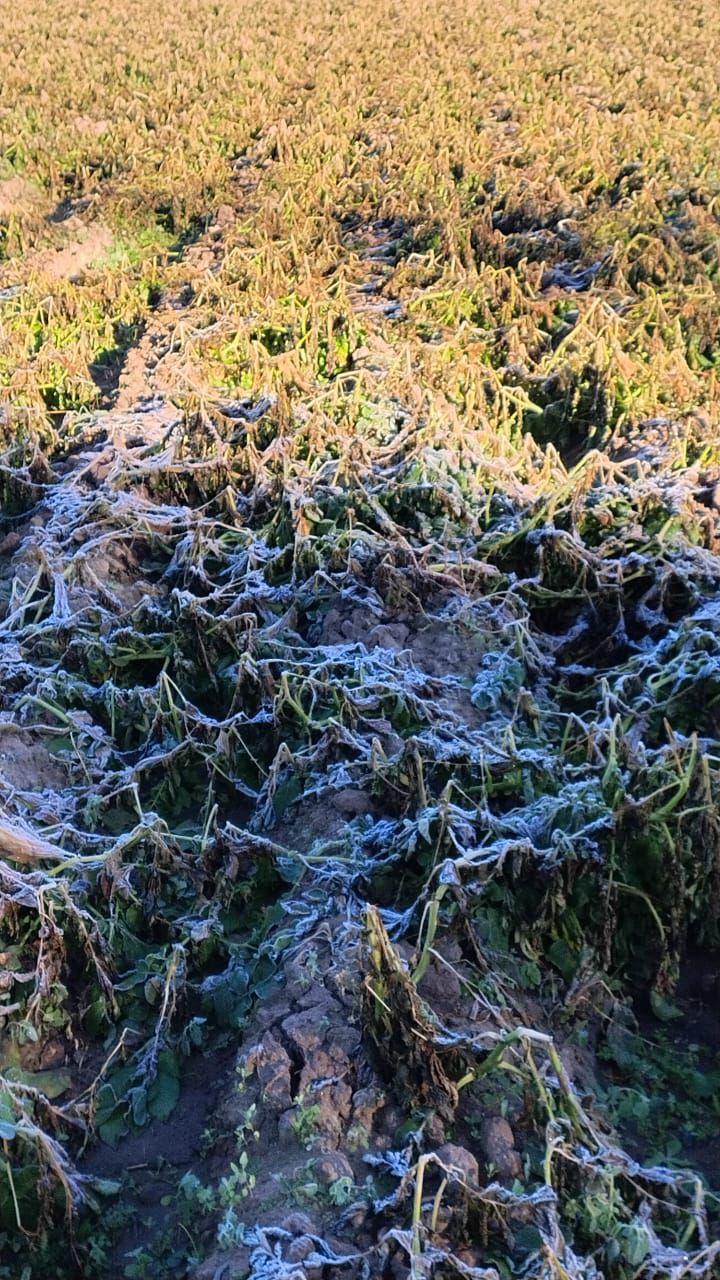
The visual evidence continuously emerging from the affected agricultural regions in Villa Dolores, the broader Traslasierra valley, and San Luis perfectly aligns with this well-documented physiological collapse.1 Field reports, agronomist surveys, and audiovisual documentation provided to Potatoes News and other agricultural outlets revealed fields entirely blanketed in thick white frost, an undeniable indicator of freezing soil and canopy conditions.1
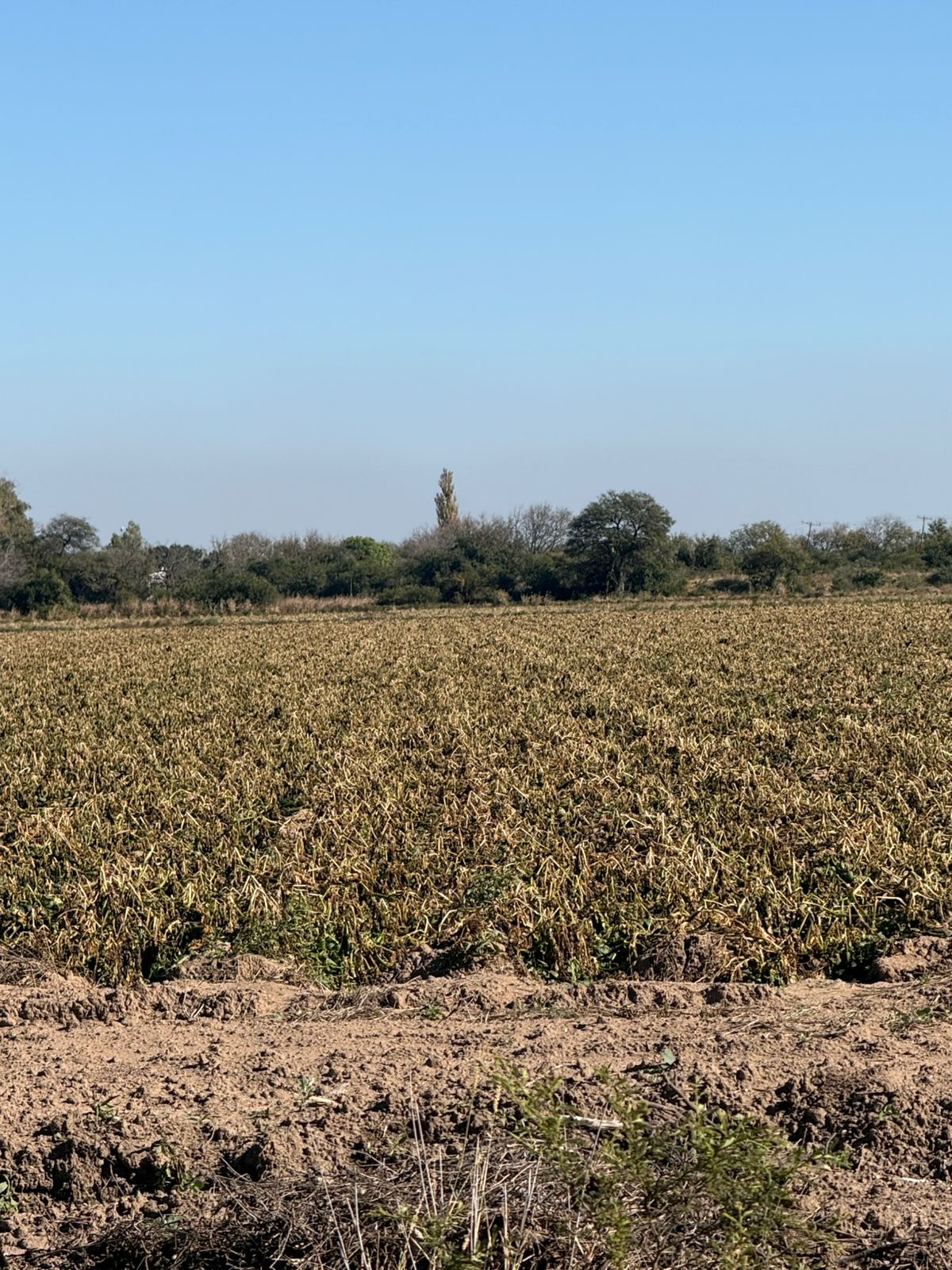
Upon thawing later in the morning, the leaves and stems of the potato plants exhibited the classic, grim symptoms of severe frostbite. The foliage rapidly wilted, darkened to a bruised, necrotic black, and physically collapsed under the structural stress of the extreme cold.1 In multiple monitored plots, producers reported that the foliage was “completely destroyed” or entirely “burned,” highlighting the extremely high intensity of the thermodynamic exchange that occurred during the night.1 This absolute destruction of the above-ground biomass instantaneously removes the plant’s capacity to intercept photosynthetically active radiation and exchange vital gases.
The Critical Vulnerability Window: 60-90 Days Post-Planting
The specific timing of this meteorological event exponentially multiplied its destructive potential and the ultimate economic fallout. Agronomic surveys confirmed that the vast majority of the affected crops in Villa Dolores, San Luis, and the Traslasierra region were situated precisely between 60 and 90 days post-planting.1 This is arguably the single most critical physiological window in the modern potato’s lifecycle.
At the 60-to-90-day mark, a healthy potato plant has completed its primary vegetative expansion phase and is intensely engaged in the process of tuber bulking.1 During this specific phase, the massive, fully developed foliar canopy acts as a highly efficient, specialized carbohydrate factory. It utilizes continuous photosynthesis to synthesize massive volumes of sucrose in the leaves, which are subsequently translocated down the phloem to the underground stolons.1 Once there, biochemical pathways convert the sucrose into dense starch within the rapidly swelling tubers.1
When severe frost annihilates the foliage at this precise juncture, it abruptly, violently, and permanently halts plant growth and photosynthesis.1 Because the plant can no longer produce carbohydrates, the tubers instantly cease to grow.1 Agronomic evidence and historical harvest data indicate that this premature, forced defoliation inevitably leads to a drastic, unrecoverable reduction in both the individual size of the tubers and the overall gross yield per hectare.1 For those specific crops positioned closer to the 60-to-70-day threshold when the frost hit, the possibility of crop recovery is effectively zero; the subterranean tubers are far too immature, small, and lacking in dry matter to constitute a marketable harvest, resulting in an absolute, 100% loss of the commercial crop for the producer.17
Agronomic Geography and the Strategic Medium-Early Crop
To understand why the destruction in these specific provinces is so critical to the national food supply, one must examine the agronomic geography and production calendar of Argentina. The Argentine Republic cultivates potatoes across several distinct regions to ensure a continuous, year-round supply of both ware (table) and food processing potatoes.7 The total potato area of Argentina hovers around 77,000 hectares, yielding a total production of approximately 2 million metric tons, which results in an average national yield of 26 tons per hectare.18
While the vast southeast of Buenos Aires province dominates the “medium late” crop with a massive area and the highest national yields, other provinces fill critical seasonal gaps.7 The affected regions—specifically the horticultural green belt (cinturón verde) of Córdoba Capital, the Traslasierra valley (including Villa Dolores), and San Luis—are designated primarily for the “medium early” crop.6
The growing period for this highly strategic medium-early crop stretches from planting in late summer/early autumn through to the critical harvest window of August to November.6 The central province of Córdoba alone represents approximately fifteen percent of the total national cultivation area.6 The strategic importance of this region cannot be overstated; it functions as a vital supplier to national wholesale markets, bridging the gap before the massive summer and autumn harvests from the southeast of Buenos Aires come online.6 The frost of May 2026 has effectively severed this supply bridge, guaranteeing a period of extreme scarcity in the national market precisely when the medium-early crop was expected to fulfill domestic demand.
To illustrate the spatial distribution of this sector, the following table details the primary potato production zones in Argentina as categorized by crop seasonality and geographic region.
| Production Season | Primary Regions/Provinces | Role in National Supply |
| Early | Concepción, Morteros | Fills early spring supply gaps. |
| Medium Early | Córdoba (Green Belt, Villa Dolores), San Luis | Critical bridge supply (August-November). Severely impacted by May 2026 frost. |
| Medium Late | Southeast of Buenos Aires | Dominant national supply, highest yields, massive acreage. |
| Seed Production | Tafí del Valle, Las Estancias, Malargüe, Tierra del Fuego | Specialized virus-free seed multiplication in isolated zones. |
Geospatial Impact Assessment and the Tragedy in Traslasierra
The geographic distribution of the frost damage paints a grim, detailed picture of localized economic catastrophe, particularly in specific agricultural micro-regions where potato farming is not merely an industry, but the absolute economic cornerstone of the community.
The Traslasierra region, situated in the picturesque western part of Córdoba province and encompassing critical agricultural hubs like Villa Dolores, Los Cerrillos, and Candelaria, undeniably bore the absolute brunt of the agricultural devastation.1 Following the mid-May freeze, the situation across these localized plots was described by observers and participants in existential, dire terms. In the districts of Los Cerrillos and Candelaria, producers reported to local media that a vast portion of their painstakingly cultivated plantations was completely wiped out by the extreme drop in temperature.17 The prolonged exposure to the freezing air mass effectively “burned” the living tissue of the plants beyond any hope of regeneration.17
The psychological and emotional toll on the producers is a critical, often entirely overlooked metric in the aftermath of agricultural disasters. Carlos Cataldo, a prominent and experienced local potato producer in the region, articulated the prevailing sentiment of the farming community during a deeply emotional assessment of the fields broadcast on Radio Explosiva.17 He stated, unequivocally and with stark resignation, that “the plots were practically all finished” (“Los lotes se liquidaron prácticamente todos”) and confirmed that the intense cold had immolated the entire canopy, noting that “the cold burned the whole plant” (“El frío quemó toda la planta”).17
More profoundly, Cataldo highlighted the intrinsic, almost symbiotic relationship between the agricultural laborers and the land they cultivate, noting, “We suffer a lot when something happens to the potato. For us, it is a living being” (“Nosotros sufrimos mucho cuando le pasa algo a la papa. Para nosotros es un ser vivo”).17 This profound sense of loss reflects the harsh reality of seeing months of intense financial investment, backbreaking physical labor, and meticulous agronomic care entirely eradicated in a matter of a few freezing hours.17
While the provincial authorities and agricultural extension agencies have yet to finalize the official census detailing the exact number of total hectares affected, the overwhelming consensus among agricultural media, local cooperatives, and boots-on-the-ground agronomists is that the damage is undeniably severe and incredibly widespread across numerous commercial lots.17 The economic setback is particularly acute for those crops that were caught in the earlier 60-to-70-day window, as these fields hold absolutely no potential for compensatory subterranean growth, representing a total financial write-off.17
In the neighboring province of San Luis, the agricultural scenario closely mirrors the devastation seen in Córdoba, albeit compounded by the even lower absolute temperatures recorded by the REM.1 The province, which has been steadily expanding its horticultural footprint over recent years, recorded massive agricultural damage corresponding to the extreme thermal lows.3 The impact here was direct, immediate, and unforgiving. Potatoes cultivated in the exposed valleys and plains of San Luis were subjected to prolonged hours of sub-zero stress, leading to identical symptoms of immediate foliar necrosis and halted tuber development.1 The prevailing concern among San Luis producers is currently centered on desperately evaluating whether any sub-surface tubers have reached a minimum viable commercial caliber to partially offset the total loss of the harvest, though early agronomic assessments remain deeply pessimistic regarding salvageable yields.3
Varietal Monoculture: The Systemic Risk of Spunta
The severity of the agricultural collapse in Córdoba and San Luis cannot be attributed solely to the meteorological extremity of the frost; it is deeply exacerbated by systemic agronomic choices, specifically the extreme reliance on a limited genetic base. An analysis of the cultivars utilized in Argentina reveals a dangerous trend of varietal homogenization that drastically increases vulnerability to abiotic shocks.
Historical data indicates that in the mid-to-late 1980s, the Argentine potato sector featured a somewhat more diverse genetic portfolio. At that time, while Spunta held a 32% market share, it was closely followed by Ballenera MAA at 29%, Kennebec at 14%, and Huinkul at 10%, alongside various other cultivars.7 This diversity provided a natural buffer; different varieties possess varying degrees of tolerance to cold, drought, and specific pathogens.
However, the modern agricultural landscape in the affected regions is vastly different. In the medium-early production areas of Córdoba and San Luis, the Spunta cultivar has become overwhelmingly dominant.7 According to comprehensive agronomic surveys, Spunta is currently by far the most dominant cultivar, accounting for a staggering 85% to 90% of the entire cropping area in these regions.7
While Spunta is highly favored by commercial producers for its rapid initial growth, high yield potential under optimal conditions, and excellent consumer acceptance due to its visual appeal, this extreme level of genetic homogenization creates a massive systemic risk.7 The Spunta variety fundamentally lacks profound genetic resistance to extreme abiotic stresses, particularly sudden, hard freezes. It does not possess the robust cellular mechanisms needed to delay intracellular freezing. Consequently, when a polar front strikes a region dedicated almost entirely to Spunta, the entirety of the regional crop responds with uniform, synchronized susceptibility. There is no genetic firewall. This absolute varietal monoculture ensures that a localized frost event translates directly into an absolute regional harvest failure, exactly as witnessed in Traslasierra and Villa Dolores.7 The sector’s pursuit of market efficiency through a single cultivar has inadvertently maximized its exposure to climate volatility.
Macroeconomic Shockwaves: The Potato Supply Chain
The destruction of the potato canopy in central Argentina does not occur in an isolated agricultural vacuum. The potato is an absolute cornerstone of the Argentine national diet, possessing an incredibly high cultural inelasticity of demand.18 Being largely of European descent, Argentines include potatoes in almost every daily dinner.18 The average per capita consumption of fresh potatoes in Argentina stands at an impressive 40 kilograms annually.18 While this is lower than traditional Mediterranean potato consumers like Spain (83 kg/capita) and Portugal (88 kg/capita), it firmly establishes the tuber as an irreplaceable dietary staple across all socioeconomic strata in Argentina.18 Consequently, any sudden shock to the domestic supply chain triggers immediate, aggressive, and highly visible market reactions.
To place Argentine consumption in a global context and highlight the domestic reliance on the fresh market, the following table compares key consumption metrics.
| Country | Per Capita Fresh Consumption (kg/year) | Per Capita Processed Consumption (kg/year) |
| Argentina | 40 | 4 |
| Spain | 83 | N/A |
| Portugal | 88 | N/A |
| The Netherlands | N/A | 44 |
As the data illustrates, Argentina relies heavily on the fresh ware market, with minimal reliance on processed potatoes (only 4 kg per capita compared to 44 kg in the Netherlands).18 This lack of processed consumption means there are few industrial reserves to smooth out fresh market volatility.
Pre-Existing Volatility and Skyrocketing Prices
Even prior to the May 2026 frost event, the Argentine potato market was experiencing a period of severe, sustained volatility.19 Initial market reports circulating widely in the national agricultural and consumer press highlighted that the retail price of potatoes had already “skyrocketed” (se fue por las nubes), reacting to a complex, compounding matrix of national inflationary pressures, previous localized weather anomalies during the summer cycle, and persistent logistical bottlenecks in transport.19
The absolute decimation of the Traslasierra, Villa Dolores, and San Luis harvests will act as a massive, unavoidable catalyst for further, hyper-aggressive price inflation in the coming months.1 Because the medium-early crops from Córdoba are strategically timed to supply the massive wholesale markets—such as the Mercado Central in Buenos Aires and various regional distribution hubs—during the precise transitional window before the primary summer/autumn harvests from the southeast of Buenos Aires are ready, their abrupt absence creates a profound, unfillable supply vacuum.6
When the anticipated tonnage of Spunta potatoes from Villa Dolores and San Luis simply fails to materialize at the market gates, wholesale buyers will be forced into intense bidding wars to secure rapidly diminishing national stocks, driving up the baseline wholesale price exponentially.1 This inflationary spike cascades directly and immediately to the neighborhood greengrocer and the supermarket shelf, directly threatening food security for lower-income demographics and forcing a costly alteration in household consumption patterns across the country.20
The Crisis of Producer Capital and Contracting Area
The macroeconomic architecture of Argentine potato farming operates on a brutal, unforgiving boom-and-bust cycle.21 The sector has historically oscillated violently between years of profound, bankrupting crisis and years of rapid, highly profitable recovery.21 The current situation generated by the frost, however, is deeply compounded by a chronic, pre-existing lack of working liquidity among the producers themselves.
Prior to the May frost, critical regions in Córdoba and the southeast of the country had already registered a considerable, alarming 12% contraction in the total planted surface area for potatoes.21 This massive reduction was driven not by a lack of consumer demand, but by severe capital exhaustion among the farming base.21 Previous agricultural seasons, marred by periods of overproduction and lack of export outlets, had led to a collapse in farm-gate prices, stripping farmers of their essential working capital and forcing them to drastically cut back on the hectares they could afford to plant.21 As prominent industry analyst Campetella noted regarding market dynamics, periods of extreme low prices deeply discourage continuous production, leading many traditional farmers to simply abandon these capital-intensive production systems entirely, a trend that has been accelerating for some time.21
The May 2026 frost strikes precisely at this point of maximum financial vulnerability. Producers in Traslasierra and San Luis who had leveraged their remaining, depleted capital—or worse, taken on high-interest agricultural debt in an inflationary economy—to finance the current crop now face an absolute, 100% loss of their seasonal investment.17 The immense costs of certified seed potatoes, imported fertilizers, necessary agrochemicals, diesel fuel for tractors, and initial field labor are entirely sunk costs. Without a viable harvest to generate vital revenue, these producers entirely lack the financial capacity to re-enter the market and purchase inputs for the next planting season.21
This forced, rapid decapitalization of the sector virtually guarantees that the subsequent planting season will see a further, perhaps even more aggressive, reduction in total planted acreage across the central provinces.21 This creates a highly dangerous, self-perpetuating feedback loop: extreme weather causes crop loss, leading to decapitalization, which leads to lower planting the next year, which inherently restricts national supply, which then drives extreme price volatility.21 This volatility ultimately benefits only those very few, highly capitalized producers who miraculously managed to escape the weather anomaly, while pushing the vast majority of family and mid-sized producers closer to total bankruptcy.21
Regional Socioeconomic Devastation
The ripple effects of this agricultural failure extend deeply and painfully into the regional socio-economic fabric. In rural hubs like Traslasierra and Villa Dolores, potato production is not merely a business venture for landowners; it is a primary, essential engine of mass employment and local commercial movement.17 The potato harvest season traditionally requires a massive influx of manual labor for the intensive processes of digging, sorting, bagging, loading, and regional logistics.17
With the crops totally destroyed at the 60-90 day mark, this vital labor force will simply not be required.17 The abrupt loss of these anticipated seasonal wages will severely depress local consumer spending. This lack of circulating cash impacts everything from local retail commerce and grocery stores to mechanical repair shops and local services, thereby magnifying the economic footprint of the frost far beyond the physical borders of the blackened fields, inducing a micro-recession in the affected departments.17
Technological Deficits and Post-Harvest Vulnerability
The catastrophic outcome of the May 2026 frost brings into sharp focus several deeply ingrained, systemic vulnerabilities within the broader Argentine potato sector that prevent it from effectively buffering against climate shocks. Despite cultivating tens of thousands of hectares and moving millions of tons of produce, the industry remains highly fragile and technologically deficient in critical areas.18
A critical, comparative analysis reveals that the Argentine potato sector operates generally at a fairly low technological level when benchmarked against global standards in North America or Western Europe.18 The entire cultivation and harvesting process remains highly, and dangerously, labor-intensive. Current industry data indicates that less than 25% of the total national potato production is fully mechanized.18 This reliance on manual labor slows down rapid response capabilities; a producer cannot rapidly harvest an early crop to save it from an incoming front if they rely entirely on large crews of manual labor rather than automated harvesters.
Even more concerning in the direct context of sudden weather anomalies is the virtually non-existent national infrastructure for the bulk storage of ware (table) potatoes.18 Unlike European or North American producers who utilize advanced, massive climate-controlled bulk storage facilities to safely warehouse their harvest and buffer against both market price volatility and late-season weather destruction, Argentine ware potatoes are predominantly stored “on the field”.18 This means the crop is left buried in the ground until the exact moment the market demands it and prices are favorable.18
This archaic practice exposes the mature crop to massive, unnecessary risks from late-season hard frosts, heavy inundating rains, and aggressive soil-borne pathogens. While the specific crops currently destroyed in Córdoba and San Luis were still actively in the vulnerable vegetative and bulking phase (60-90 days) and not yet ready for any form of storage, the absolute lack of a national storage buffer means there is no strategic reserve of potatoes held over from previous harvests to release into the market to stabilize skyrocketing prices when a regional harvest like Villa Dolores fails.1 The Argentine potato sector is, therefore, desperately in need of massive capital investment and widespread technological integration to boost baseline yields, improve quality control, and dramatically lower catastrophic post-harvest losses.18
Institutional Frameworks, Mitigation, and Risk Management
Faced with the undeniable increasing frequency of extreme climatic events—ranging from the profound, multi-year droughts of recent intense La Niña cycles to the sudden, deep freezes of May 2026—the necessity for robust agronomic mitigation strategies and comprehensive institutional support mechanisms has never been more urgent for the Argentine farmer.
Active Agronomic Defenses Against Frost
At the immediate field level, agricultural extension agencies and the Ministry of Agriculture and Livestock (MAG) consistently issue agrometeorological alerts when massive polar fronts approach the continent.23 The technical recommendations provided to producers focus on immediate, tactical interventions designed to artificially alter the microclimate and marginally raise the temperature within the plant canopy.23
For highly vulnerable, high-value horticultural crops like potatoes, the primary active defensive strategies recommended include:
- Overhead Sprinkler Irrigation (Riego por Aspersión Nocturno): This is agronomically the most effective active mitigation method against radiative frost. By applying water continuously over the potato foliage during the freezing overnight hours, the latent heat of fusion (the thermal energy released as the liquid water turns to solid ice) is transferred directly to the plant tissue. As long as liquid water is continuously freezing on the plant, the tissue temperature remains firmly clamped at exactly 0°C, thereby preventing the lethal intracellular freezing that only occurs when tissue temperatures drop to -1.5°C or lower.23 However, implementing this requires immense, readily available water reserves, highly functional and expensive pumping infrastructure, and continuous, flawless operation throughout the night, resources which many decapitalized Argentine farmers simply lack.21
- Thermal Blankets and Micro-Tunnels (Mantas Térmicas): Physical barriers can trap the residual heat radiating from the soil, creating a localized microclimate that remains several degrees warmer than the surrounding ambient air.23 While highly effective for small-scale, extremely high-value horticulture (such as early strawberries or specialized greens), deploying miles of thermal blankets over hundreds of hectares of commercial potato fields in Villa Dolores is logistically impossible and economically unfeasible for most medium-scale producers.23
When these active agronomic defenses fail—either due to lack of infrastructure, overwhelming absolute cold (such as the -6.9°C in San Luis), or the sheer scale of the farming operation—producers are entirely dependent on institutional safety nets to avoid total financial ruin.
Emergency Declarations: A Reactive Measure
The traditional, reactive mechanism utilized by the Argentine state in the face of such disasters is the formal declaration of an Agricultural Emergency (Emergencia Agropecuaria).24
Following the severe May 2026 frost, the Government of the Province of Córdoba rapidly mobilized to declare a state of agricultural emergency specifically for the affected rural exploitations, expressly targeting agricultural, forestry, and fruit/horticultural operations decimated by the extreme freezing temperatures.25 The provincial administration tasked local agencies with compiling the exhaustive registries of directly affected producers and promptly submitted them to the National Commission for Agricultural Emergencies and Disasters (Comisión Nacional de Emergencias y Desastres Agropecuarios) for crucial federal homologation.25
Similar bureaucratic frameworks have been repeatedly activated across the country in recent years, ranging from frost declarations in Entre Ríos to emergency status in diverse productive zones of Río Negro, and extended declarations in Buenos Aires due to devastating flooding.24 This constant activation illustrates a national agricultural matrix that is constantly besieged by climate extremes.
These emergency declarations provide critical, albeit temporary, bureaucratic relief. They typically manifest in the form of provincial tax deferments, the temporary suspension of aggressive advanced tax collections by revenue agencies, and the vital extension of credit maturities at state-backed banks.25 However, they are fundamentally flawed as a recovery tool: they do not replace the massive lost capital. They merely pause the financial hemorrhaging for a few months, theoretically allowing the producer to survive until the next cycle, but utterly failing to provide the massive influx of cash capital necessary to purchase new seed, fertilizer, and fuel to actually replant the lost 60-90 day potato crop.1
The Evolution of Risk Transfer and the Insurance Gap
Recognizing the deep inadequacy of purely reactive emergency declarations, some progressive provincial governments are attempting to develop proactive risk-transfer mechanisms. A paramount, innovative example is the pilot program recently launched by the Government of Córdoba: the Seguro Multirriesgo Agrícola 2025/26 (Agricultural Multi-risk Insurance).29
This program represents an unprecedented, structural shift in provincial agricultural policy, developed in strategic conjunction with the Association of Insurers of the Interior of the Argentine Republic (ADIRA).29 The insurance utilizes highly advanced parametric models and continuous satellite monitoring to provide comprehensive, undeniable coverage against a broad spectrum of catastrophic weather events, explicitly including severe droughts, devastating hail, massive flooding, and, crucially, severe frosts.29
To incentivize widespread adoption and improve overall farming standards, the province strategically subsidized the cost of the insurance entirely, making it free for producers who formally adhered to the Good Agricultural Practices (BPAs) framework.29 This requirement ensures a transparent, auditable, and technically sound risk management environment, rewarding farmers who utilize sustainable methods.29
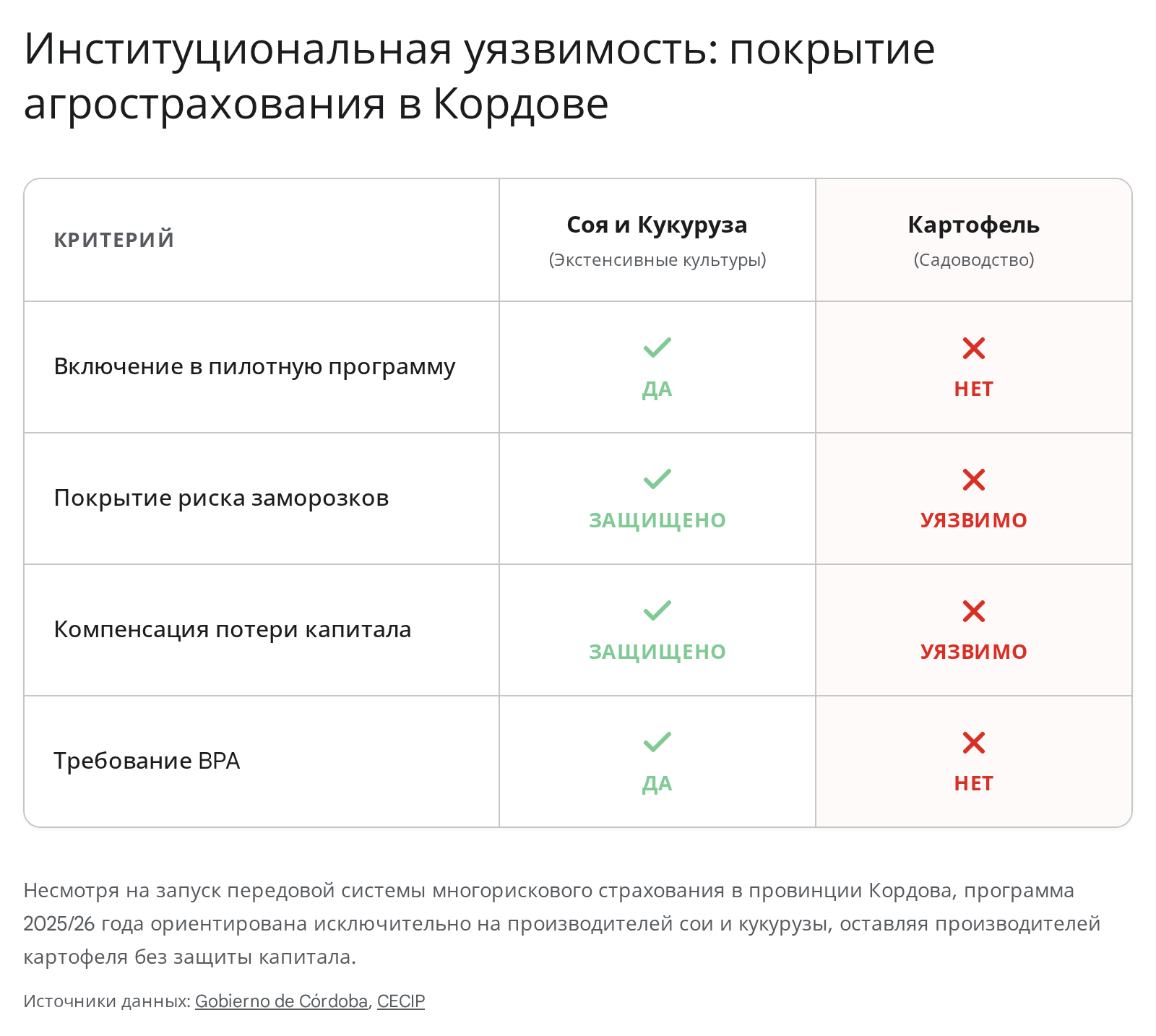
However, a critical, comparative analysis of this institutional tool reveals a profound gap in coverage that directly and painfully pertains to the May 2026 horticultural crisis. The Seguro Multirriesgo Agrícola pilot program was massively structured to cover more than 500,000 hectares, but this coverage is currently restricted exclusively to broad-acre, export-driven extensive commodities: specifically, soy and corn.29
The intensive, high-value horticultural sector—which critically includes the deeply impacted potato producers in Traslasierra, the green belt, and Villa Dolores—remains entirely outside the protective financial umbrella of this specific parametric insurance policy.29 While slow, bureaucratic mechanisms like the national agricultural emergency system will eventually activate to defer their future taxes, the potato farmers lack the direct, immediate indemnity payouts that the soy and corn producers will theoretically receive if their parametric trigger yields are compromised by the exact same frost event.25 This glaring institutional asymmetry deeply highlights the urgent, systemic need to rapidly expand parametric and multi-risk insurance products into the high-value, highly vulnerable, and domestically essential horticultural sectors. Without it, the risk of total bankruptcy rests entirely on the shoulders of the individual family farmer.
Conclusion and Future Outlook
The May 2026 polar front serves as a severe, uncompromising, and highly destructive stress test for the agricultural systems of central Argentina. The catastrophic plunge of localized temperatures to extreme lows of -6.9°C in San Luis and the pervasive, deep freezes across the highly productive valleys and green belts of Córdoba did not merely cause a temporary vegetative setback.1 They enacted absolute, irreversible physiological destruction upon strategic potato crops caught precisely at their most critical, sensitive 60-to-90-day phase of tuber bulking development.1
The localized devastation witnessed in areas like Traslasierra and Villa Dolores heavily transcends the immediate biological death of the Solanum tuberosum plants.1 It represents a profound, cascading economic hemorrhage for an entire rural community deeply intertwined with the cultivation, harvesting, and logistics of this tuber. The frost wipes out heavily leveraged invested capital and brutally erases the anticipated labor income that sustains the foundation of the regional economy.17
On a broader macroeconomic level, the sudden, forced eradication of this crucial “medium-early” supply guarantees the immediate exacerbation of already skyrocketing potato prices in the national wholesale markets, feeding the vicious inflationary cycles that severely stress the purchasing power of the national consumer base for an inelastic dietary staple.6 The 12% reduction in planted acreage observed prior to the freeze will only compound this scarcity, as decapitalized farmers find themselves unable to participate in the next planting cycle.21
Crucially, this devastating event violently exposes the systemic, structural fragility of an Argentine agricultural sector operating with incredibly low levels of mechanization, virtually zero bulk climate-controlled storage capacity, and a dangerous, high-risk varietal homogenization reliant almost entirely on the frost-susceptible Spunta cultivar.7 While progressive provincial governments, such as Córdoba, are rightfully beginning to innovate with highly advanced risk-transfer tools like the Seguro Multirriesgo for extensive grain commodities, the highly capital-intensive and profoundly weather-sensitive horticultural producers remain heavily, unsustainably exposed.29
Until massive, coordinated public and private investments are made in advanced agronomic resilience, protective post-harvest infrastructure, crop diversification, and truly inclusive, comprehensive financial safety nets that cover horticulture, the Argentine potato sector—and the consumers who rely upon it—will remain perpetually and dangerously at the absolute mercy of an increasingly volatile and unforgiving global climate system.
Источники
- Argentina: Severe Frost Causes Widespread Damage to Potato Crops in Villa Dolores, San Luis, and Córdoba, дата последнего обращения: мая 19, 2026, https://potatoes.news/argentina-severe-frost-causes-widespread-damage-to-potato-crops-in-villa-dolores-san-luis-and-cordoba/
- Heladas en Córdoba. Con una mínima de -2,5ºC: ranking de lugares y temperaturas bajo cero • Agroverdad – Noticias e Información del Agro, дата последнего обращения: мая 19, 2026, https://agroverdad.com.ar/2026/05/heladas-en-cordoba-con-una-minima-de-25oc-ranking-de-lugares-y-temperaturas-bajo-cero
- Preocupación en San Luis por fuertes heladas que dañaron cultivos de papa – El Semiárido, дата последнего обращения: мая 19, 2026, https://www.elsemiarido.com/preocupacion-en-san-luis-por-fuertes-heladas-que-danaron-cultivos-de-papa/
- San Luis bajo cero: las temperaturas mínimas llegaron hasta los -6,9°C – El Chorrillero, дата последнего обращения: мая 19, 2026, https://elchorrillero.com/nota/2026/05/17/624934-san-luis-bajo-cero-las-temperaturas-minimas-llegaron-hasta-los-69c/amp/
- BE PROFY IN POTATOES NEWS, дата последнего обращения: мая 19, 2026, https://potatoes.news/
- Argentina – World Potato Atlas, дата последнего обращения: мая 19, 2026, https://beagle-flute-7j84.squarespace.com/s/ARC_Argentina_200519.pdf
- ANALYSIS OF SEED AND WARE POTATO PRODUCTION SYSTEMS AND YIELD CONSTRAINTS IN ARGENTINA DANIEL O. CALDIZ, дата последнего обращения: мая 19, 2026, https://edepot.wur.nl/198432
- Frío, heladas y luego calor: qué zonas recibirán más de 25 mm esta semana – Agrositio, дата последнего обращения: мая 19, 2026, https://www.agrositio.com.ar/noticia/246309-tiempo-frio-seguido-por-el-ascenso-de-la-temperatura-acompanado-por-precipitaciones-abundantes-sobre-el-nordeste-del-area-agricola.html
- Calor, tormentas aisladas y zonas sin agua: el clima no da tregua – Agrositio, дата последнего обращения: мая 19, 2026, https://www.agrositio.com.ar/noticia/244820-calor-tormentas-aisladas-y-zonas-sin-agua-el-clima-no-da-tregua.html
- Frost, rain threaten Argentina’s potentially record wheat crop – Grain Central, дата последнего обращения: мая 19, 2026, https://www.graincentral.com/markets/frost-rain-threaten-argentinas-potentially-record-wheat-crop/
- Informe Agrometeorológico Mensual – ENERO 2026 – Bolsa de Cereales de Córdoba, дата последнего обращения: мая 19, 2026, https://bccba.org.ar/informes/informe-agrometeorologico-mensual-enero-2026/
- Se consolida la masa de aire frío, con clima gélido y heladas: cómo sigue la temperatura en Buenos Aires – MinutoUno, дата последнего обращения: мая 19, 2026, https://www.minutouno.com/sociedad/se-consolida-la-masa-aire-frio-clima-gelido-y-heladas-como-sigue-la-temperatura-buenos-aires-n6276431
- Temperaturas y lluvias en San Luis: los datos del tiempo hoy, 13 de mayo de 2026, дата последнего обращения: мая 19, 2026, https://www.canal26.com/clima/san-luis/temperaturas-y-lluvias-en-san-luis-los-datos-del-tiempo-hoy-13-de-mayo-de-2026/
- Tras las heladas y nevadas, anticipan un domingo muy frío en San Luis – El Chorrillero, дата последнего обращения: мая 19, 2026, https://elchorrillero.com/nota/2026/05/17/624944-tras-las-heladas-y-nevadas-anticipan-un-domingo-muy-frio-en-san-luis/amp/
- Anticipan un viernes cálido y un fin de semana con posible caída de nieve en la zona serrana, дата последнего обращения: мая 19, 2026, https://agenciasanluis.com/2026/05/15/1166300-anticipan-un-viernes-calido-y-un-fin-de-semana-con-posible-caida-de-nieve-en-la-zona-serrana/
- Se registraron heladas, temperaturas bajo cero en toda la provincia de San Luis y nevadas en las sierras, дата последнего обращения: мая 19, 2026, https://laprovinciadiario.com.ar/se-registraron-heladas-temperaturas-bajo-cero-en-toda-la-provincia-de-san-luis-y-nevadas-en-las-sierras/
- Las heladas golpearon fuerte a los productores de papa en …, дата последнего обращения: мая 19, 2026, https://noticiasvillademerlo.com/las-heladas-golpearon-fuerte-a-los-productores-de-papa-en-traslasierra-hay-quienes-perdieron-casi-toda-la-cosecha/
- POTATO PRODUCTION in ARGENTINA – WUR eDepot, дата последнего обращения: мая 19, 2026, https://edepot.wur.nl/11
- El precio de la papa se fue por las nubes – Bien Informados, дата последнего обращения: мая 19, 2026, https://bieninformados.com.ar/contenido/10542/el-precio-de-la-papa-se-fue-por-las-nubes
- Explicaron por qué aumentó el precio de la papa y qué factores inciden en el valor, дата последнего обращения: мая 19, 2026, https://www.elonce.com/parana/explicaron-por-que-aumento-el-precio-de-la-papa-en-el-mercado.htm
- Argentina (Córdoba): Potato overproduction leads to falling prices and job losses, дата последнего обращения: мая 19, 2026, https://www.argenpapa.com.ar/noticia/16493-argentina-cordoba-potato-overproduction-leads-to-falling-prices-and-job-losses
- Papa: caída del 12% de la superficie de siembra – El Atlántico, дата последнего обращения: мая 19, 2026, https://diarioelatlantico.com.ar/2026/04/21/papa-caida-del-12-de-la-superficie-plantada/
- MAG alerta por riesgo de heladas y recomienda medidas para proteger cultivos y ganado, дата последнего обращения: мая 19, 2026, https://diariocampo.com.py/2026/05/07/mag-alerta-por-riesgo-de-heladas-y-recomienda-medidas-para-proteger-cultivos-y-ganado/
- El Gobierno Nacional declaró la emergencia agropecuaria para Entre Ríos por heladas y granizo | Argentina.gob.ar, дата последнего обращения: мая 19, 2026, https://www.argentina.gob.ar/noticias/el-gobierno-nacional-declaro-la-emergencia-agropecuaria-para-entre-rios-por-heladas-y
- Declaran la emergencia agropecuaria en Córdoba por heladas, дата последнего обращения: мая 19, 2026, https://lmdiario.com.ar/contenido/402577/declaran-la-emergencia-agropecuaria-en-cordoba-por-heladas
- Tres provincias argentinas son declaradas en estado de emergencia agropecuaria hasta 2026 – El Estratégico, дата последнего обращения: мая 19, 2026, https://www.elestrategico.com/2025/11/12/tres-provincias-argentinas-son-declaradas-en-estado-de-emergencia-agropecuaria-hasta-2026/
- El Gobierno Nacional declaró la emergencia agropecuaria en distintas zonas productivas de Río Negro | Argentina.gob.ar, дата последнего обращения: мая 19, 2026, https://www.argentina.gob.ar/noticias/el-gobierno-nacional-declaro-la-emergencia-agropecuaria-en-distintas-zonas-productivas-de
- El Gobierno Nacional declaró la emergencia agropecuaria en nuevas zonas de la provincia de Buenos Aires y la prorrogó en otras afectadas por las inundaciones | Argentina.gob.ar, дата последнего обращения: мая 19, 2026, https://www.argentina.gob.ar/noticias/el-gobierno-nacional-declaro-la-emergencia-agropecuaria-en-nuevas-zonas-de-la-provincia-de
- La Provincia impulsa el Seguro Multirriesgo Agrícola – Web de …, дата последнего обращения: мая 19, 2026, https://prensa.cba.gov.ar/informacion-general/la-provincia-impulsa-el-seguro-multirriesgo-agricola/
- Seguro Multirriesgo Agrícola Córdoba 2026: Primera provincia en implementar cobertura integral contra riesgos climáticos, дата последнего обращения: мая 19, 2026, https://cecip.org.ar/seguro-multirriesgo-agricola-cordoba-2026-primera-provincia-en-implementar-cobertura-integral-contra-riesgos-climaticos/
- Seguro Multirriesgo Agrícola 2025/26 de Córdoba, sin costo: se abrió la inscripción para acceder a la cobertura – Agroverdad, дата последнего обращения: мая 19, 2026, https://agroverdad.com.ar/2025/12/seguro-multirriesgo-agricola-2025-26-de-cordoba-sin-costo-se-abrio-la-inscripcion-para-acceder-a-la-cobertura