• Latest
  • Trending
  • All
  • News
  • Business
  • Politics
  • Science
  • World
  • Lifestyle
  • Tech
Potato Virus Y (PVY): a non-persistent virus  threatening the potato production

Potato Virus Y (PVY): a non-persistent virus threatening the potato production

21.06.2024
Timiryazev Academy Scientists Present Breakthroughs in Potato Processing – from Diabetic Nutrition to Zero-Waste Technologies

Timiryazev Academy Scientists Present Breakthroughs in Potato Processing – from Diabetic Nutrition to Zero-Waste Technologies

14.07.2026
Nizhny Novgorod Region Exports Over 27,000 Tonnes of Potatoes in First Half of 2026

Nizhny Novgorod Region Exports Over 27,000 Tonnes of Potatoes in First Half of 2026

14.07.2026
The Obesity Gene That Boosts Crops: How Inserting Human DNA into Potatoes Increased Yields by 50%

The Obesity Gene That Boosts Crops: How Inserting Human DNA into Potatoes Increased Yields by 50%

13.07.2026
Yaroslavl Region Boosts Agricultural Support: Over $1.4 Million Allocated for Potato and Vegetable Production in 2026

Yaroslavl Region Boosts Agricultural Support: Over $1.4 Million Allocated for Potato and Vegetable Production in 2026

13.07.2026
Potato “Genealogy” and Aeroponic Innovation Drive Seed Breakthroughs in Gansu’s Dingxi

Potato “Genealogy” and Aeroponic Innovation Drive Seed Breakthroughs in Gansu’s Dingxi

13.07.2026
Cross-Regional Potato Research Collaboration Strengthens Breeding and Seed Propagation in Bijie and Enshi

Cross-Regional Potato Research Collaboration Strengthens Breeding and Seed Propagation in Bijie and Enshi

12.07.2026
Smart Irrigation and Innovative Cultivation Boost Potato Yields in Yongchang’s Green Demonstration Base

Smart Irrigation and Innovative Cultivation Boost Potato Yields in Yongchang’s Green Demonstration Base

12.07.2026
Double-Mulch Potatoes Deliver Record Early Harvest in Qinghai’s Huangzhong District

Double-Mulch Potatoes Deliver Record Early Harvest in Qinghai’s Huangzhong District

12.07.2026
 Bountiful Potato Harvest in Tangshan: “Order-Based” Model Drives Rural Revitalization

 Bountiful Potato Harvest in Tangshan: “Order-Based” Model Drives Rural Revitalization

11.07.2026
From Nord-Pas-de-Calais to Indre: Guillaume de Carcouët’s Dual Strategy for Potato Success

From Nord-Pas-de-Calais to Indre: Guillaume de Carcouët’s Dual Strategy for Potato Success

11.07.2026
Belgian Soul in the Heart of Paris: Star Chef Mallory Gabsi Opens the Ultimate Fritkot

Belgian Soul in the Heart of Paris: Star Chef Mallory Gabsi Opens the Ultimate Fritkot

11.07.2026
US Atlantic Potatoes Take Root in Vietnamese Mountains, Yielding Millions in Profit Per Plot

US Atlantic Potatoes Take Root in Vietnamese Mountains, Yielding Millions in Profit Per Plot

10.07.2026
  • Home
  • IPT
    • POTATO 2.0
  • News
  • AGROTECHNOLOGY
  • IRRIGATION
  • About Us
    • Contact us
Tuesday, July 14, 2026
  • Login
POTATOES NEWS
  • Home
  • IPT
    • POTATO 2.0
  • News
  • AGROTECHNOLOGY
  • IRRIGATION
  • About Us
    • Contact us
No Result
View All Result
POTATOES NEWS
No Result
View All Result
Home AGROTECHNOLOGY Agronomy AGRONOMIC ARCHIVE

Potato Virus Y (PVY): a non-persistent virus threatening the potato production

by Maria YEROKHOVA
21.06.2024
in AGRONOMIC ARCHIVE, Potato diseases, Сrop protection
0
Potato Virus Y (PVY): a non-persistent virus  threatening the potato production
763
SHARES
2.2k
VIEWS
Share on LinkedInShare on ВКонтакте

The main virus species in many potato growing regions is Potato Virus Y (PVY).

Primary infection of PVY occurs in the growing season and is aphid-borne. The Peach-potato aphid, Myzus persicae, is considered the most efficient vector of PVY (i.e. it is more effective at transmitting PVY between potato plants than other aphid species). Winged forms of non-potato aphids such as cereal aphids can also be important in spreading the virus.

Secondary infection is tuber-borne.

Symptoms of primary infection can sometimes be seen but this probably varies with the variety, environment/season and timing of infection. Diseased (symptomatic) plants are generally the result of secondary transmission from infected tubers.

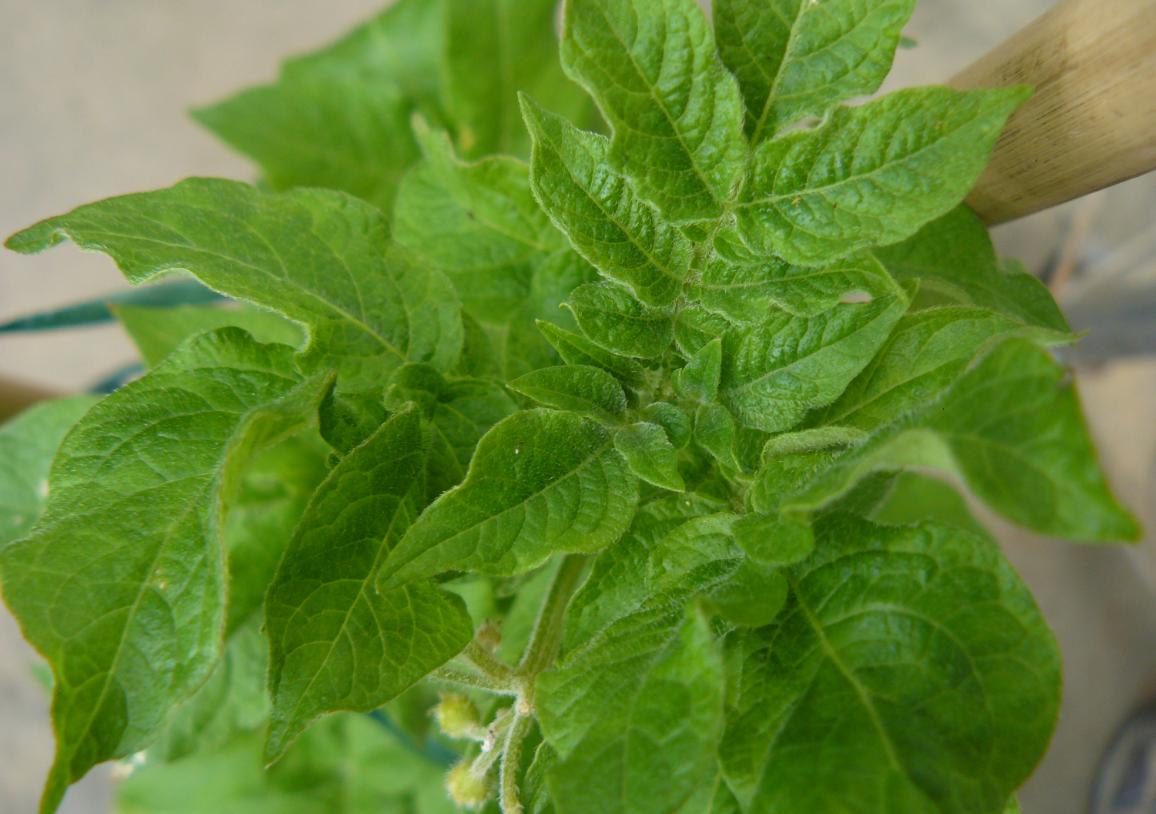
Symptoms include chlorotic mosaics in the haulm with possible pallor, leaf deformation, reduced leaflet size and overall reduction in vigour. Susceptible varieties could also produce smaller tubers with necrotic or dead rings on the skin.

Mixed infections are when a plant is infected by different virus species and this generates more severe symptoms (i.e. severe mosaic, stunting).

There are different strains and variants of PVY (e.g., PVYO, PVYC, PVYN, PVYNTN). These reflect differences that can be detected primarily according to their biology (e.g., the symptoms they cause), antibody-based detection methods like ELISA and using molecular techniques. More than one method is often needed to identify the viruses. It is generally accepted that isolates of the PVYN strain group cause milder mosaic symptoms on most potato cultivars than isolates of the PVYO strain group.

The strategy of control measures mainly relies upon the management of vectors and the use of pathogen-free seed potatoes. The elimination of sources of virus inoculum, such as volunteer potatoes and weeds such as nightshade and cape gooseberry, is very important (e.g., every 300-400 infected tubers per ha equates to an equivalent additional 1% increase in seed infection).  Planting a non-host border crop around the potato crop about four weeks before planting, for example, wheat, oats, sorghum. This acts as a cleansing barrier for aphids. If PVY is entering the crop from an outside source then infective aphids may feed on the barrier crop, lose the virus and will no longer be infective when they land on the potato crop. Quick acting insecticides (pyrethroids, flonicamid, acetamiprid) would be preferred to slow acquisition of PVY from any infected plants and hinder flights to neighbouring non-infected plants.  Some aphids (M. persicae, Sitobion avenae [Grain aphid]) that spread PVY are known to be resistant to pyrethroids. Mineral oils are used in mainland Europe/Canada to reduce virus transmission. They may be adjuvants to be applied with plant protection products (PPP) or in some cases paraffin oils are registered as PPP themselves.  The mechanism of action of oils is not fully understood but it’s possible that oil on the aphid mouthparts reduces the acquisition and/or retention of PVY by the aphids.  The number or frequency of mineral oil applications seem to be more important than the rate of each application. Overseas the focus is on the frequency of applications on young plants to protect leaves that are constantly developing.  Field trials carried out in GB indicated that mineral oils can reduce virus transmission (up to a 2-fold (50%) reduction in the best-case scenario), but under high infectivity pressure (vector and virus source) may not always provide the necessary levels of prevention of virus infection for certified seed crops.

Photo: https://www.agric.wa.gov.au/

Source: https://ahdb.org.uk/, https://www.agric.wa.gov.au/

Tags: aphid-borne diseasedisease controlpotatoes
Share53Share38
Maria YEROKHOVA

Maria YEROKHOVA

  • Trending
  • Comments
  • Latest
Potatoes.news 2025: The Nervous System of the Global Potato Industry

Potatoes.news 2025: The Nervous System of the Global Potato Industry

01.01.2026
Subway launches Spudway: a new era of hot baked potatoes

Subway launches Spudway: a new era of hot baked potatoes

26.02.2025
Processing and Packaging Equipment supplier tna expands manufacturing in the Netherlands

Processing and Packaging Equipment supplier tna expands manufacturing in the Netherlands

22.04.2021
Aviko Belgium orders peace of mind

Aviko Belgium orders peace of mind

0
Potato crops at risk of disease during slower desiccation

Potato crops at risk of disease during slower desiccation

0
GRIMME Technica will not take place

GRIMME Technica will not take place

0
Timiryazev Academy Scientists Present Breakthroughs in Potato Processing – from Diabetic Nutrition to Zero-Waste Technologies

Timiryazev Academy Scientists Present Breakthroughs in Potato Processing – from Diabetic Nutrition to Zero-Waste Technologies

14.07.2026
Nizhny Novgorod Region Exports Over 27,000 Tonnes of Potatoes in First Half of 2026

Nizhny Novgorod Region Exports Over 27,000 Tonnes of Potatoes in First Half of 2026

14.07.2026
The Obesity Gene That Boosts Crops: How Inserting Human DNA into Potatoes Increased Yields by 50%

The Obesity Gene That Boosts Crops: How Inserting Human DNA into Potatoes Increased Yields by 50%

13.07.2026
BE PROFY IN POTATOES NEWS

Copyright © 2010-2026 POTATOES NEWS.

Navigate Site

  • Home
  • IPT
  • News
  • AGROTECHNOLOGY
  • IRRIGATION
  • About Us

Follow Us

Welcome Back!

Login to your account below

Forgotten Password?

Retrieve your password

Please enter your username or email address to reset your password.

Log In
No Result
View All Result
  • Home
  • IPT
    • POTATO 2.0
  • News
  • AGROTECHNOLOGY
  • IRRIGATION
  • About Us
    • Contact us

Copyright © 2010-2026 POTATOES NEWS.