From Nord-Pas-de-Calais to Indre: Guillaume de Carcouët’s Dual Strategy for Potato Success
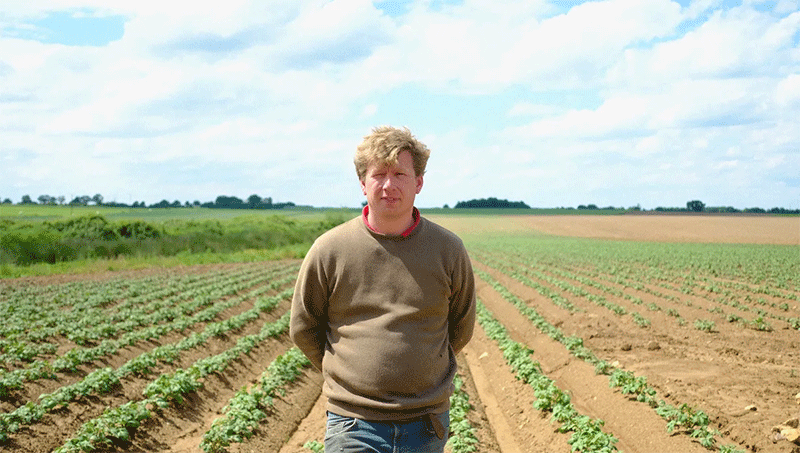
In Concrémier, western Indre (France), farmer Guillaume de Carcouët has been cultivating potatoes for four years, bringing expertise from his native Nord-Pas-de-Calais—France’s traditional potato heartland—to a region where the crop is still relatively rare. Of the 400 tons produced last year on his seven hectares of fully mechanized farmland, 40 tons were sold directly from the farm, bypassing supermarkets to offer more competitive prices by eliminating intermediaries. The remaining output goes to an industrial processor for fresh french fries, creating a dual economic model that de Carcouët considers essential: industrial sales fund expensive machinery (harvesters, cold storage), which is then leveraged for direct sales, making the entire operation viable and efficient from planting to sorting and storage. This low-competition niche in Indre helped him weather last year’s domestic market glut, when oversupply and stagnant industrial demand forced many colleagues to let their crops rot as prices collapsed.
Despite his success, de Carcouët acknowledges significant challenges, particularly the region’s unpredictable climate, with alternating floods and droughts demanding careful irrigation and disease management. Yet he remains convinced potatoes are a winning bet—easy to mechanize, technically rewarding, and beloved by consumers who never tire of them. Beyond economics, his local production and sales strategy serves as a shield against volatile global markets increasingly dominated by China and India, where competition rules differ. “Not everyone plays by the same rules on world markets,” he notes, highlighting a broader debate about the future of French agriculture. With the Centre-Val de Loire region ranking fourth in national production at nearly 800,000 tons last year (up 20%), de Carcouët’s model offers a compelling case for sustainable, locally anchored farming in an uncertain global landscape.
Global Potato Brief
Top five stories, prices, disease alerts and events. Weekday mornings, no advertising.
Linked in this material
Related stories

Poland: Starch Maker PEPEES Posts Wider Parent-Company Loss in H1 2026 on Low Potato Starch Prices

Netherlands: Flikweert Vision Launches New-Generation QualityGrader With AI Cameras and Up to 30 t/h