Potato “Genealogy” and Aeroponic Innovation Drive Seed Breakthroughs in Gansu’s Dingxi
In the Wupeng greenhouse of the Dingxi Potato Research Institute in Gansu Province, a remarkable soilless cultivation technique called “fog cultivation” (aeroponics) is transforming potato seed production. Here, green seedlings develop roots in the air, nourished by regularly sprayed nutrient solution—with no soil in sight. Institute Director Li Jinfu explains the process using a vivid family metaphor: the original microtubers are called “grandfather,” the sprouted elite seeds are “father,” and the commercial potatoes sold on the market are “grandchildren.” This innovative method not only effectively avoids soil-borne diseases but also dramatically increases tuber yield per plant—from just a few under traditional planting to 40–50 per plant. When selecting seeds, Li emphasizes that “father” seeds should be chosen for disease resistance and broad adaptability, while “mother” seeds should prioritize high yield and quality to ensure market recognition. Behind this accessible analogy lies a strategic industrial vision for the Anding District, where seed potatoes are treated as agricultural “chips.” By 2025, the coverage rate of virus-free seed potatoes in the region had exceeded 90%, with the contribution of quality seeds to overall yields steadily increasing year after year.
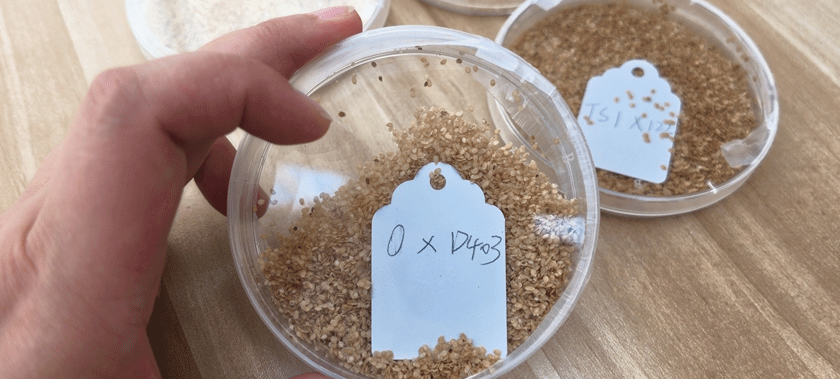
At the institute’s breeding greenhouse, Lin Hongxi, head of breeding research and development, meticulously records data on seedling racks, intimately familiar with each plant’s growth. Every year, his team creates 300 to 400 hybrid combinations, collecting nearly 300,000 true seeds—of which only 130,000 to 150,000 are selected for field transplantation. The real selection begins in the field: each year, just 3–5% of the best plants are retained for the next generation. This painstaking process is repeated for six to seven years until one or two candidate varieties with the most outstanding traits emerge, at which point variety registration and promotion can proceed. Currently, four potato varieties have completed registration, with four more in the pipeline expected to reach the market next year. The new “Laike” series (Laike No. 1, No. 2, No. 3) is specifically adapted for northern regions with limited rainfall, featuring excellent environmental adaptability, vigorous growth, the ability to maintain high yields even under insufficient irrigation, and strong disease resistance. Looking ahead, Lin Hongxi notes that future breeding efforts will target specialized markets—such as high-starch varieties and colored potatoes—while continuing to optimize cultivation techniques and production methods.