Niger: Potato Output Passes 435,000 Tonnes, but 8,000–9,000 t of Imported Seed a Year Drive a Local RAC Seed Push
Niger's potato production has grown from under 50,000 tons in the early 2000s to over 435,000 tons in 2024, but the country still depends on costly and unreliable seed imports. The national agricultural research institute INRAN is using tissue culture and rooted apical cuttings (RAC) to build a loca
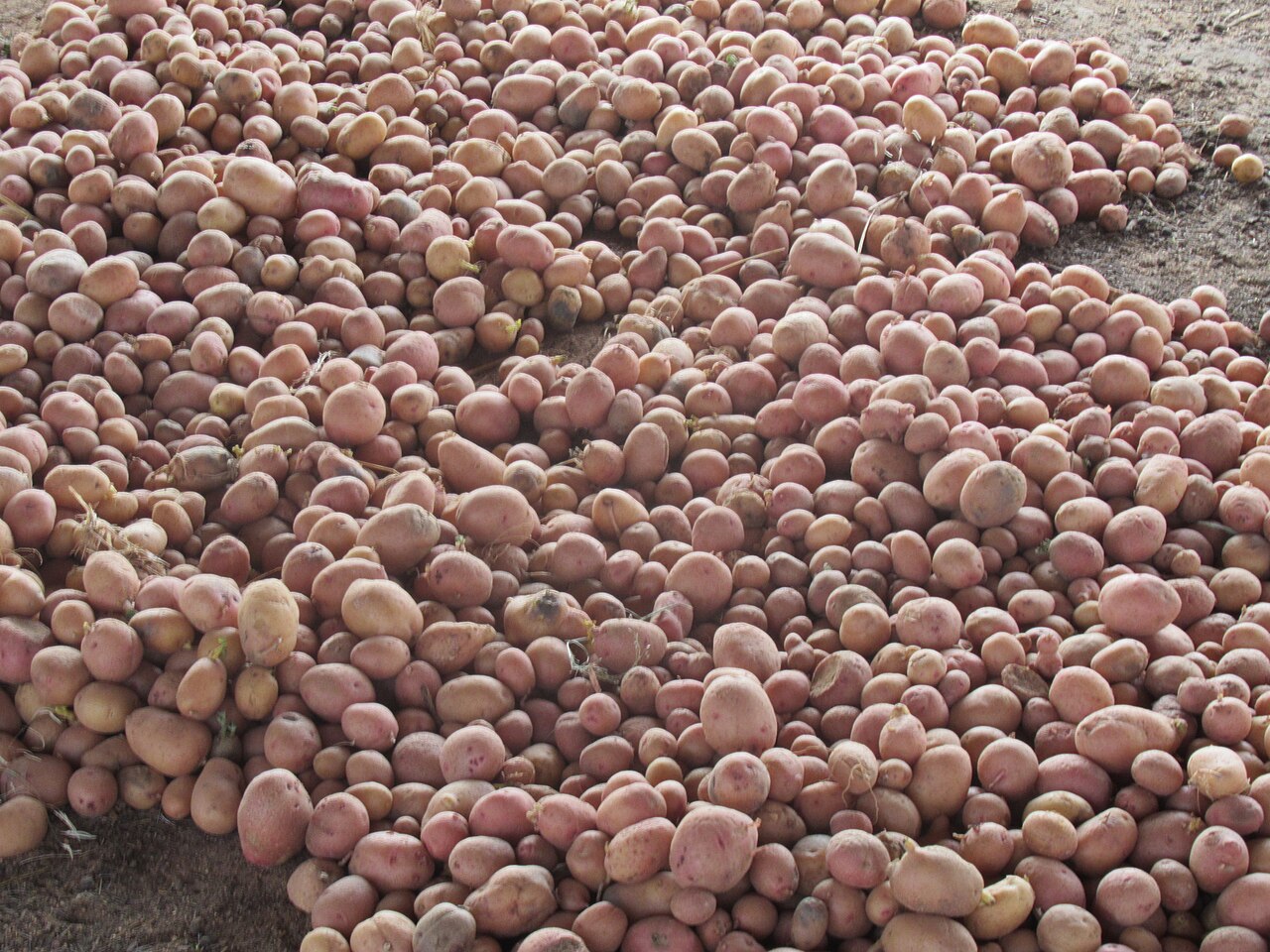
Niger’s potato production has grown from under 50,000 tons in the early 2000s to over 435,000 tons in 2024, but the country still depends on costly and unreliable seed imports. The national agricultural research institute INRAN is using tissue culture and rooted apical cuttings (RAC) to build a locally controlled seed system, and has produced its first local mini-tubers.
Why it matters
According to the poster, Niger ranks among the world’s least developed countries, with severe food insecurity and the highest global fertility rate. The potato sector remains constrained by seed dependency: Niger imports 8,000–9,000 tons of seed potato annually, costing 7 billion FCFA, with supplies often arriving late or falling critically short.
What was done
To break this cycle, INRAN established a biotechnology laboratory and imported 20 accessions from the International Potato Center. The aim is a sustainable, locally controlled seed system built on biotechnology and participatory variety selection, which would reduce dependency on imports while improving seed quality, availability and affordability for smallholder farmers.
Weekdays. Unsubscribe in one click.
Rooted apical cuttings offer a rapid, low-cost seed multiplication pathway suited to Niger’s once-a-year irrigated potato system. Apical shoots are harvested from disease-free mother plants produced through tissue culture at INRAN’s laboratory and rooted under controlled humidity and temperature. Each cutting develops into a transplant capable of producing mini-tubers. The cool highland climate of Mount Bagzan (15°C average) enables year-round multiplication. The poster places the work in the context of the FAO–INRAN project TCP/NER/3901.
Results
- RAC technology has helped produce the first local mini-tubers at INRAN.
- Potato production in Niger grew from under 50,000 tons in the early 2000s to over 435,000 tons in 2024.
- Imported seed cost 1,200 FCFA/kg in 2018 and 1,400 FCFA/kg in 2023 (a year of critical shortage), according to the poster’s chart.
- The target price for local seed (INRAN G3/G4) is 400 FCFA/kg, below the project’s target ceiling of 600 FCFA/kg.
- According to the authors, RAC bypasses the costly and unreliable import chain, reduces the risk of disease transmission associated with imported tubers and gives smallholder farmers timely access to certified, genetically pure planting material.
The authors’ conclusion
The authors write that Niger’s potato sector stands at a turning point. Despite remarkable production growth, chronic dependency on costly, unreliable seed imports continues to suppress yields and perpetuate food insecurity. INRAN’s investment in biotechnology and tissue culture, together with Mount Bagzan’s year-round multiplication capacity, represents a decisive shift toward seed sovereignty. With innovations like RAC, locally controlled seed systems can unlock potato’s full potential and transform an import-dependent crop into a cornerstone of Niger’s food security, rural income and agricultural resilience.
Authors: Dr Ali Koura Abdoulaye (Institut National de la Recherche Agronomique du Niger, INRAN) and Monica L. Parker (Independent, Vancouver BC, Canada). Based only on a poster presented at the World Potato Congress 2026 in Kenya.
Related on Potatoes.News: Kenya: Rooted Apical Cuttings Produce Up to 45 Tubers per Cutting in Farmer-Managed Demos · Rwanda: How Aeroponics Grew From One Pilot Unit Into a National Seed Potato Technology · Yemen’s Seed Potato Push: Imported Dutch Seed Performs Well, Rooted Cuttings Are the Next Test