Yemen’s Seed Potato Push: Imported Dutch Seed Performs Well, Rooted Cuttings Are the Next Test
Two research reports from Yemen’s Dhamar valley show high yields from the first multiplication of imported Dutch seed, rising virus and disease pressure in the second, and a first season of trials with rooted cuttings as a locally produced alternative.
Yemen’s potato growers depend on seed that is difficult to secure, and research from the Dhamar valley describes two approaches to maintaining supply. Observations from five farms in 2023 found tuber yields of 47.8–59.4 tonnes per hectare in crops grown from first-generation (G1) Dutch seed, while second-generation (G2) crops showed greater incidence of visible virus and disease symptoms.
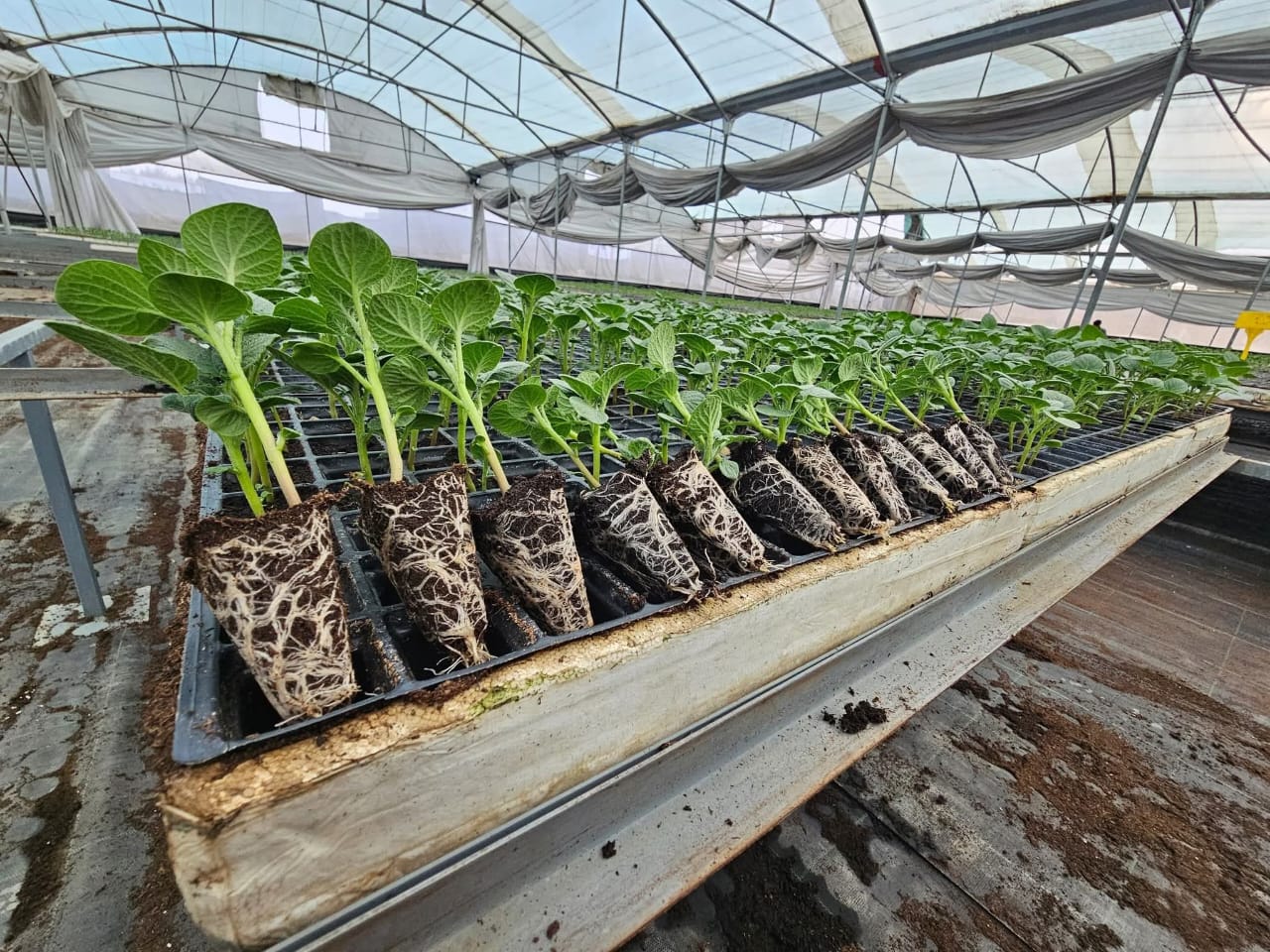
A separate set of preliminary trials evaluated 16 potato cultivars and clones produced from apical rooted cuttings (ARC), a potential route to multiplying planting material within Yemen.
Weekdays. Unsubscribe in one click.


Imported seed still anchors production
The researchers report that Yemen’s potato production declined from more than 303,000 tonnes in 2010 to 228,000 tonnes in 2021. They describe agricultural input shortages and higher costs against the background of prolonged conflict.
The Dhamar valley, at roughly 2,400 metres above sea level, is an important potato-growing area.
Imported seed is constrained, but imports have not ceased entirely. The ARC research report describes a foreign-exchange shortage that disrupted seed imports.
A World Potato Congress article published on 26 September 2023 also records that the privately owned Dhamar First Center for Seed Potatoes (DFC) was permitted to import 700 tonnes of seed from several Dutch companies in 2021.
According to that report, the centre had 2,200 tonnes of storage capacity, including refrigerated rooms, and arranged seed multiplication, sorting and storage for local growers.
What five farms recorded in 2023
Three participating farms grew G1 crops of Diamant, Fabula and Panamera. The crops were planted in mid-February and harvested on 16–18 June.
The survey recorded no black leg or Rhizoctonia in these three fields, and visible virus symptoms were absent or below 0.01% in the sampling data.
| Generation | Variety | Observed yield (t/ha) |
|---|---|---|
| G1 | Diamant | 47.8 |
| G1 | Fabula | 54.8 |
| G1 | Panamera | 59.4 |
| G2 | Panamera, field 1 | 48.5 |
| G2 | Panamera, field 2 | 43.5 |
G2 observations concerned only Panamera, on two different farms whose crops were planted in mid-January and harvested in mid-May.
The shares of plants showing potato leafroll virus (PLRV) symptoms were 2.9% and 4.0%; mosaic symptoms, 0.9% and 2.4%; black leg, 1.1% and 2.3%; and Rhizoctonia, 0.8% and 1.0%. The two yields averaged 46.0 t/ha.
The authors interpret the findings as evidence of increasing virus and pathogen pressure as seed is multiplied.
However, the G1 and G2 yields cannot be compared as a controlled generation effect, because planting and harvesting dates and farmer fields differed.
They also reported no bacterial wilt in the observed fields; the findings do not establish that the disease is absent from the wider area.
Panamera remained attractive to participating growers for subsequent seed multiplication.
As a crop-management measure, the poster’s authors suggest removing visibly infected plants before dehaulming. This is their reported recommendation, not a universal prescription: growers should agree suitable disease-management and crop-use measures with a qualified local agronomist.
Rooted cuttings as a locally produced alternative
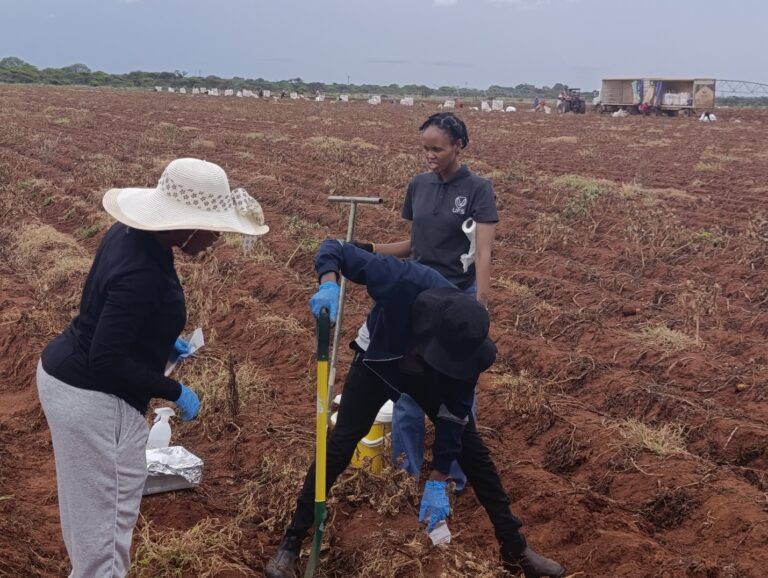
A separate report, Evaluation of Apical Rooted Cuttings in Field Trials in Yemen, describes three exploratory field trials during the 2023 season.
Researchers from Dhamar University, the General Authority for Agricultural Research and Extension, Dhamar First Center and their collaborators examined 16 cultivars and clones supplied by the International Potato Center (CIP).
Plants were produced by rooting apical cuttings derived from tissue-culture material and transplanted to sites at approximately 2,364 metres elevation.
The report’s variety-characteristics table lists 14 of the 16 entries as resistant or extremely resistant to late blight, while two were assessed as moderately resistant.
These are the resistance classifications reported for the material, not resistance outcomes established by the Yemeni field trials.
In the report’s first field site, four introduced entries produced more than 1 kg of tubers per plant:
- Kenya Mpya — 1,660 g
- Chulu — 1,184 g
- Sherekea — 1,026 g
- Wanjiku — 1,021 g
The local reference variety Diamant produced an average of 290 g per plant across the reported trial observations.
The numbers are promising, but all three trials were unreplicated, so the observed values are indicative and should not be used to rank varieties rigorously or predict commercial yields.
Consumer preferences will also shape the next phase.
The authors report a local preference for white-skinned potatoes with yellow flesh, while some of the higher-yielding introductions have red or pink skins.
White- or cream-skinned entries, including Chulu and several CIP selections, may offer a closer match, subject to further consumer and agronomic testing.
The researchers said cooking and eating evaluations were under way at the time of their report.
What this means for seed supply
Seed quality: Dutch-origin planting material delivered strong yields in the farms observed, but the G2 observations underscore the need for disease surveillance throughout multiplication.
Local multiplication: Rooted cuttings could diversify the source of planting material, provided propagation quality, field performance, costs and seed health are validated under practical conditions.
Variety choice: Resistance classifications, tuber yield, market preferences and rigorous replicated testing all matter before any cultivar is recommended for wider adoption.
The two studies highlight complementary routes for strengthening Yemen’s seed potato supply. Imported seed multiplication remains valuable where quality can be maintained, while locally propagated rooted cuttings offer a promising research direction. Wider adoption will depend on repeated trials, consistent seed health and varieties suited to farmers and consumers.
Sources
- Mohammed Ali Muthanna Saleh, Abd-Allah Mohammed Dhaif-Allah and Peter VanderZaag. Challenges and opportunities for seed availability and quality in Yemen. World Potato Congress, 26 September 2023. https://potatocongress.org/challenges-and-opportunities-for-seed-availability-and-quality-in-yemen/
- Md Ali Muthanna Saleh, Abd-Allah Md Dhaif-Allah, Ahmed Ayedh Algabri, Md Hezam Al-Raiee, Monica Parker and Peter VanderZaag. Evaluation of Apical Rooted Cuttings in Field Trials in Yemen, Season 1 (2023). Research report supplied to the editorial team.