Indonesia: Extra Light Lifts Aeroponic Seed Potato Yield by 55% in Atlantic Malang, but Not Every Cultivar Responds the Same
BRIN researchers found that extending the day to 16 hours with blue LEDs raised final tuber weight by 55% in Atlantic Malang without stem descent, but sharply cut Chipita's yield when combined with late stem descent.
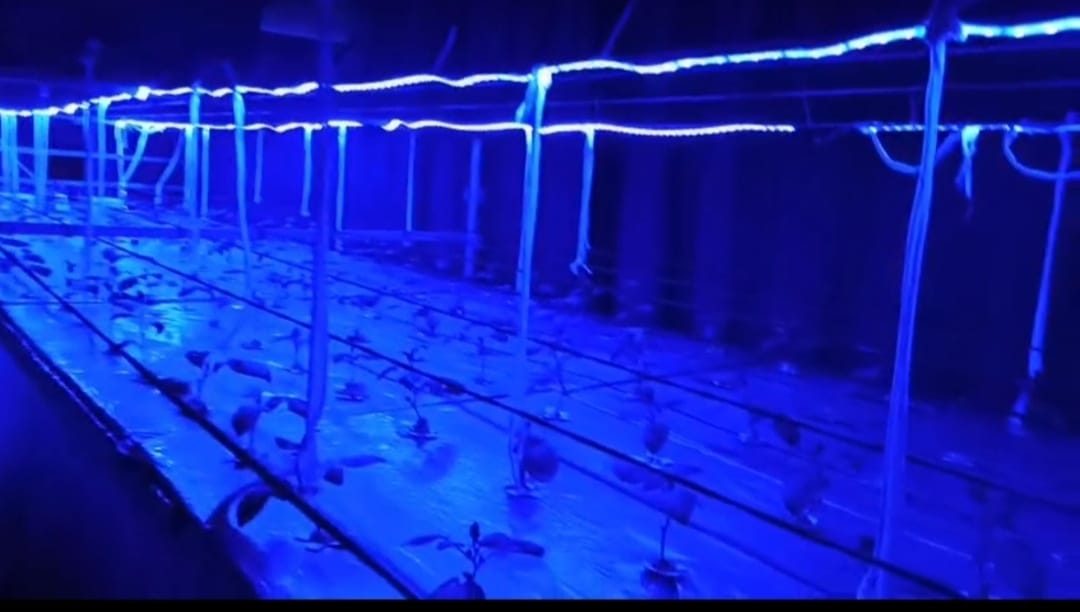
Extending the day from approximately 12 to 16 hours using supplemental blue LED lighting did not produce the same final-yield response in every aeroponically grown potato cultivar. Researchers from Indonesia’s National Research and Innovation Agency (BRIN) found that the response depended on the cultivar and the timing of stem descent. In cv. Atlantic Malang without stem descent, 16 hours increased final tuber weight per plant by 55% compared with 12 hours. In cv. Chipita, however, combining 16 hours with stem descent at four weeks after planting sharply reduced final tuber production.
Why it matters
In tropical highlands, the natural day is close to 12 hours throughout the year. Extending daylength with supplemental lighting can stimulate early growth, but larger canopies and stolon systems do not necessarily result in greater final tuber yield. For aeroponic seed potato producers, lighting decisions therefore need to take account of the cultivar and how the plant canopy is managed.
What was done
The researchers used a split-plot randomised complete block design with five blocks. Daylength was the main-plot factor: approximately 12 hours of natural daylight or an intended 16-hour day. Subplots combined two cultivars, Atlantic Malang and Chipita, with three stem-descent treatments: no stem descent, stem descent at two weeks after planting (WAP), or stem descent at four WAP.
Weekdays. Unsubscribe in one click.
For the 16-hour treatment, commercial blue LED strips mounted approximately 50 cm above the aeroponic bed supplied four additional hours of evening light (18:00–22:00) from planting until six WAP. The controller could also activate the lamps during cloudy conditions when illuminance fell below 1,000 lux. The nominal photosynthetic photon flux density at bed level was estimated at approximately 360 µmol/m²/s.
Results
- At six WAP, the 16-hour treatment increased early canopy, root, stolon and tuber growth on average across cultivar and stem-descent combinations. These early gains did not consistently translate into greater final yields.
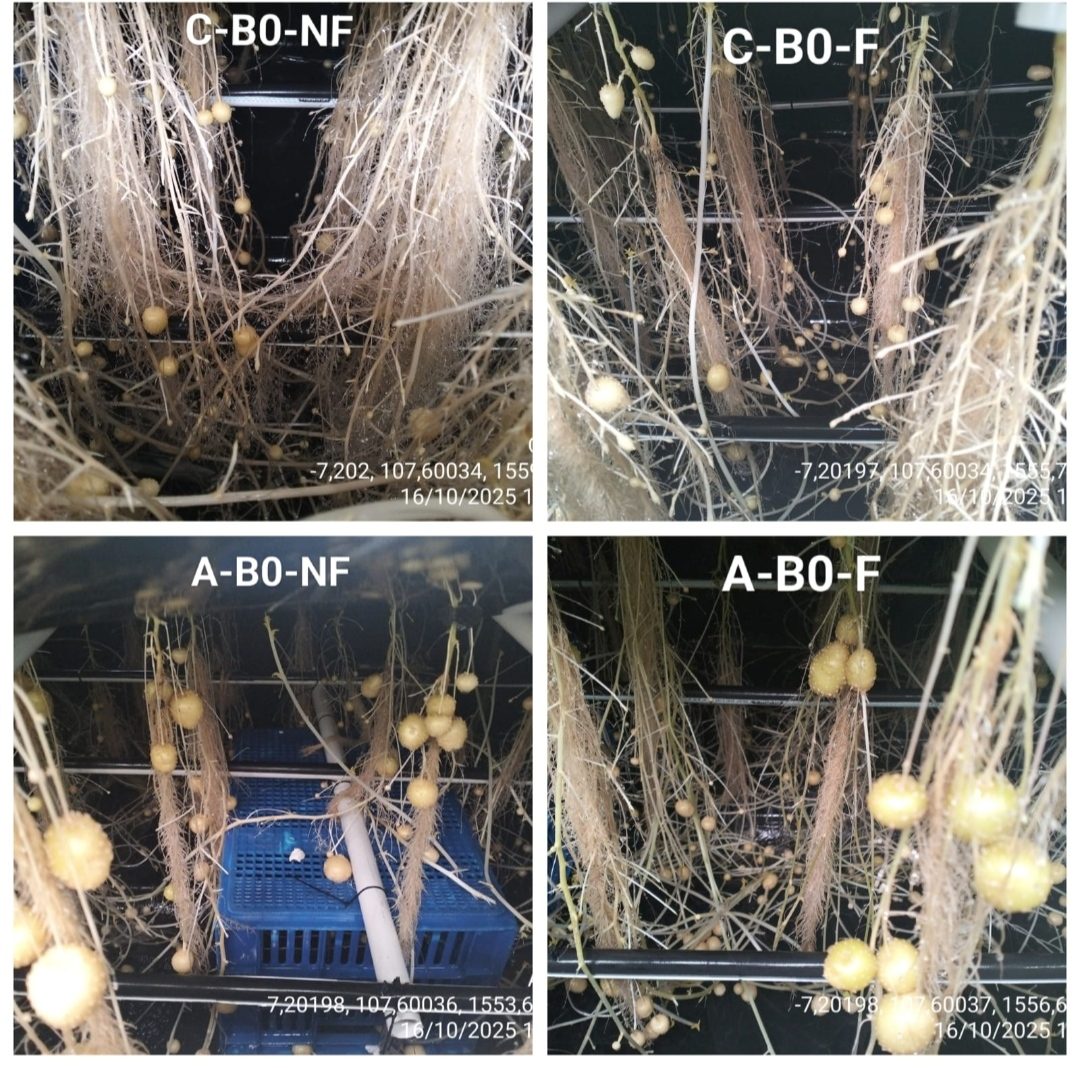
- In cv. Atlantic Malang without stem descent, 16 hours increased final tuber weight per plant by 55% (from 168.84 to 261.16 g) compared with the corresponding 12-hour treatment.
- In cv. Chipita with stem descent at four WAP, 16 hours reduced final tuber number by 71% and tuber weight per plant by 59%, compared with the same stem-management treatment under 12 hours.
- Averaged across daylength treatments, cv. Chipita without stem descent or with descent at two WAP produced the greatest plot-level tuber yields. Early stem descent was tolerated but did not demonstrate a yield improvement over no descent.
The authors’ conclusion
Supplemental lighting in tropical aeroponic seed potato production should be matched to cultivar characteristics and the timing of stem descent rather than recommended as a universal practice. Stronger early vegetative growth does not necessarily lead to a higher final tuber yield.
Poster authors: Meksy Dianawati, Kiki Kusyaeri Hamdani, Asep Kurnia (Research Center for Horticulture, National Research and Innovation Agency (BRIN), Indonesia); Elisabeth Handini (Research Center for Environmental Botany, BRIN, Indonesia). Based on a poster presented at the World Potato Congress 2026 in Kenya; text reviewed by the authors.
Related on Potatoes.News: Rwanda: How Aeroponics Grew From One Pilot Unit Into a National Seed Potato Technology · Kenya: Rooted Apical Cuttings Produce Up to 45 Tubers per Cutting in Farmer-Managed Demos · Yemen’s Seed Potato Push: Imported Dutch Seed Performs Well, Rooted Cuttings Are the Next Test