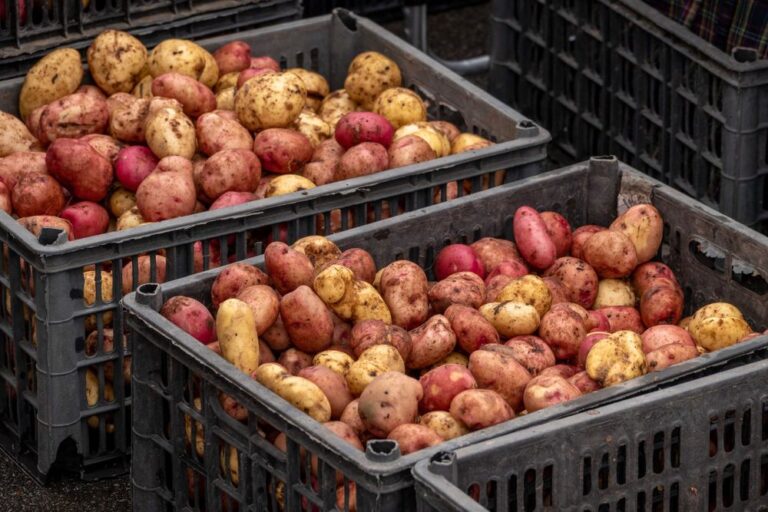
East Africa: Only About 4% of Farmers Use Quality Seed Potato, NPCK Review Finds
A review by the National Potato Council of Kenya (NPCK) of seed potato rules across the East African Community (EAC) finds that only about 4% of farmers in the region use quality seed potato, while nearly 95% rely on farm-saved seed. The authors call for harmonised regional standards and mutual reco
A review by the National Potato Council of Kenya (NPCK) of seed potato rules across the East African Community (EAC) finds that only about 4% of farmers in the region use quality seed potato, while nearly 95% rely on farm-saved seed. The authors call for harmonised regional standards and mutual recognition of certification systems to ease cross-border seed trade.
Why it matters
The poster describes potato as Kenya’s second most important food and cash crop and one of the top 10 priority value chains across EAC Partner States. Over the last 20 years, potato production in the EAC rose from 1.6 million to 3.4 million metric tonnes (FAO, 2018). Yet access to and movement of quality seed remain constrained by fragmented regulatory systems, and low use of quality seed contributes to low productivity, disease spread and limited commercialisation.
What was done
- A desk review examined regional and national seed regulations and standards governing seed potato trade within the EAC.
- It covered seed certification, phytosanitary requirements and regional market integration.
- Frameworks were benchmarked against the EAC Regional Seed Potato Strategy and Action Plan (2022–2032).
Results
- About 4% of regional farmers use quality seed potato; nearly 95% rely on farm-saved seed.
- Certified seed could raise smallholder yields from about 8 t/ha (8–10 t/ha with current seed access) to 16–20 t/ha.
- Regulatory inconsistencies exist in seed certification procedures and in phytosanitary compliance for cross-border seed movement.
- Implementation of the EAC Regional Seed Potato Strategy and Action Plan remains uneven across Partner States.
- These challenges constrain regional seed availability, public variety listing in the regional catalogue, private-sector investment and regional seed market integration.
- Charts on the poster show seed demand far exceeding seed supply in Tanzania (2016–2019) and in the EAC (2016–2020).
The authors’ conclusion
The authors recommend harmonising regional seed potato standards through mutual recognition of certification systems, strengthening coordination among EAC Partner States and accelerating implementation of the EAC Regional Seed Potato Strategy and Action Plan (2022–2032). Harmonised standards and stronger implementation can improve access to quality seed and facilitate cross-border trade, supporting productivity and regional market integration.
Weekdays. Unsubscribe in one click.
Authors: Jack Odhiambo, Mary Mwende, Henry Chemjor — National Potato Council of Kenya (NPCK). Partner logos on the poster: GIZ, AGRA. Based only on a poster presented at the World Potato Congress 2026 in Kenya.
Related on Potatoes.News: Kenya: Rooted Apical Cuttings Produce Up to 45 Tubers per Cutting in Farmer-Managed Demos · Rwanda: How Aeroponics Grew From One Pilot Unit Into a National Seed Potato Technology · Kenya: Shangi Variety and Certified Seed Push Lift Smallholder Yields