Vietnam: Red River Delta Potato Yields Double to Over 20 t/ha as the Crop Becomes a Cash Crop for Processors
In Vietnam's Red River Delta, the potato has changed from a staple food into a cash crop grown under contract for chip makers. A poster by the Field Crops Research Institute (FCRI) reports that yields have more than doubled, while most seed still comes from farmers' own fields.
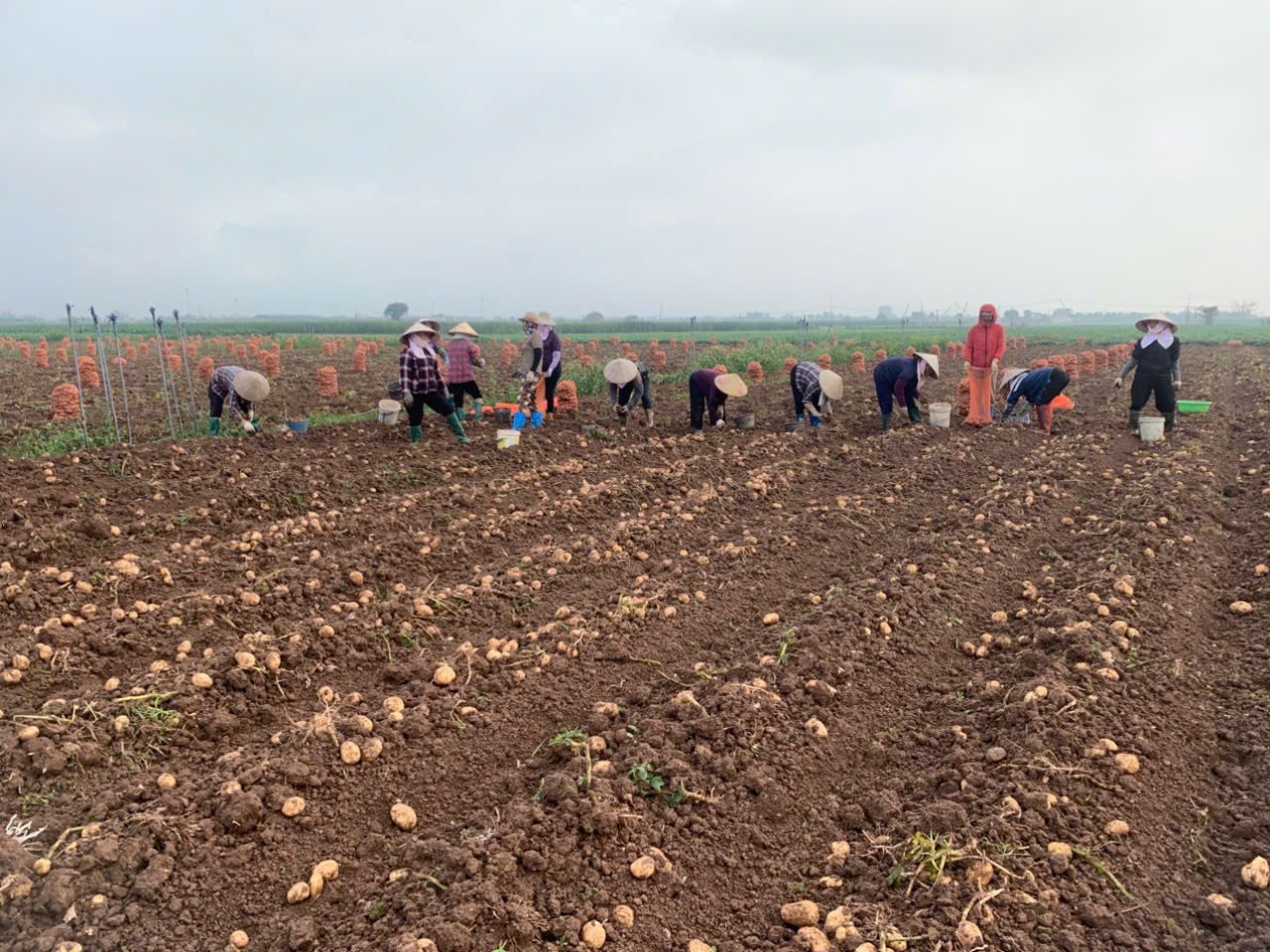
In Vietnam’s Red River Delta, the potato has changed from a staple food into a cash crop grown under contract for chip makers. A poster by the Field Crops Research Institute (FCRI) reports that yields have more than doubled, while most seed still comes from farmers’ own fields.
Why it matters
The Red River Delta (RRD) is a subtropical monsoon region where potatoes are grown from November to March, at temperatures of 8–28°C. The poster outlines the constraints and opportunities for potato production in the region, from seed supply to research collaboration.
What was done
The poster traces how production has changed. Before 1990, potatoes were a staple food; harvested tubers were stored as seed under beds for nine months during the hot monsoon season, pests and diseases were poorly managed, and yields averaged 10 t/ha. With rising prosperity and a ready supply of table potatoes from neighbouring provinces of China, the potato became a cash crop for processing under contracts with PepsiCo Vietnam and Orion Foods Vina.
Weekdays. Unsubscribe in one click.
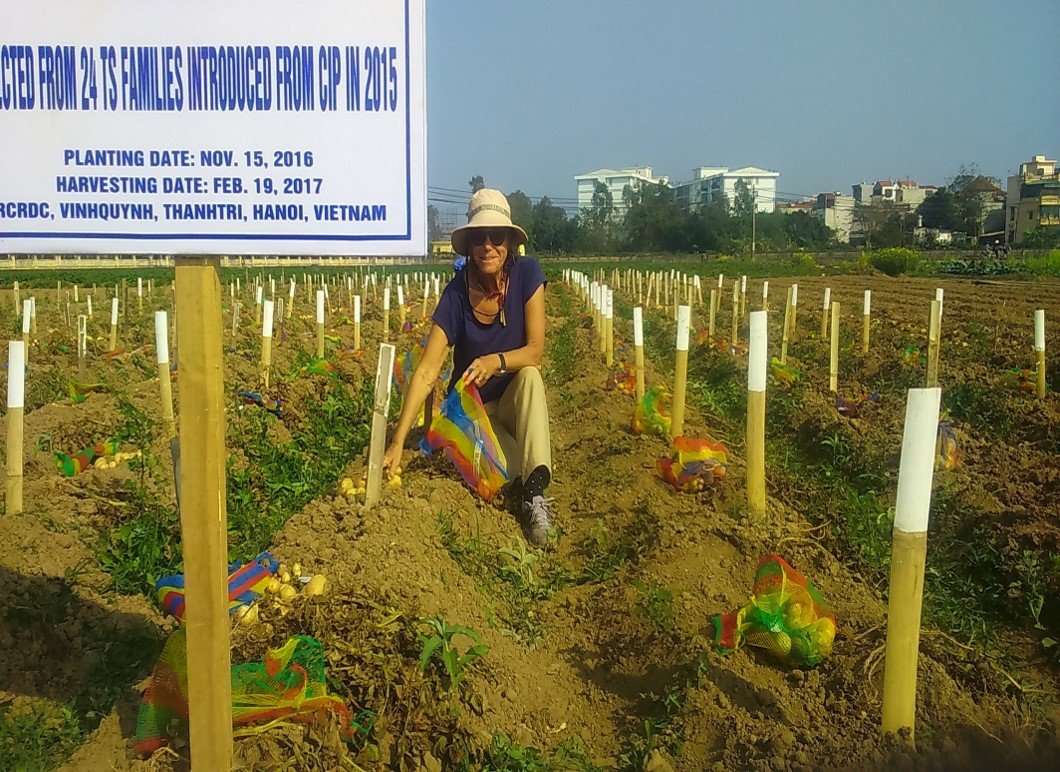
The poster also describes research collaboration: selection at FCRI and crossing at PVFC, with material from the International Potato Center (CIP), which sent its first scientist, Dr Peter Vander Zaag, to Vietnam in 1982.
Results
- Yields have more than doubled to over 20 t/ha with better seed, fertilizers and crop management.
- Traditionally, table potatoes are grown after paddy rice, using short-duration varieties of 90–100 days.
- Under PepsiCo contracts, the processing variety FL2215 (100–110 days) is grown on alluvial land along the river; in Bac Ninh in 2025 it yielded 20–23 t/ha.
- In 2016–2021, 1,200 breeding lines led to 11 promising hybrids.
- According to the poster’s chart of the seed market, about 52% of seed is multiplied in farmers’ fields, 30% is selected from table potatoes imported from China, 10% is multiplied from seed imported from the EU and 8% is provided by PepsiCo and Orion Foods Vina.
- CARAH and FCRI scientists visited farmers’ fields in Bac Ninh in April 2025, where potatoes were grown in winter 2024.
The authors’ conclusion
The poster has no separate conclusions section. Under the title “Constraints and opportunities”, it shows the shift from staple food to a contract-grown processing crop, with yields now above 20 t/ha thanks to better seed, fertilizers and crop management, alongside a seed market in which most seed is still multiplied in farmers’ fields or selected from table potatoes imported from China.
Authors: Pham Thi Thu Huong, Field Crops Research Institute (FCRI), Hai Phong, Vietnam. Based only on a poster presented at the World Potato Congress 2026 in Kenya. Photos: Nguyen Phan Anh, FCRI (FL2215 harvest in Bac Ninh, 2025, main image); Nguyen Thi Nhung (line selection), provided by the author.
Related on Potatoes.News: Bangladesh: Better Seed Helps Indigenous Farmers in the Chittagong Hill Tracts Grow Potatoes · Rwanda: How Aeroponics Grew From One Pilot Unit Into a National Seed Potato Technology · Kenya Hosts 13th World Potato Congress in Naivasha