
Trailed or Self-Propelled: What Decides the Choice of a Potato Harvester
Growers who expand their potato area face a costly choice between a trailed and a self-propelled harvester. Farm size, soil, labour and the cost of downtime matter more than the type of drive.
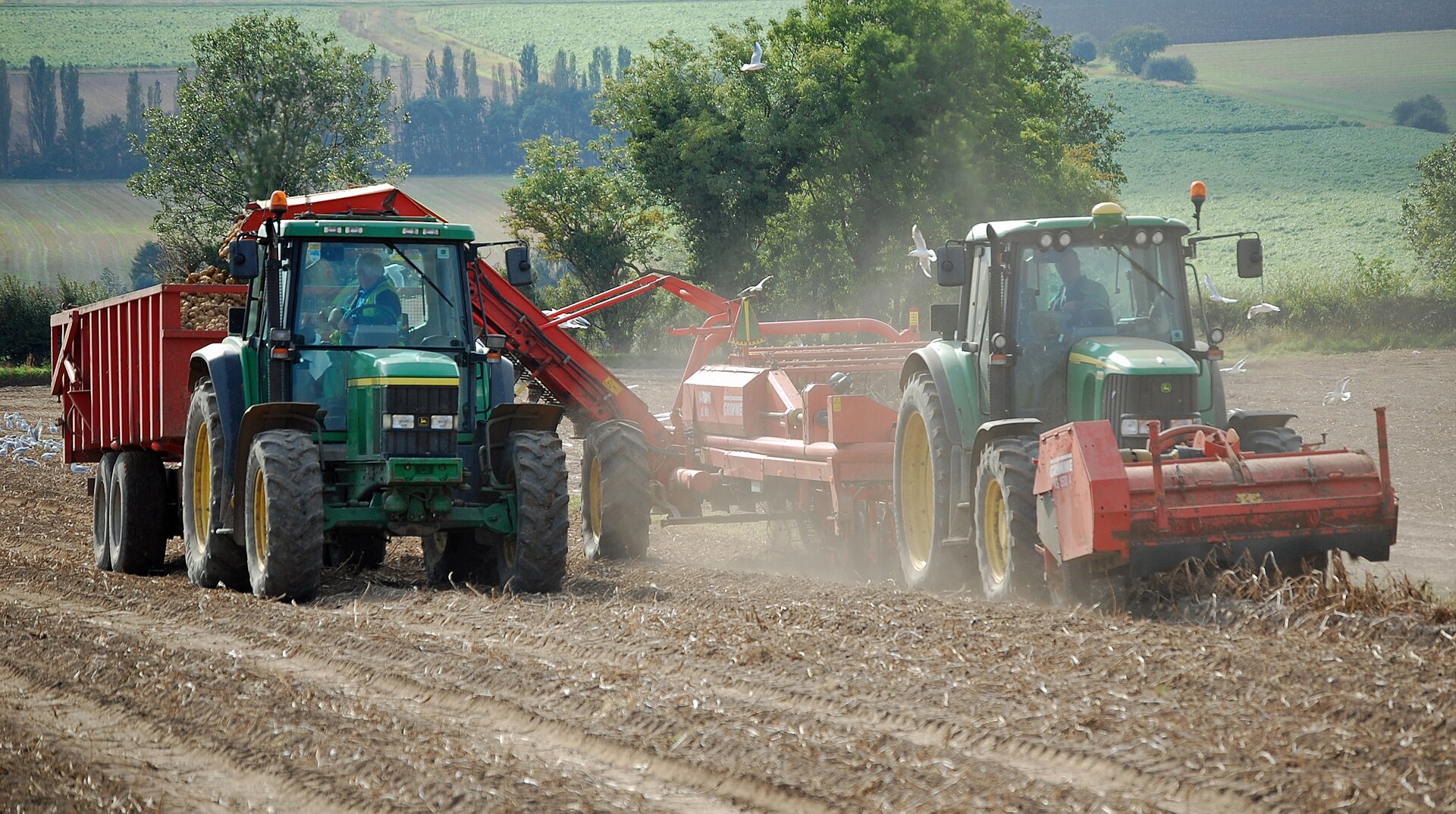
Farms that grow more potatoes sooner or later face the same question. Should they move from a trailed harvester to a self-propelled machine? The price difference is large. Practitioners also disagree on basic points, such as which type works better in rain.
A guide by the British magazine Farmers Weekly, published in 2018, gives useful benchmarks. According to the magazine, a tractor with a trailed harvester stays competitive on farms with up to about 120–160 hectares of potatoes. A self-propelled machine usually becomes competitive from about 200 hectares.
The capital cost differs widely. In the 2018 figures, a new trailed harvester cost about £140,000. A self-propelled harvester cost up to £500,000. A tractor and a trailed machine together came to about £345,000. These prices are now eight years old, but the ratio still shows the scale of the decision. One grower in the article expected his self-propelled machine to pay for itself in about five years. He planned to keep it for seven years.
Weekdays. Unsubscribe in one click.
Cleaning and handling
Self-propelled machines often clean the crop more thoroughly. According to Farmers Weekly, this can allow delivery straight from the field to the store and reduce handling damage. For farms with few workers at the picking table, this is an important argument.
Rain and heavy soil
Many growers believe that self-propelled harvesters cope better with rain. Practice is less clear. One operator quoted in the 2018 article said his trailed machine could keep travelling and harvesting when others had stopped. In the chat discussion, growers also compared the width of the intake and two intake designs: with rollers and open. The result depends on the specific machine, tyres and soil, not only on the type of drive.
Other factors
The magazine lists further points to check. They include the availability and training of operators, the size and spread of fields, access roads, soil compaction, and protection against depreciation through warranties or buy-back agreements. A trailed harvester also leaves the tractor free for other work outside the harvest season.
Our analysis of the choice between a new and a rebuilt harvester was published on 22 September.
Why it matters
A harvester is a decision for five to seven years, not a one-off purchase. A wrong estimate of the break-even area ties up capital. A poor match between the machine and the soil costs a share of the marketable crop. Growers should calculate the full cost of ownership: price, operator, repairs, spare parts and the cost of a lost harvest day.
The topic was raised by practitioners in the MAX messenger chat «КАРТОФЕЛЬ И Т.Д. (Potato etc.)», a community of more than 1,100 potato growers and industry specialists. Participants are not named. Join the discussion.
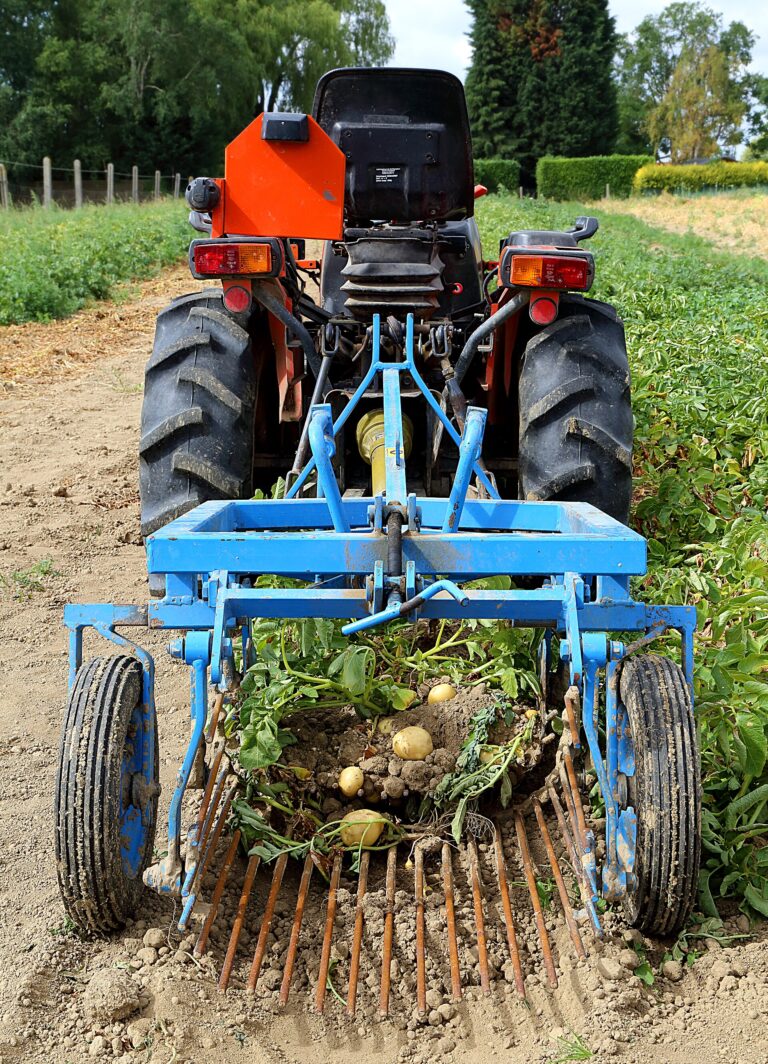
Photo: Potato lifting with a tractor and a trailed harvester near Bonby, North Lincolnshire, England, in 2011 (illustrative). David Wright / Wikimedia Commons, CC BY 2.0