Plant Into Ripe Soil or Harvest Clods: Russian Growers Debate the 7–10 Day Window
Key takeaways
- 7–10 days: typical window of physical soil ripeness
- 50–60% of field moisture capacity marks physical ripeness
- 13 of 16 trials showed yield loss on compacted soil
- 18 t/ha: average yield loss from compaction in the review
Why it matters
- For farmers
- Size planting capacity to the soil's 7–10 day ripe window, check ripeness before entering fields, and avoid wheel and implement compaction during planting and ridging
- For suppliers
- Machinery dealers can position additional planters and lower-compaction setups as a way for farms to fit planting into the short ripe-soil window
60-second summary
Russian potato growers in an industry chat on the MAX messenger debated why some fields come to the harvester almost free of clods while others send tonnes of soil into the store. The shared answer was to plant into physically ripe soil and avoid compaction during planting and ridging. Participants said the ripe window usually lasts 7–10 days and this year fell at the end of May and start of June in their area. Agronomy references place physical ripeness at around 50–60% of field moisture capacity, when soil crumbles without sticking. Some growers find August ploughing leaves soil looser, while ploughing wet clay produces clods that are hard to break in spring. The counter-argument was capacity: a 200 ha farm with one planter doing 10 ha a day cannot fit its planting into that window. A Cambridge University Farm review for AHDB found yield losses in 13 of 16 compaction trials, averaging 18 t/ha. Participants are not named.
Why do some fields go into the harvester almost free of soil and clods, while others send tonnes of earth into the store? A lively exchange this week in a Russian-language potato growers’ chat on the MAX messenger, «КАРТОФЕЛЬ И Т.Д. (Potato etc.)», centred on one answer: plant into physically ripe soil.
One grower reported that after changing the planting and ridging technology, almost no soil was coming off the field at harvest. Others argued the key was timing rather than machinery. In their view, no tillage implement can break a clod if it is already there, and clods only disappear when the soil reaches physical ripeness. Under normal weather, participants said, that window lasts 7–10 days. This year it came at the end of May and start of June in their area. Several growers stressed the rule of avoiding compaction during planting and ridging, with tight control at every stage.
Agronomy references define physical ripeness as the state, typically at 50–60% of field moisture capacity, when soil crumbles into small aggregates, does not stick to implements and needs minimal energy to work. Wetter soil smears; drier soil breaks into large clods.
Weekdays. Unsubscribe in one click.
Participants also discussed autumn ploughing. One noted that August ploughing works better on their soils: repeated wetting and drying leaves the soil looser and less prone to compaction by snowmelt. Growers on clay and loam said ploughing overly wet ground produces large clods that are hard to break in spring. Frost, they agreed, helps crumble the furrow.
The capacity problem
The counter-argument was blunt. A farm with 200 ha, one planter and 10 ha a day cannot fit its planting into a 7–10 day window, so part of the crop will inevitably go into less-than-ideal soil.
Research supports the stakes. A Cambridge University Farm review for AHDB found significant yield decreases in 13 of 16 experiments comparing compacted and loose soil. The losses averaged 18 t/ha and reached 25–38 t/ha in some trials. The review also notes that earlier planting raises the chance of working in compaction-prone conditions.
Why it matters
Clods cost money three times: yield lost to compaction, harvester capacity and tuber damage at lifting, and soil hauled into storage. The chat’s conclusion is practical. Planting capacity should be sized to the soil’s ripe window, not to the calendar.
The topic was raised by practitioners in the MAX messenger chat «КАРТОФЕЛЬ И Т.Д. (Potato etc.)», a community of more than 1,100 potato growers and industry specialists. Participants are not named. Join the discussion.
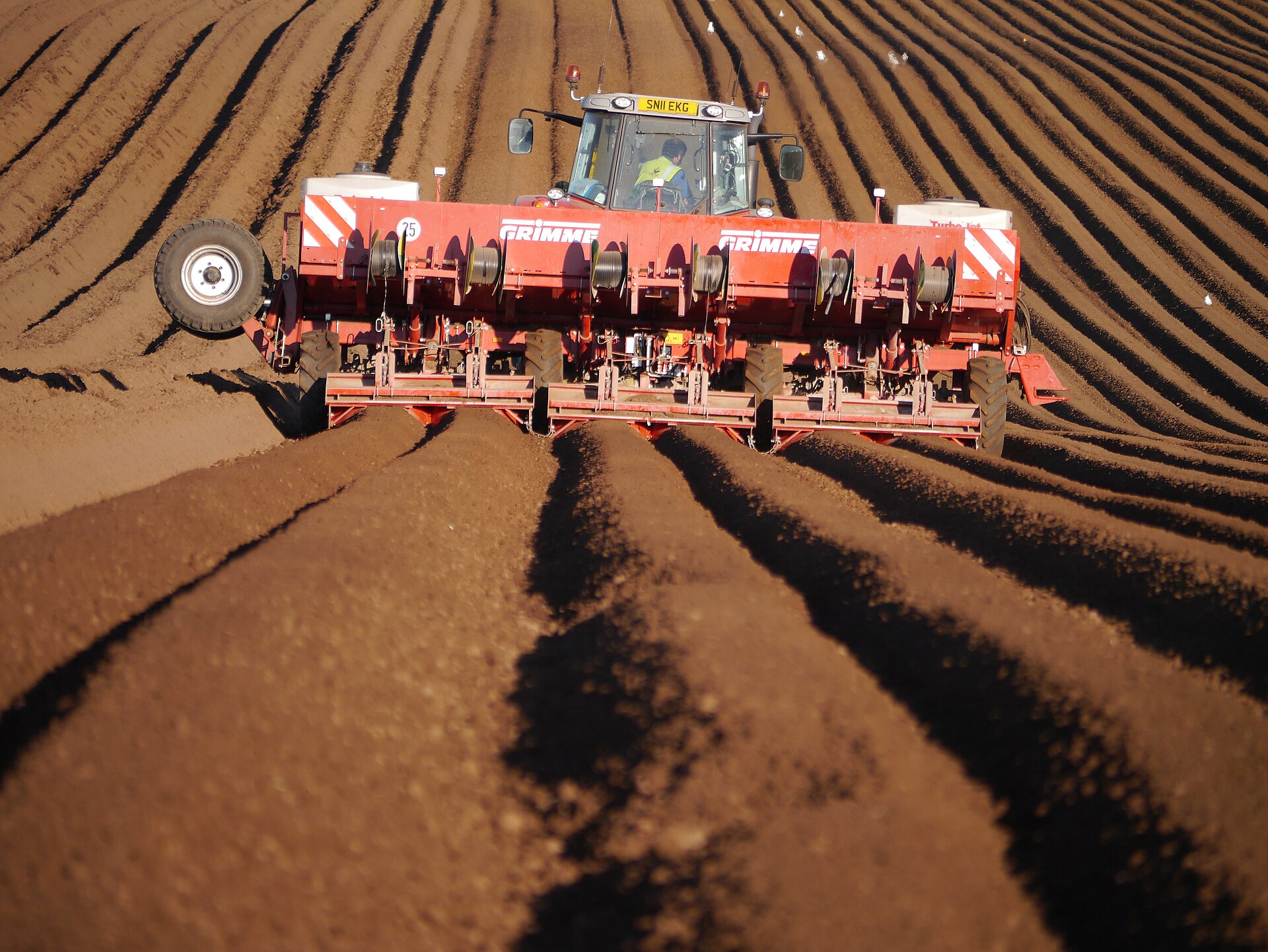
Photo: Potato planting near Chapel Wood, UK (illustrative). James T M Towill / Wikimedia Commons, CC BY-SA 2.0.
Global Potato Brief
Top five stories, prices, disease alerts and events. Weekday mornings, no advertising.
Sources
- MAX chat «КАРТОФЕЛЬ И Т.Д. (Potato etc.)» — https://max.ru/join/SViX6IyOKuJHB6-xuuepbMbts_zk4eiEYdXUpUWVu28
- Soil ripeness — agricultural encyclopaedic dictionary — https://dic.academic.ru/dic.nsf/agriculture/3014/
- AHDB — Review of the effect of soil compaction on potato growth (Stalham et al.) — https://potatoes.ahdb.org.uk/effect-of-soil-compaction-on-potato-growth-and-its-removal-by-cultivation
Linked in this material
- Country
- Russia
- Technologies
- soil tillage; potato planting; ridging
- Sections
- AgronomyAGROTECHNOLOGYNews
Related stories

Belgium: Latest Trial Digs Put the Potato Yield at 37.3 t/ha, About 11 t/ha Below the Five-Year Average

From the Margins to the Main Field: The Quiet Rise of Differently Abled Farmers in Kenya’s Potato Sector