
China: A Heilongjiang Grower Reports Yields of About 45 t/ha and Sends Small Tubers to Starch Processing

Key takeaways
- 6,000 jin per mu is about 45 t/ha, the grower reports
- 210 mu, about 14 ha, was grown by one farmer this year
- 1,200 yuan per tonne is the income cited in the report
- 100 or more villagers work at harvest for 200 yuan a day
Why it matters
- For farmers
- Consider sorting by size and an outlet at a starch plant, so that small tubers earn income instead of being wasted.
- For processors
- Starch processors in north-east China can expect a steady supply of small tubers from growers who sort by grade.
60-second summary
In the Qiqihar area of Heilongjiang, the harvest on one farm shows how north-eastern growers try to make a modest-price crop pay. The farmer behind the story planted 210 mu this season, part of close to 1,000 mu in his town, and claims about 3 tonnes per mu, roughly 45 t/ha. Buyers take the big tubers for the fresh trade, while the small ones end up in starch, and selling by grade is said to add over 10,000 yuan per shang, about a hectare, compared with past seasons. The report puts income at up to 1,200 yuan a tonne and says the harvest employs more than a hundred local people on daily pay of about 200 yuan. For growers, the model shows the value of sorting and a starch outlet; for processors, it signals a steady flow of small tubers. All numbers are the grower's own and come from one state media report, without confirmation from official statistics.
Potato growers in north-east China are in the middle of harvest. In Woniutu, a town in the Meilisi Daur district of Qiqihar city, Heilongjiang province, farmers are lifting a good crop. The state news service China News Service (chinanews.com.cn) reported this on 18 September.
One large grower, Liu Feng, expanded his area to 210 mu this year. A mu is one fifteenth of a hectare, so this is about 14 hectares. The whole town grows almost 1,000 mu of potatoes, or about 67 hectares.
According to the report, the yield reaches 6,000 jin per mu. A jin is half a kilogram. This equals 3 tonnes per mu, or about 45 tonnes per hectare. The report says that the income per tonne of potatoes can reach 1,200 yuan.
Weekdays. Unsubscribe in one click.
The crop is sorted by size. Large tubers are sold on the fresh market. Small tubers go to processing into starch. According to the report, better sorting and sales by grade raise income by more than 10,000 yuan per shang compared with earlier years. A shang is a local land unit in north-east China, equal to about one hectare.
The harvest also creates local jobs. More than 100 villagers from the area work at the farm during the harvest. They pick, sort and transport potatoes. According to the report, each worker earns about 200 yuan a day.
The grower described potato farming as a business with mature technology and stable sales channels.
All figures come from one report and are based on statements by the grower. They have not been confirmed by official statistics.
Why it matters
The report shows how growers in north-east China add value to a crop that sells at a modest price. Sorting by size allows each part of the crop to find a buyer: the fresh market for large tubers and starch factories for small ones. This reduces waste and raises farm income. The case also shows that seasonal harvest work remains an important source of income in rural areas.
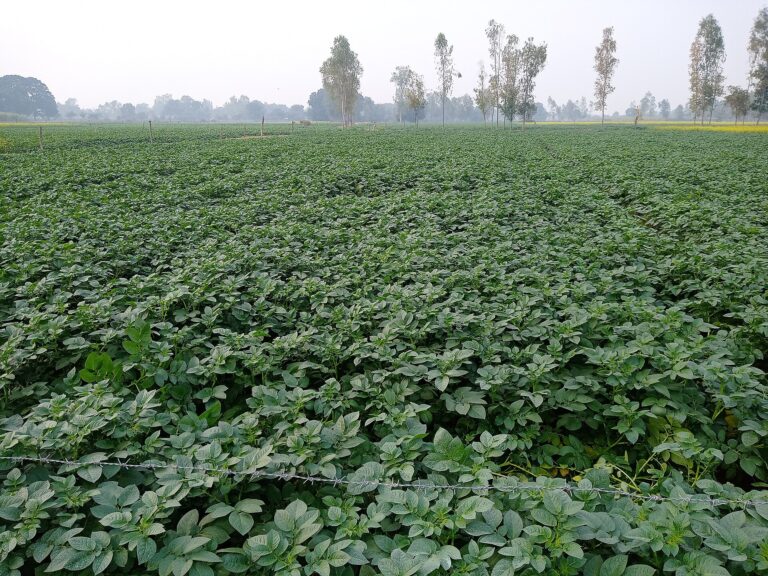
Photo: A potato field (illustrative). wanghongliu / Wikimedia Commons, CC BY-SA 3.0
Global Potato Brief
Top five stories, prices, disease alerts and events. Weekday mornings, no advertising.
Sources
- China News Service (chinanews.com.cn), 18 Sep 2026 — https://www.chinanews.com.cn/sh/2026/09-18/10698787.shtml
- ONE SOURCE; yield and income figures are statements of the grower and the local report
Linked in this material
- Country
- China
- Sections
- AsiaHarvestingNewsProcessing
Related stories
India: Punjab Sets Firm Planting and Haulm-Cutting Deadlines for Seed Potatoes to Keep Aphid-Borne Viruses Out
Bangladesh: A Dispute Over Cold-Store Rent Turns Violent in Rajshahi as Fuel Costs Rise for Potato Growers


