
Taste of Maine Launches New Kettle Chip Plant in Limestone with Locally Grown Potatoes and Ambitious Growth Plans
Key takeaways
- Kettle chip plant in production at Limestone, Maine
- Potatoes sourced from farms within 10 miles
- Investment of about USD 75 million
- 80,000 sq ft plant, up to 14M lb a year
- About 20 jobs now, target of 60 or more
Why it matters
- For farmers
- Stable contracts inside a ten-mile radius are the point of the plant as far as growers are concerned.
- For processors
- Co-packing at 12 million pounds is larger than the own-brand ambition — the capacity is being sold, not just used.
- For investors
- USD 75 million into northern Maine, with tariffed steel priced in, sets the bar for regional processing economics.
60-second summary
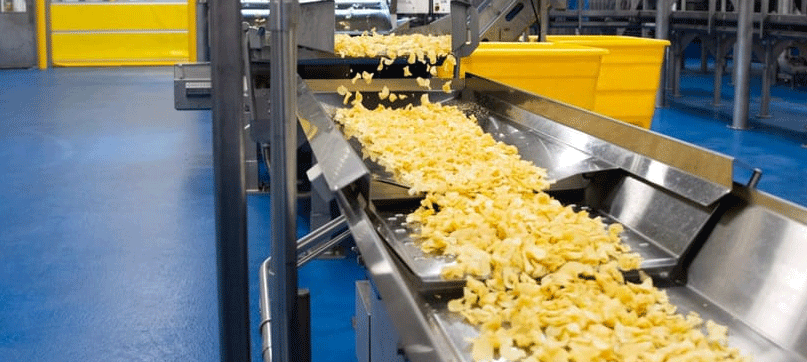
After more than two years of planning and construction, the Taste of Maine potato chip plant in Limestone has begun production, making kettle chips from potatoes grown within ten miles of the site. Owner Bruce Sargent has built the facility on the former Loring Air Force Base at a cost of about USD 75 million, a figure that reflects rising material and construction costs including tariffs on Canadian steel. Five flavours shipped in the first week — seven tractor-trailer loads to convenience stores, Walmart, Hannaford, Market Basket, Shaw’s and bars across Maine — with distributors in Bangor, Lewiston and Portland and expansion into New England planned within the month. Four kettles currently run 12-hour shifts three to four days a week, supporting around 20 jobs; running 24/7 would take that past 60. At capacity the 80,000-square-foot plant could make up to 14 million pounds a year, doubling with eight kettles. Co-packing is expected to account for about 12 million pounds, with a three-million-pound deal starting in September.
After more than two years of planning and construction, the Taste of Maine Potato Chip plant in Limestone has officially commenced production, bringing kettle chips made from locally sourced Maine potatoes to retail shelves across the state. Owner Bruce Sargent, a longtime advocate for potato processing in northern Maine, has realized his vision with a state-of-the-art facility that sources potatoes from farms within 10 miles of the plant. The chips, available in five flavors—salt and vinegar, salt and pepper, classic sea salt, sour cream and onion, and ‘Aroostook BBQ’—are carefully crafted with a balanced flavor profile designed to appeal to a wide range of consumers. In its first week, the brand shipped seven tractor-trailer loads of chips to convenience stores, grocery chains including Walmart, Hannaford, Market Basket, and Shaw’s, as well as bars throughout Maine. The company is already working with distributors in Bangor, Lewiston, and Portland, with plans to expand into other parts of New England within the coming month.
The Taste of Maine facility, located on the former Loring Air Force Base, represents a significant investment of approximately USD 75 million—a figure that reflects rising material and construction costs, including the impact of tariffs on Canadian steel. Currently operating with four kettles on 12-hour shifts three to four days a week, the plant has created around 20 jobs, with the goal of running 24/7 to expand employment to 60 or more positions. At full capacity, the 80,000-square-foot facility could produce up to 14 million pounds of chips annually, with the potential to double output by expanding to eight kettles. Beyond its own brand, Taste of Maine anticipates that contract packaging (co-packing) will account for about 12 million pounds of production, with a three-million-pound deal already secured to begin in September. Sargent hopes the plant will revitalize the local economy, providing farmers with stable contracts and demonstrating the viability of potato processing in northern Maine, while offering consumers a locally grown, fresh alternative to national chip brands.
Global Potato Brief
Top five stories, prices, disease alerts and events. Weekday mornings, no advertising.
Sources
- Bruce Sargent, owner — quoted in the article
Linked in this material
- Country
- USA
- Sections
- NewsProcessing
Related stories

Russia Accelerates Development and Certification of New Domestic Potato Varieties in 2026
Separation Settings on a Potato Harvester: How Webs and Agitation Protect the Crop


