
Soilborne diseases of potatoes: black dot of potatoes
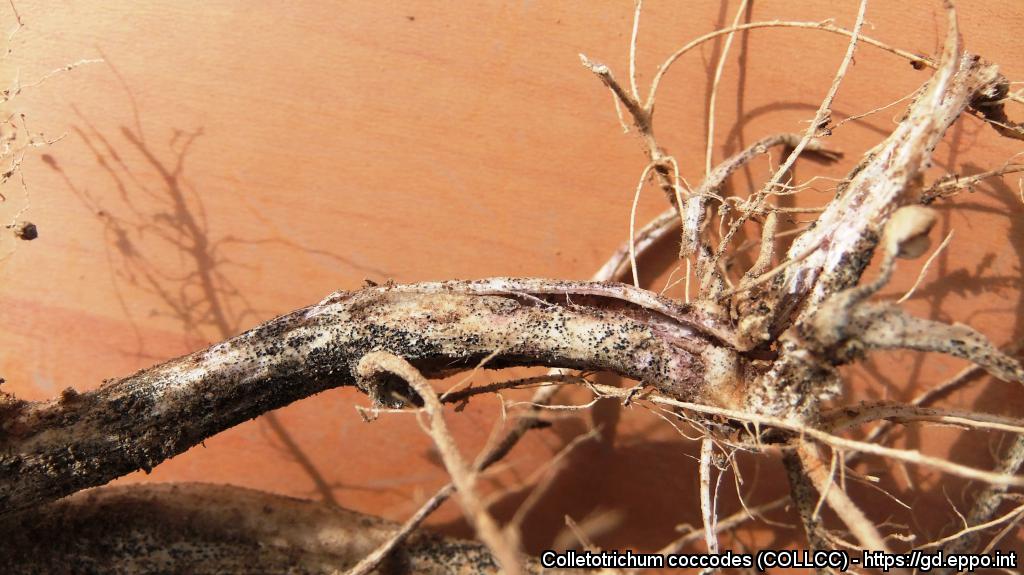
Black dot is a tuber blemish disease of potatoes, caused by Colletotrichum coccodes.
Nowadays this is becoming severe constraint for potato production worldwide.
Black dot takes its name from the tiny jet black microsclerotia that are just visible to the naked eye both on the blemish and on stem and stolen lesions late in the season. Symptoms are usually seen later in the season and are present on stems, stolons and roots, however this does not necessarily lead to tuber disease. The disease can cause early senescence. Tuber symptoms are present at harvest. Affected skin initially appears light brown to unblemished, but with dots. Later unsightly dark brown patches can develop. Lesions tend to be irregularly shaped and often without a defined outline. Lesions on red potatoes and well developed lesions can look silvery leading to confusion with silver scurf. The black dots which differentiate this disease from silver scurf are visible with the naked eye and are easily seen under a hand lens (10 x magnification). In the past, the incidence and severity of black dot might have been underestimated, as tuber symptoms were often mistaken for silver scurf (Helminthosporium solani). Inoculum of C. coccodes can be both seed tuber- and soilborne, and disease control is difficult as there are few chemical control methods and little resistance in commercial cultivars. Cultural control options offer the only potential means to control this disease at present. Long rotations are advisable as microsclerotia can survive 7 years in soil. Use of pathogen-free seed potatoes that have been tested in a certified laboratory is the most recommended practice.
Weekdays. Unsubscribe in one click.
Photo: Maria A. Kuznetsova, All-Russian Phytopathology Research Institute (https://gd.eppo.int/taxon/COLLCC/photos).
Reference: Lees, A.K. and Hilton, A.J. (2003), Black dot (Colletotrichum coccodes): an increasingly important disease of potato. Plant Pathology, 52: 3-12. https://doi.org/10.1046/j.1365-3059.2003.00793.x
Global Potato Brief
Top five stories, prices, disease alerts and events. Weekday mornings, no advertising.
Linked in this material
- Sections
- Potato diseasesСrop protection
Related stories
Potato Farming Returns to Central Saanich After 40-Year Ban Lifted
2026 Protection Strategy: Priluki Institute Tackles Aggressive Phytophthora Race with Advanced Fungicide Blends


