
Rising Agricultural Costs Put Pressure on Mexican Farmers as Potato Remains One of the Few Profitable Options

Mexico’s agricultural sector is entering a difficult planting season as higher input costs, weak crop prices, and growing dependence on food imports increase pressure on farmers and consumers.
Mexican farmers are facing a new wave of financial pressure as the cost of agricultural inputs continues to rise. According to information published by Argenpapa, fertilizer prices have increased by up to 50%, while agrochemicals have become 20% to 30% more expensive. These increases are directly affecting production costs across several agricultural sectors, including vegetables, basic grains, and potatoes.
Roberto Garza Villarreal, director of Agropecuaria El Arranque, noted that there is currently no shortage of inputs, but the sharp rise in prices — partly linked to oil costs — has significantly increased operating expenses for farmers. Although the exchange rate has helped soften part of the impact, producers warn that higher costs will eventually be reflected in consumer prices, especially in the vegetable sector.
Weekdays. Unsubscribe in one click.
Growing Gap Between Production Costs and Market Prices
One of the main concerns for Mexican farmers is the widening gap between what it costs to produce crops and the prices they receive in the market. While fertilizers, crop protection products, fuel, labor, and logistics are becoming more expensive, the market value of many agricultural products remains stable or even historically low.
This creates a difficult situation for producers, particularly those growing basic grains such as corn and wheat. According to Garza Villarreal, prices for these crops have remained almost unchanged for three or four years, despite the global market disruptions that began after the conflict in Ukraine.
For many farms, this means lower margins, reduced investment capacity, and greater uncertainty about future planting decisions.
Potato Production Still Offers an Opportunity
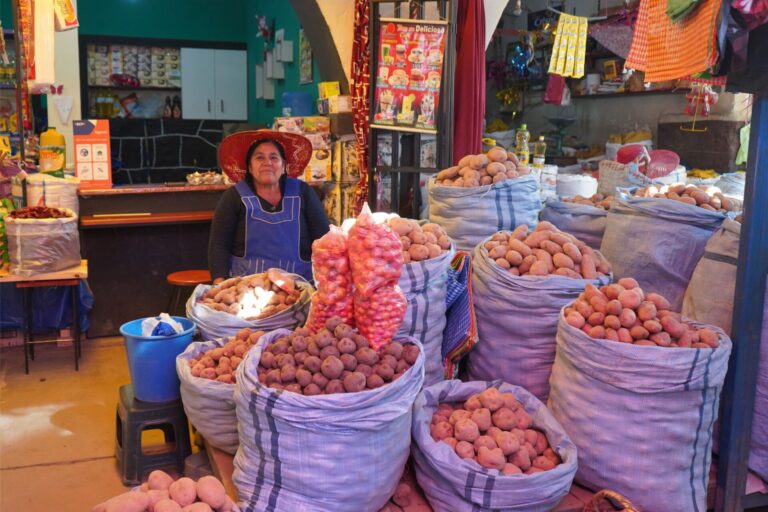
Against this difficult background, potato farming appears to remain one of the few agricultural activities with potential profitability in Mexico. Potato is one of the main crops grown by Agropecuaria El Arranque, and according to the report, it may still generate profit if current market prices are maintained.
However, this opportunity depends heavily on price stability. Potato production is also input-intensive, requiring fertilizers, crop protection products, irrigation, storage, and logistics. If production costs continue to rise and farmgate prices weaken, potato growers may also face the same financial pressure affecting other sectors.
For the potato industry, the Mexican situation highlights a broader global challenge: profitability is no longer determined only by yield, but also by the ability to manage costs, secure inputs, improve storage, and maintain stable market access.
Food Imports and Food Security Concerns
The report also points to a worrying trend: Mexico is becoming more dependent on imported food. Lower profitability in domestic agriculture may discourage farmers from planting, reducing national food supply and increasing exposure to international price volatility.
Garza Villarreal warned that this growing dependence on foreign markets goes against the goal of food self-sufficiency and may create additional economic risks for Mexican households. If domestic production continues to decline, food inflation could increase in the coming months, particularly for vegetables and other crops that require high levels of chemical inputs.
What This Means for the Potato Sector
For potato producers, processors, traders, and input suppliers, the situation in Mexico is an important signal. Rising production costs are not a local issue only; they are part of a wider global trend affecting agriculture in many regions.
The key priorities for the potato sector will be:
- improving input efficiency;
- selecting varieties with better performance under local conditions;
- investing in storage and post-harvest management;
- reducing losses along the supply chain;
- building stronger links between growers, processors, and buyers;
- developing long-term strategies to protect farm profitability.
Mexico’s experience shows that potato can remain a promising crop even in a difficult agricultural environment. But this will require careful cost management, reliable market channels, and stronger support for farmers who continue to invest in domestic food production.
Source: Argenpapa — “México: Preocupación en el campo mexicano por el alza de costos agrícolas”
https://argenpapa.com.ar/noticia/17255-