

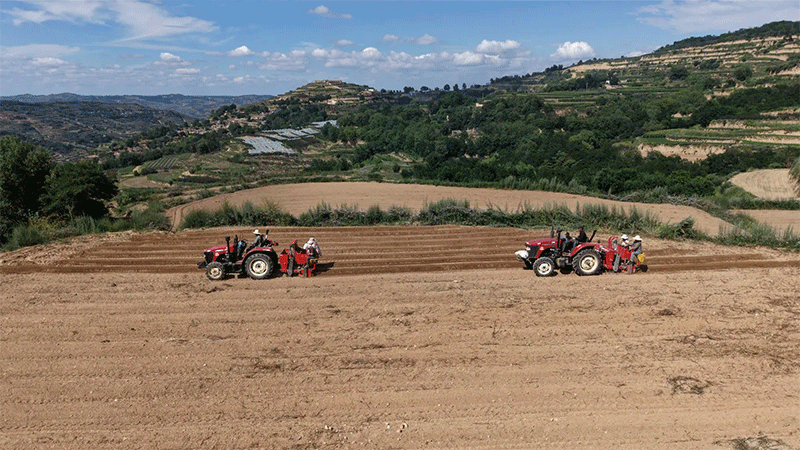
Summer harvest has ended, but agricultural activity in Jinshan Town, Gangu County, Gansu Province, has not paused. Taking advantage of the brief window between crops, local farmers are replanting potato on fields recently cleared of winter rapeseed. By combining scientific crop rotation with fully mechanized operations — from ridging and fertilizing to sowing and soil covering in a single pass — the town has dramatically reduced labor intensity while maximizing land use efficiency. Within just one week, nearly 1,000 mu (about 67 hectares) have already been planted with the high-quality, high-yield “Green Potato No. 9” variety, and the total replanting area is expected to reach 1,400 mu. As local officials explain, this integrated approach has not only eased the physical burden on farmers but also sparked widespread enthusiasm for planting.
The town has been promoting a “rapeseed + potato” rotation system that delivers two harvests over three years — a model proven to improve soil structure, balance fertility, and solve the low productivity problems associated with monoculture. This strategy ensures that idle land remains productive throughout the year, turning every season into an income-generating opportunity. Local authorities have provided comprehensive support, including land planning, variety selection, technical guidance, and machinery allocation. Looking ahead, agronomists will continue to offer on-site advice on pest control, water, and fertilizer management to secure stable yields. By steadily expanding this high-efficiency rotation model, Jinshan Town is transforming its natural land into sustained industrial growth, laying a solid foundation for rural revitalization and steady income growth for farming households.