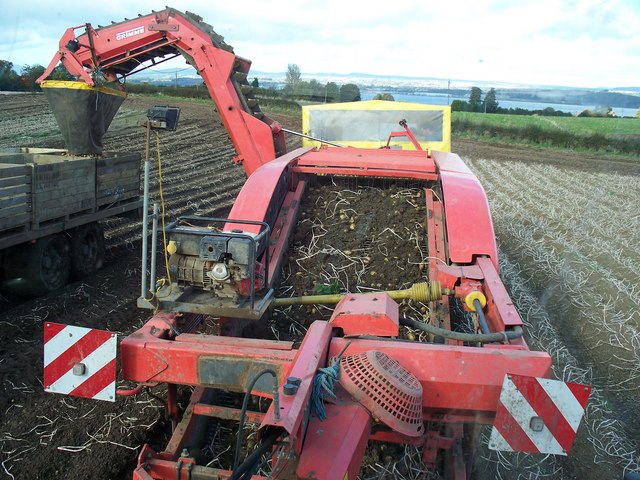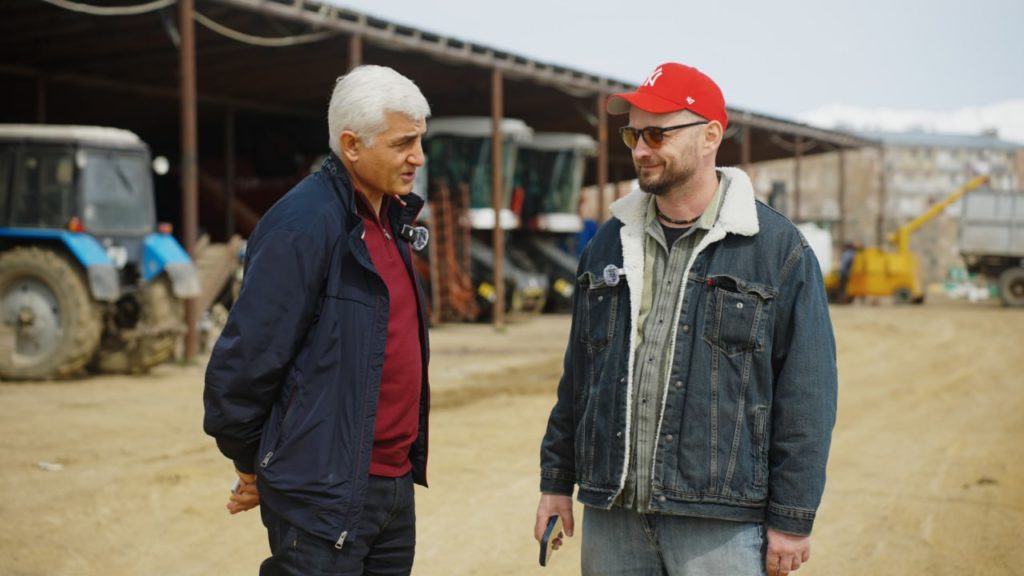
When the International Potato Tour visited Edagro near Vardenis in March 2026, Edward Nalbandyan described how tuber size affects sales, why the farm sells part of the crop at harvest and how much goes into storage. Nalbandyan, who trained as an economist, dated the start of the enterprise to 1996. Edagro grows potatoes, cereals and pulses in Armenia’s Gegharkunik region. Tour footage, 01:32–02:12 · Stanislav Kim’s account of the visit.
An outlet for small potatoes
Asked about demand for smaller potatoes, Nalbandyan described cooking them on skewers alternating with pieces of fat. He said there was demand for potatoes of that size. He also recalled trying closer spacing between Argana tubers at planting to obtain a smaller size grade. In his field, the tubers still grew larger than he wanted. Danespo lists Argana as a large-tubered variety. Tour footage, 08:49–09:42 · Danespo’s Argana variety profile.

What goes into storage
Nalbandyan said the farm tries to sell potatoes during harvest. In a typical year, he said, around 3,000–4,000 tonnes remain and go into storage. During the interview he described plans to build a store in the area. Tour footage, 06:16–06:45.
Weekdays. Unsubscribe in one click.
Shipping from the start of harvest
In a separate part of the discussion, Nalbandyan recalled that the farm began sending potatoes to Russia in late September in the 2024 season, as harvest got under way. The timing he described applied to that season. Tour footage, 15:31–15:49.
The tour also discussed how Edagro fits lentils into a wider mix of potatoes and cereals. Read the separate report on crop rotation near Lake Sevan.