“The climate regulates the market price”: Tandil growers on Argentina’s volatile potato season
Growers from the Tandil Potato Growers' Centre describe how El Niño rains, late frosts and high costs are shaping planting and prices in one of Argentina's key potato regions.
Representatives of the Tandil Potato Growers’ Centre explain how El Niño, heavy rains, late frosts and high costs are conditioning planting, supply and prices in one of Argentina’s key potato regions — where the optimal planting window has narrowed to 10–20 October and prices have trended upward over the past 15 days.
Potato production in Argentina is passing through a scenario of uncertainty determined by climatic variability, high costs and market fluctuations, Argenpapa reports. Juan Manuel Ferreiro and Pedro Felice, representatives of the Tandil Potato Growers’ Centre, analysed the situation in an interview with the programme Tandil Despierta, broadcast by Eco TV and Tandil FM 104.1.
The growers explained that the El Niño phenomenon directly influences planting planning, and that rainfall can modify both crop development and the availability of potatoes in the markets.
Weekdays. Unsubscribe in one click.
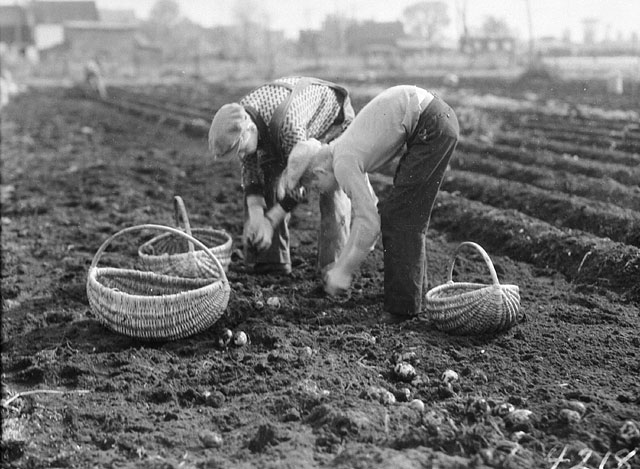
Planting the crop demands careful soil preparation. The potato needs a seedbed with between 40 and 60 centimetres of loose soil, so excess moisture hinders the entry and movement of machinery. Pedro Felice compared working in saturated soil with walking inside mud. Faced with these conditions, growers must permanently watch the forecasts and adapt the pace of field work.
Traditionally, potato planting in the region could extend from late August until early December. However, growing climatic variability has forced dates to be flexible. According to the Growers’ Centre representatives, the period considered optimal is usually between 10 and 20 October, although it can be modified according to the state of the fields and weather conditions. Ferreiro noted that climate changes oblige growers to adjust strategies to reduce exposure to late frosts and high temperatures — two factors that can hit yields.
Irrigation systems have become a fundamental tool for managing water according to the crop’s needs, and also make it possible to suspend applications when rain is forecast. The availability of irrigation has allowed growers to move onto higher ground, where drainage and runoff are more favourable during periods of abundant rainfall.
On seed quality, Ferreiro and Felice explained that the seed used in commercial production comes from multiplication processes carried out under strict sanitary controls to prevent viruses and other diseases. Tubers are cut ensuring that each portion keeps at least one viable sprout, commonly known as the “ojito”, from which a new plant will develop.
The potato market has shown an upward trend over the last 15 days. Among the causes mentioned are the frosts that affected Córdoba months ago and the excessive rains recorded in Tucumán, which hindered harvesting and the movement of production from the north towards the main wholesale markets, temporarily reducing available supply.
“The market price is regulated by the climate,” Felice summarised. The lack of a large-scale storage structure that would allow supply to be regulated increases the sector’s vulnerability to regional production problems. The representatives also made clear that a price increase does not necessarily benefit all growers: when rains prevent entering the fields, the potato cannot be harvested or sent to market, even when the price is favourable.
Ferreiro and Felice defined potato as a high-risk crop, in which an unfavourable campaign can generate significant losses and compromise much of the investment made. They recalled previous cycles in which overproduction caused prices to collapse and forced entire lots to be discarded for lack of buyers — a scenario that contrasts with the current supply reduction and demonstrates the difficulty of reaching a stable equilibrium. Despite these challenges, the regional potato sector continues to incorporate technology and adapt its production practices to sustain the activity and guarantee supply.