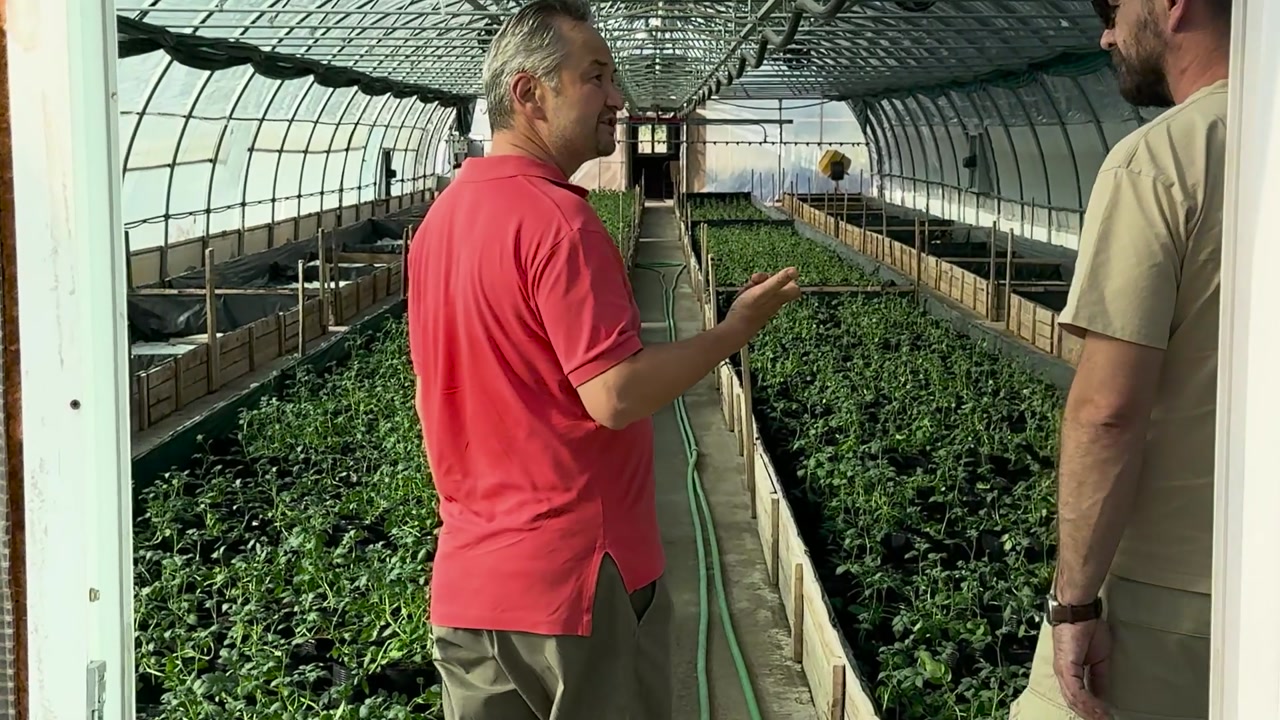
The second report from the International Potato Tour visit to Livingstone Kazakhstan follows managing partner Eldar Isataev into the greenhouse. He describes what the team does with minitubers it considers too small for direct field planting and explains how the greenhouse fits into the company’s wider seed programme.
Watch part two in Russian
- 00:47 From a laboratory plant to the first minitubers
- 05:18 How Isataev moved from banking into agriculture
- 10:09 Why the smallest minitubers stay under cover
- 11:12 Why the team tries to keep that material
- 14:33 The company’s route to elite-grade seed
- 17:40 Strawberry trays and root development
The smallest minitubers get another growing cycle
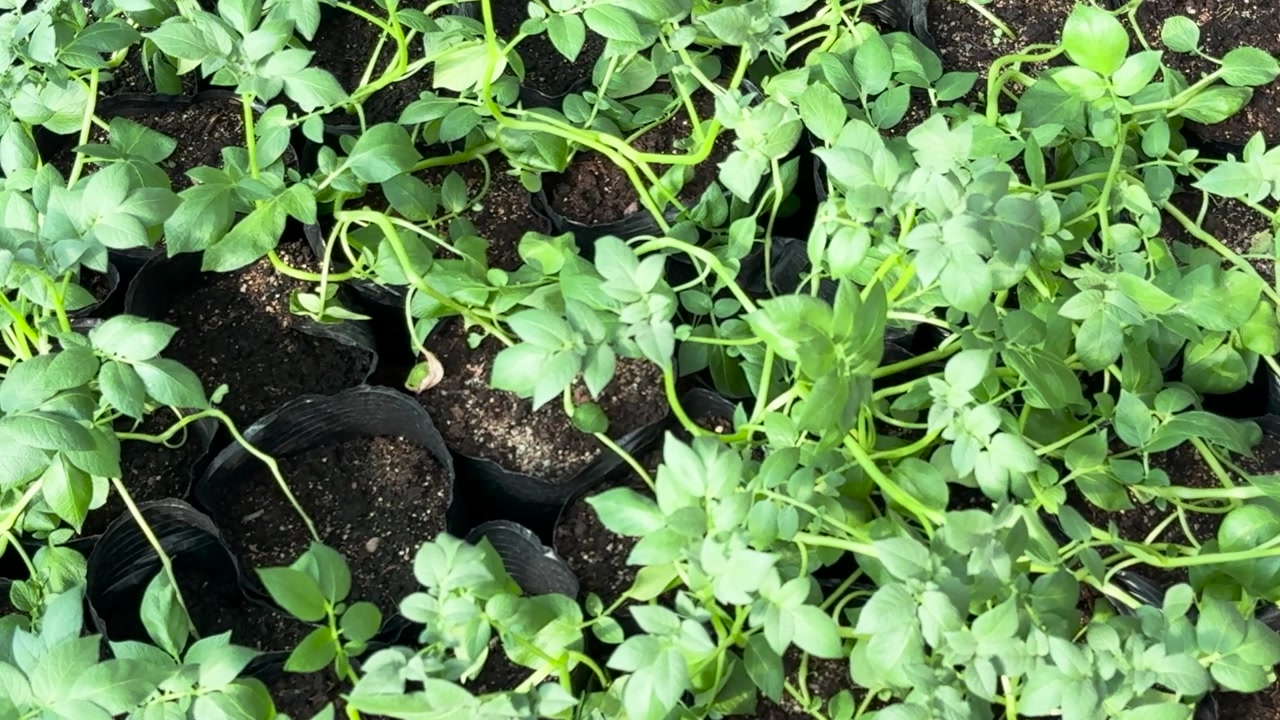
At the greenhouse, Isataev points to plants grown from minitubers he describes as pea-sized. He says the team considered them too small to establish reliably outdoors and planted them under cover to get another crop. He presents it as a way to retain planting material that already represents an investment for the business.
What the field visit adds
Later, Isataev says the company starts with its own laboratory plants, produces minitubers in the greenhouse and multiplies the material in the field. He identifies the material planted in the field shown in the report as super-elite seed. He describes elite-grade seed as the end point of the sequence the company manages in-house.
Weekdays. Unsubscribe in one click.
A different decision for strawberry plants
In the strawberry section, Isataev shows trays with 32 cells and compares them with 50-cell trays of the same footprint. He says the larger cells cost more to use but give each plant more room to develop roots. For him, root development is what matters when deciding whether a plant is ready to sell.
Read part one on the seed potato laboratory · Livingstone Kazakhstan describes its laboratory and greenhouse