Spain’s 2026 Potato Harvest to Fall 8–10% on Rains and Heat Waves, Fepex Warns
Spain’s potato production will drop by 8–10% this campaign, with losses approaching 15% in the northern regions, according to the Spanish federation of fruit and vegetable producer-exporters Fepex. Smaller tubers and rising costs are set to keep consumer prices — already up 41% since 2022 — under pressure into spring.
Spain’s potato sector is closing the 2026 campaign with a smaller crop and smaller tubers. Fepex, the federation that groups the country’s fruit and vegetable producer-exporter associations, estimates national production will fall between 8% and 10%, despite a partial recovery in planted area over recent years.
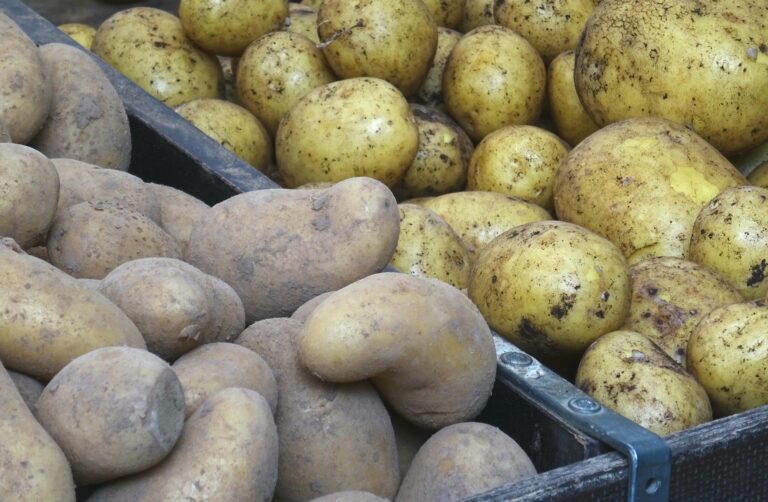
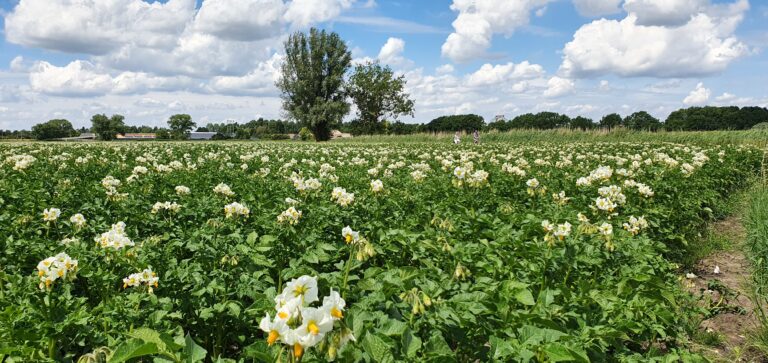
Alfonso Sáenz de Cámara, president of Fepex’s potato committee, described a season marked by unusual and adverse weather in the main producing regions. Winter rains delayed planting in Andalusia and compromised the early harvest there. Successive summer heat waves then hit crops established in the centre and north of the country. Persistent heat, especially during night hours, limited tuber initiation and bulking — the reason yields fell and a larger share of the crop graded into smaller calibers.
Weekdays. Unsubscribe in one click.
The regional split is sharp. From Madrid northwards, production is estimated to have fallen by close to 15%, while the impact was less pronounced in Murcia. Rising energy and fertiliser costs compounded the weather damage.
The decline breaks a fragile recovery. Spain planted around 271,281 hectares of potatoes in 1990; by 2023 the area had shrunk to 59,219 hectares. A rebound to 66,660 hectares in 2025 — driven partly by the growth of the traditional southern “verdete” crop planted in winter — did not translate into an equivalent production expansion: Spain harvested roughly 1.92 million tonnes in 2023 and 1.94 million tonnes in 2025.
Consumers are already paying for the tightening balance. Retail potato prices in Spain have risen 41% since 2022 and 58% since 2018. A smaller harvest with lower calibers could keep upward pressure on prices in the coming months, though the final outcome will also depend on European supply and the quality of stored merchandise.
That European context offers little relief. Spain relies heavily on imports, mainly from France, to complete its supply, yet other European countries suffered the same droughts, heat and cost inflation. EU production stands at around 55.6 million tonnes. Surplus stocks carried over from the previous campaign have kept quotations low in some market segments even as 2026 productivity fell — a cushion that will thin as the season advances.
The sector’s real test, Fepex warns, is conservation: there will be potatoes available, but keeping national and European production in good condition until the next early harvests arrive at the end of April will be difficult. Phytosanitary restrictions limit the possibility of importing potatoes from numerous southern-hemisphere countries because of the risk of introducing pests and diseases absent in Europe. That raises the premium on storage quality, conservation management and sanitary monitoring of tubers over the coming months — and leaves little room for further shocks in a market that has already priced in a great deal of weather.
Behind the immediate forecast sits the longer structural story the Fepex figures make visible. Spain has lost more than 200,000 hectares of potato area since 1990, and the recent stabilisation around 60,000–67,000 hectares rests heavily on the winter verdete crop in the south — a segment acutely exposed to exactly the winter rainfall that disrupted this campaign. A sector that has already contracted this far has little slack left: each percentage point of yield lost to weather now translates almost directly into import demand, and with France as the main supplier also hit by drought and heat, the traditional balancing mechanism within the EU is weaker than in a normal year. That is why a forecast of “only” 8–10% is landing as a market warning rather than a statistical footnote.