INMA says it has expanded the area under drip irrigation tenfold since 2010 and converted its entire potato crop to drip in 2024. Operations director Amr Shakir’s update puts the emphasis on filtration, distribution uniformity, scheduling and staff training, rather than on a new headline claim for water savings.
A reported operating change, not a new yield trial
The update describes a change in the company’s production system. It does not provide a field-by-field water balance, a comparison of marketable yields or an independently audited estimate of savings.
INMA’s corporate history documents its long-running focus on irrigation technology, its Wadi Al-Dawasir base and expansion into Al-Jouf. That history supports the broader context of technology adoption, but it does not independently verify the tenfold expansion or the completion figure. Those remain statements attributed to Shakir.
Weekdays. Unsubscribe in one click.
Why hardware is only part of the system
For potato growers, drip irrigation is a management system as well as a purchase of pipes and emitters. Water has to reach the intended part of the root zone with sufficient consistency for the crop and soil. A system can operate on schedule while individual blocks receive uneven amounts; a uniform installation still needs a schedule that responds to changing demand.
AHDB’s comparison of potato irrigation methods identifies the importance of soil texture, emitter spacing and soil-water monitoring. It also notes the higher cost of drip. University of California guidance describes potential water-efficiency benefits alongside difficulties with tillage, harvest operations and very coarse soils. These are general considerations, not measurements from INMA.
The practical question is consequently whether field teams can identify and correct a problem quickly: a blocked filter, an unexpected pressure change, a damaged line or a mismatch between an irrigation decision and the condition of a block. Training and responsibility for responding to alerts deserve a place in the operating plan.
What evidence would make the case transferable
A useful comparison would report the same boundaries before and after conversion: planted area, crop season, soil and weather conditions, water applied, marketable output and quality. Energy use, labour, maintenance and replacement costs would help explain the operating economics. A percentage reduction in water applied alone would not explain the complete result.
For other arid-region farms, the next step is a local feasibility and agronomic assessment, rather than copying a percentage or a timetable from another business. A small, well-documented comparison can be more useful than a large installation with no reliable baseline. Rates, placement and irrigation timing should be agreed with the farm’s agronomist and irrigation specialist.
Keeping block-level records also makes a future expansion easier to evaluate. A farm can compare the reasons for interventions, the work required to maintain reliable delivery and the share of harvested potatoes that meets the buyer’s specification. Those records give managers a basis for changing the system when the crop or its destination changes.
A documented baseline also helps the farm explain the results to customers, technical partners and staff responsible for the next season.
What this means for farms and the market
- Treat the conversion figures as company-reported operating information, not independently measured savings.
- Compare water, energy, labour, marketable yield and quality within the same field and seasonal boundaries.
- Assess filtration, monitoring, maintenance and staff responsibilities before expanding a system.
Sources
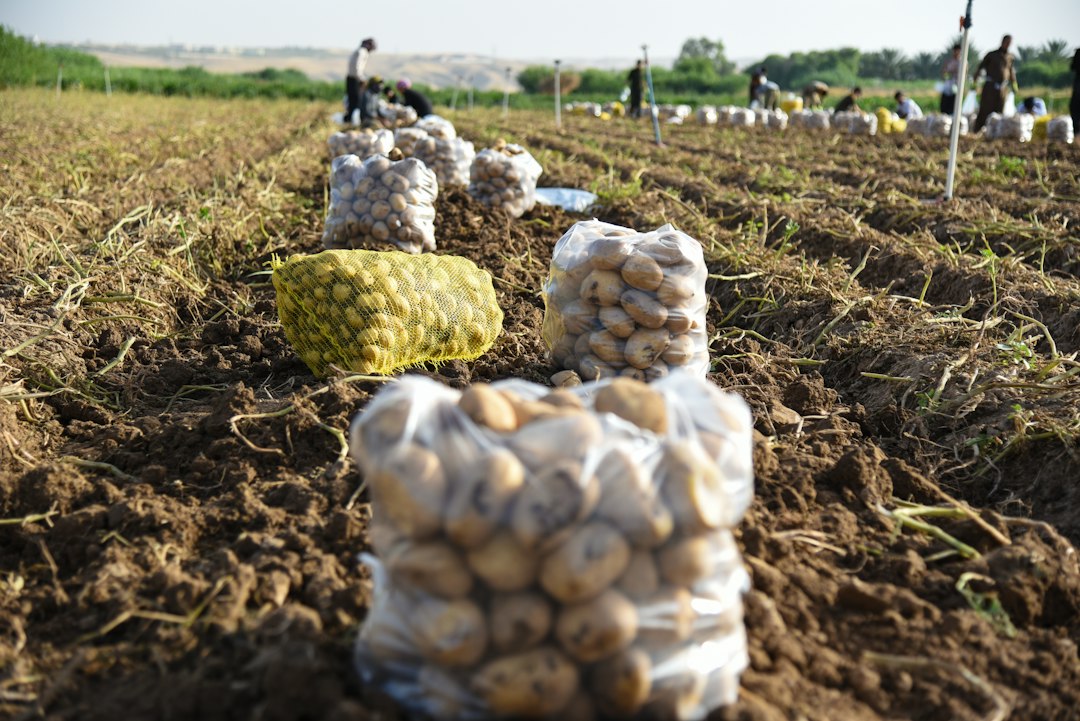
Potato harvest in Kalar, Kurdistan Region; illustrative photograph, not an INMA field. Photo: Diyar Bakir Wahab / Unsplash.