Rain Slows Brazil’s Winter Potato Harvest in Vargem Grande do Sul, Lifting Grower Prices
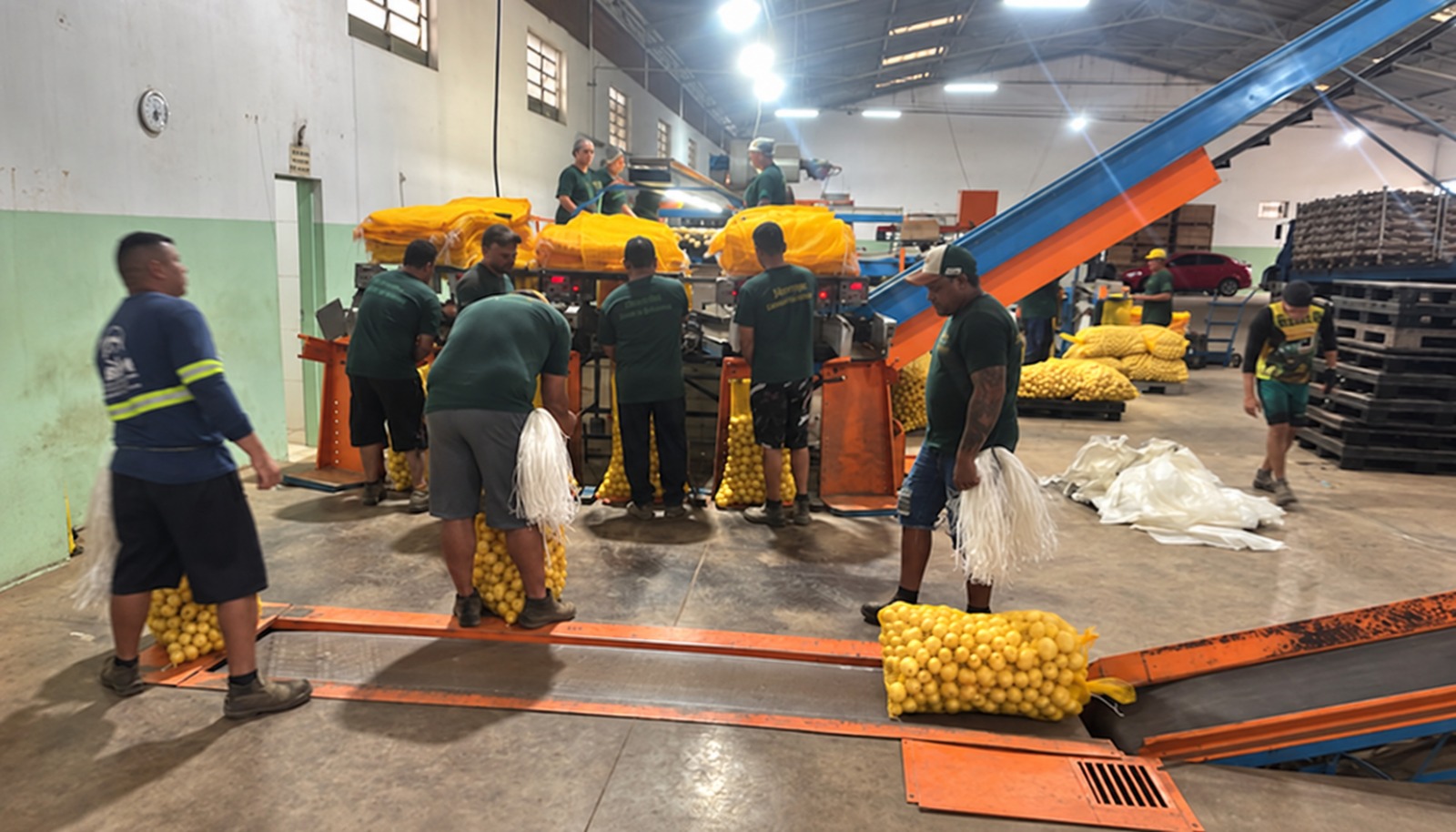
Wet fields have cut the flow of potatoes out of São Paulo’s main winter-crop hub just as the season nears its end. Prices had collapsed at peak harvest and are now recovering, and some loads have been shipped south to Argentina.
Recent rain in Vargem Grande do Sul has done more for potato prices than weeks of market sentiment managed. Vargem Grande do Sul is a municipality in north-eastern São Paulo state and one of Brazil’s key sources of potatoes in the second half of the year. Waterlogged soils have kept harvesters out of the fields and slowed lifting, which has temporarily reduced the volume reaching the market. According to the local weekly Gazeta de Vargem Grande, which surveyed the trade on 17 September, prices have begun to recover after steep falls during the period of heaviest supply. Around 80% of the winter crop has now been harvested.
From below cost to a partial recovery
Growers this week received around R$60 (roughly US$12) per 25 kg sack of top-grade (“especial”) table potatoes of the Orchestra and Ágata varieties. That is about R$2.40/kg, or close to US$470 per tonne at a mid-September exchange rate of around R$5.10 to the dollar. A few days earlier, the same sack had sold for about R$80 at local beneficiadoras, the washing, grading and packing plants that prepare potatoes for wholesale markets.
Weekdays. Unsubscribe in one click.
Earlier in the season, prices were far weaker. In mid-July, growers were being paid R$35–40 per sack, levels the Gazeta described as close to production cost on many farms. By early August the price was around R$48. The current R$60 is therefore 50–70% above the July lows.
Longer-term comparisons show how volatile Brazil’s fresh potato market is. In 2025 an oversupplied market pushed average grower prices in the region down to about R$30 per sack, well below cost. In 2024 the same product had fetched R$140–150.
Potatoes grown for processing move on a separate track. The crisping variety Atlantic is trading at about R$120 per 50 kg sack, washed and ready at the packing plant. That also works out at roughly R$2.40/kg. In past seasons, local reporting has described processing potatoes in the region as grown largely under contracts with pre-agreed prices, which shields them from the swings of the table market.
Loads for Argentina
Vargem Grande do Sul potatoes are sold across Brazil and into other South American markets. Marconi Jesus Andreatto owns Beneficiadora de Batata Santana, which for the past decade has washed potatoes exclusively for the processing industry. He told the Gazeta that several loads had been sent to Argentina in the week before the survey. He gave no volumes, varieties or buyers. It was also not specified whether the shipments were his company’s own or part of wider flows from the region.
Without volume data, it is too early to judge whether the shipments signal a meaningful trade flow or were opportunistic one-off sales.
A better year, but not for everyone
Andreatto said the 2026 season had been considerably better than 2025. He described last year as atypical and very poor, both for potato growers and for the wider fresh-produce supply chain, which had suffered heavy losses. He added that the preceding years had been very good, so results averaged out over several seasons.
Not every farm will ride that average, however. According to Andreatto, some smaller growers are expected to give up potato production, although he considered the region’s supply chain as a whole to be well structured.
How big is the crop?
The Gazeta estimates the area planted in the region this season at 10,500–11,000 hectares. Applying a reference yield of around 40 t/ha, it puts potential output at 420,000–440,000 tonnes. The paper stresses that this is its own calculation from area and yield, not an official production figure.
That yield assumption may be generous. According to the Hortifruti/Cepea research centre at the University of São Paulo, yields in Vargem Grande do Sul in July averaged close to 30 t/ha. The centre attributed this to excessive rain in May and June and to prolonged overcast weather that limited photosynthesis. Yields recovered to around 40 t/ha only from August. At a blended season average of 35 t/ha, the same area would produce roughly 370,000–385,000 tonnes.
About a fifth of the crop is still in the ground. The harvest is expected to finish by mid-October but could run until 30 October, depending on the weather and the pace of lifting in the remaining fields. Rainfall over the coming weeks will set both supply and prices until the end of the season.