

June marks the season for freshly harvested “Haji potatoes” in Korea — spring-planted potatoes dug up around the summer solstice (June 21) before the monsoon rains can spoil them in the fields. These new potatoes, with their high moisture content and fluffy texture, are simply boiled and dipped in salt for a perfect summer snack. But beyond Korea, there is a country where potatoes hold an even more profound meaning — Kyrgyzstan, often called the “Switzerland of Central Asia.” Here, potatoes are affectionately known as “the second bread.” In this mountainous nation where 90% of the land is rugged terrain, potatoes have long been a staple for semi-nomadic herders who still move their livestock to high-altitude pastures and live in yurts during the summer months. The potato’s ability to grow in poor soil, store for long periods, and travel with migrating communities made it a vital survival crop — especially during the economic turmoil following the Soviet collapse. Even today, in the 21st century, Kyrgyz families continue this tradition, maintaining a way of life that challenges the assumption that urbanization is the only path forward.
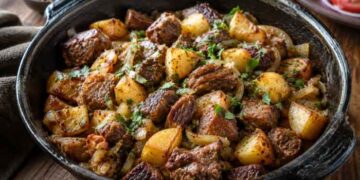
At the heart of Kyrgyz potato cuisine is Kuurdak, one of Central Asia’s oldest dishes. The name comes from the Kyrgyz word meaning “to fry” or “to roast.” Originally, nomadic herders would prepare this dish immediately after slaughtering a sheep, quickly frying the meat and offal in fat before it could spoil during long journeys to summer pastures. Today, potatoes and onions are added to create a hearty, rustic one-pan meal: chunks of lamb or beef are first browned in generous oil, then combined with potatoes, onions, salt, pepper, and cumin. A splash of water and a gentle simmer for 20–30 minutes yields a savory, aromatic dish that embodies the spirit of the steppe and mountains. Each family may add carrots or bell peppers, but the soul of Kuurdak remains unchanged. This June, as fresh potatoes arrive, it’s worth trying this recipe at home — and while stirring the pot, remembering that even now, somewhere in the Tien Shan mountains, people are living in yurts, tending their herds, and sharing the same humble yet nourishing meal.