

Important Potato Diseases and Tips to Manage them in Storage

As the potato harvest is ongoing in many places and much of the harvested potatoes are being stored, it is a good time to have a look at what it takes to offer these potatoes the best chance for a long and successful storage. This article by two experienced Canadian storage specialists, Dr Eugenia Banks (Ontario Potato Board) and Mark VanOostrum (WD Potato Ltd) offer an overview of what to look for.
The basics
An essential requirement for a long storage period is that the storage conditions match the needs and the end use of the crop.
The storage requirements of the crop can be assessed before harvest by doing several test digs which allow to determine if present the distribution and level of tuber infection.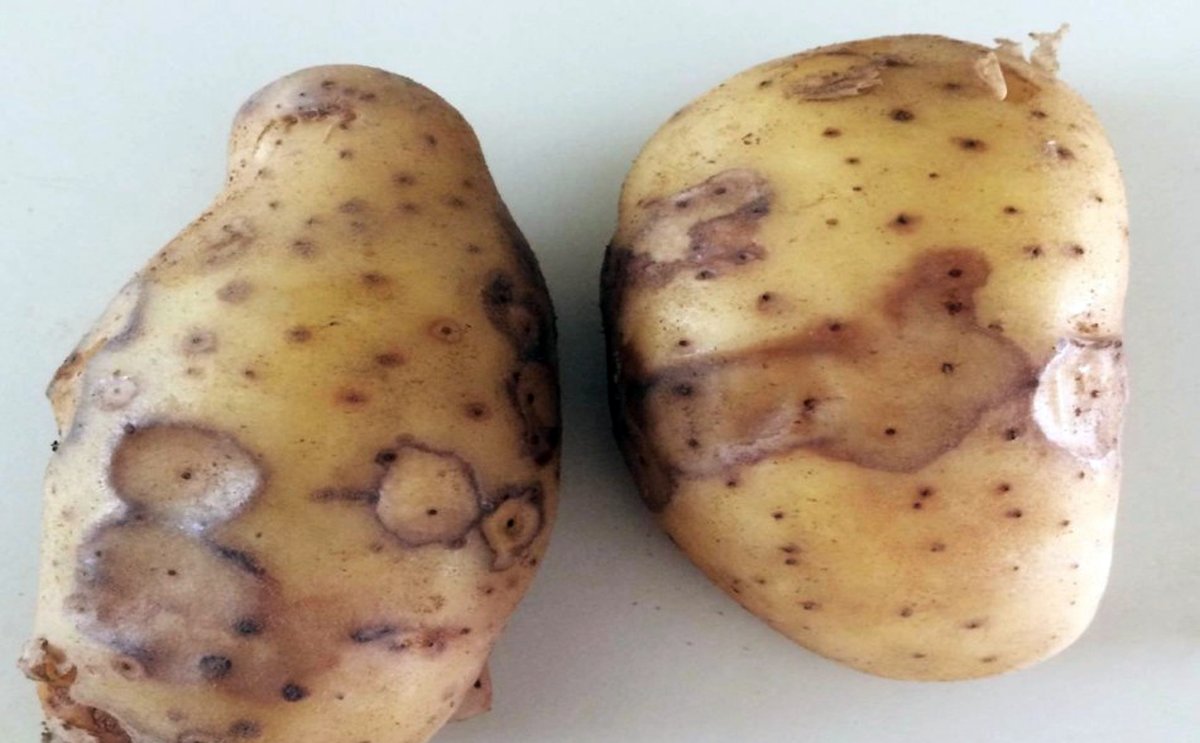
Soft rot
If there are risky areas in a field such as low spots that have blighted potatoes, skip those areas, do not harvest them.
If you find about 2% of blighted potatoes scattered throughout the field, try to market the crop straight from the field. If this is not feasible, store the crop near the storage door and move it at the earliest opportunity.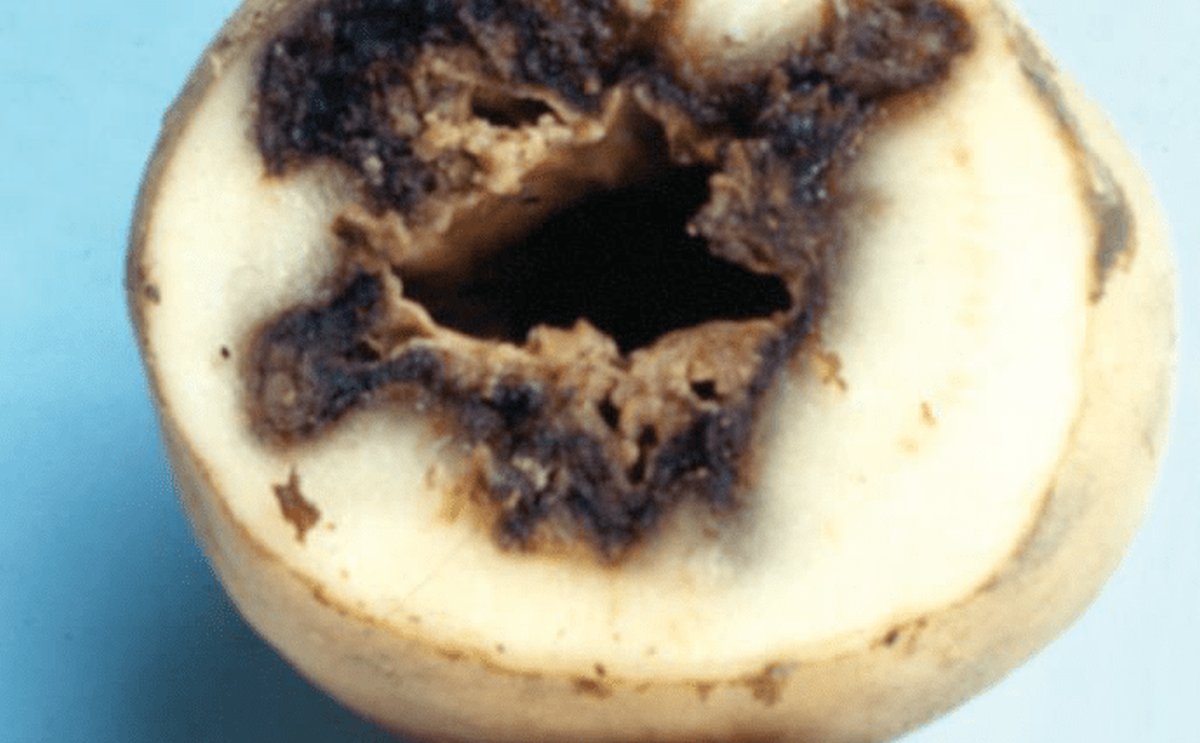
Blackleg
Fields with soft rots such as Dickeya and blackleg can benefit from harvesting later in the storage season, allowing time for the diseased tubers to breakdown completely or enough so they are easily identified for grading.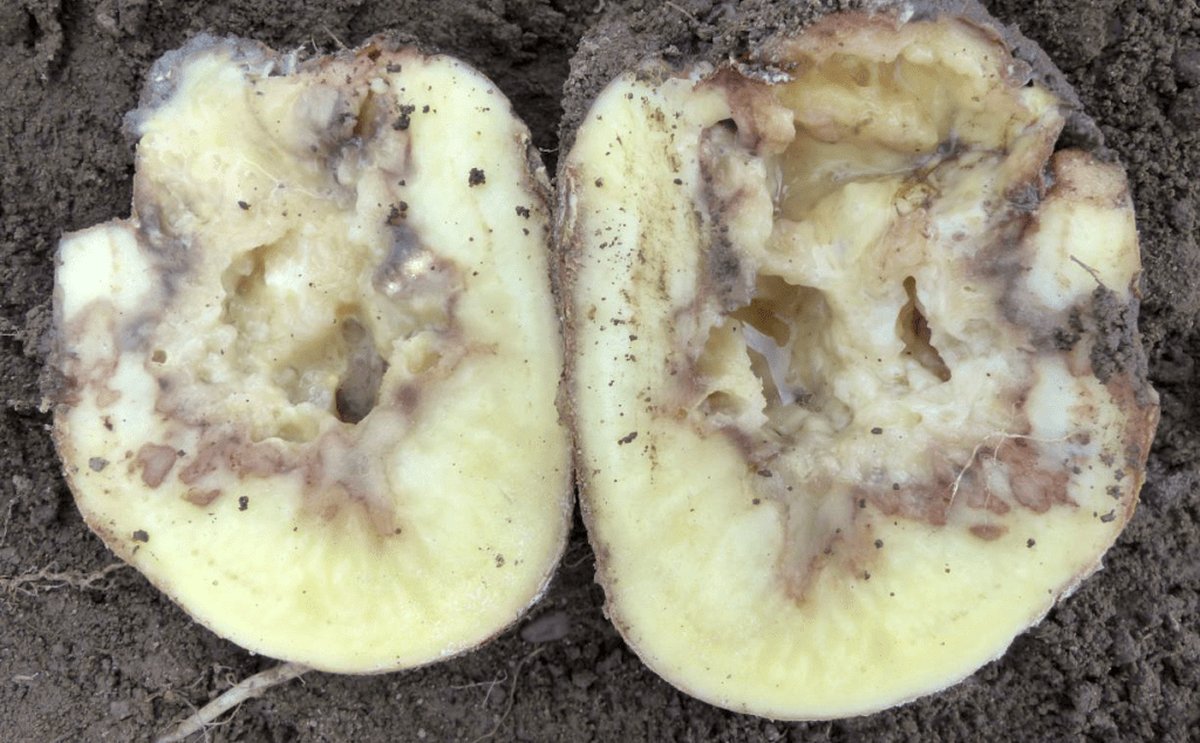
Dickeya dianthicola
In many cases opening up a field and seeing a lot of soft rots can be very scary but moving on and returning in two weeks has allowed enough time for rots to breakdown completely and the crop store well many times.
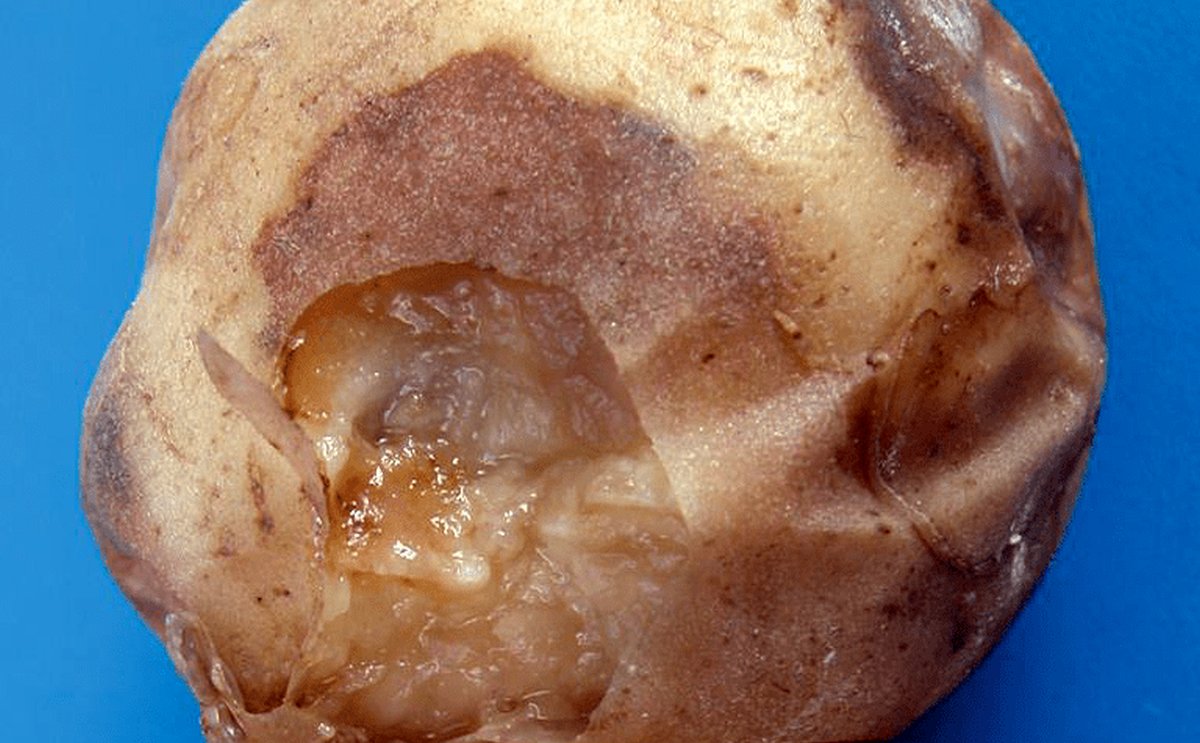
Soft rot
The top 5 storage diseases that require continuous vigilance during the storage period are: late blight, pink rot, Pythium leak, Fusarium dry rot, and soft rots. Correct Identification is critical to apply a post-harvest treatment and to implement specific storage-management practices.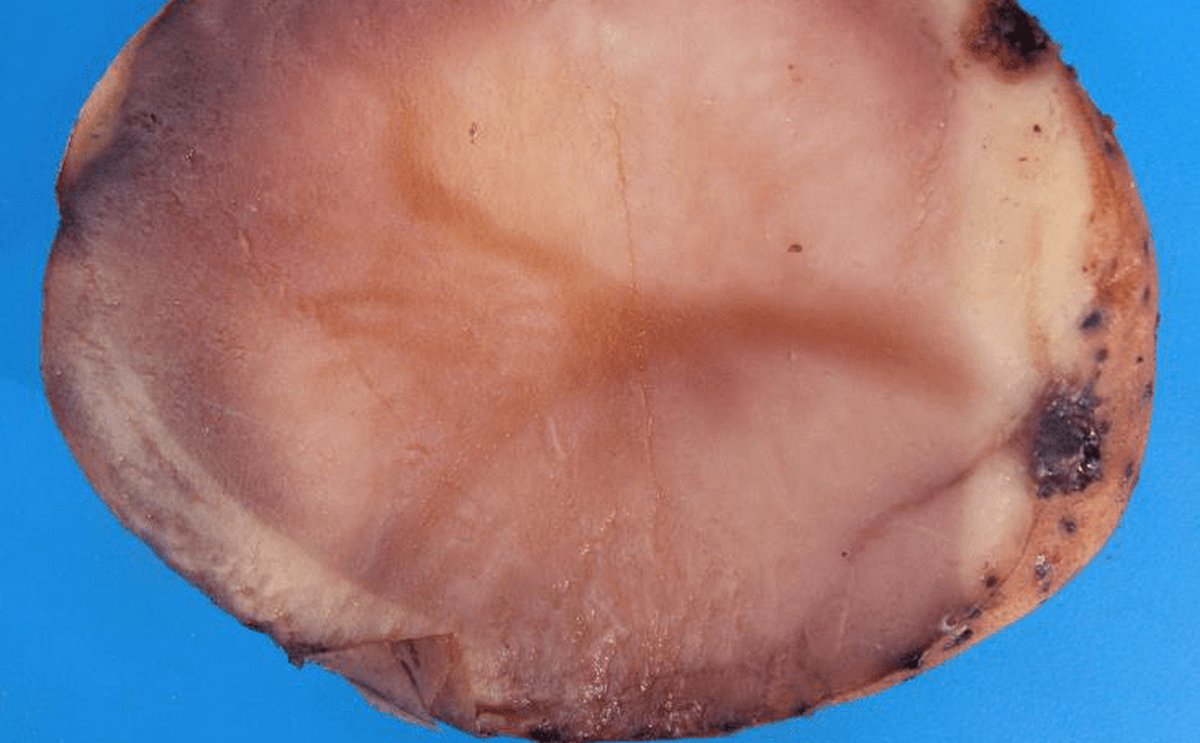
Pink rot
Applying a post harvest fungicide to a crop that is only showing bacterial soft rots can be a waste of time and money. Harvesting, handling, and storing problem potatoes require continuous attention.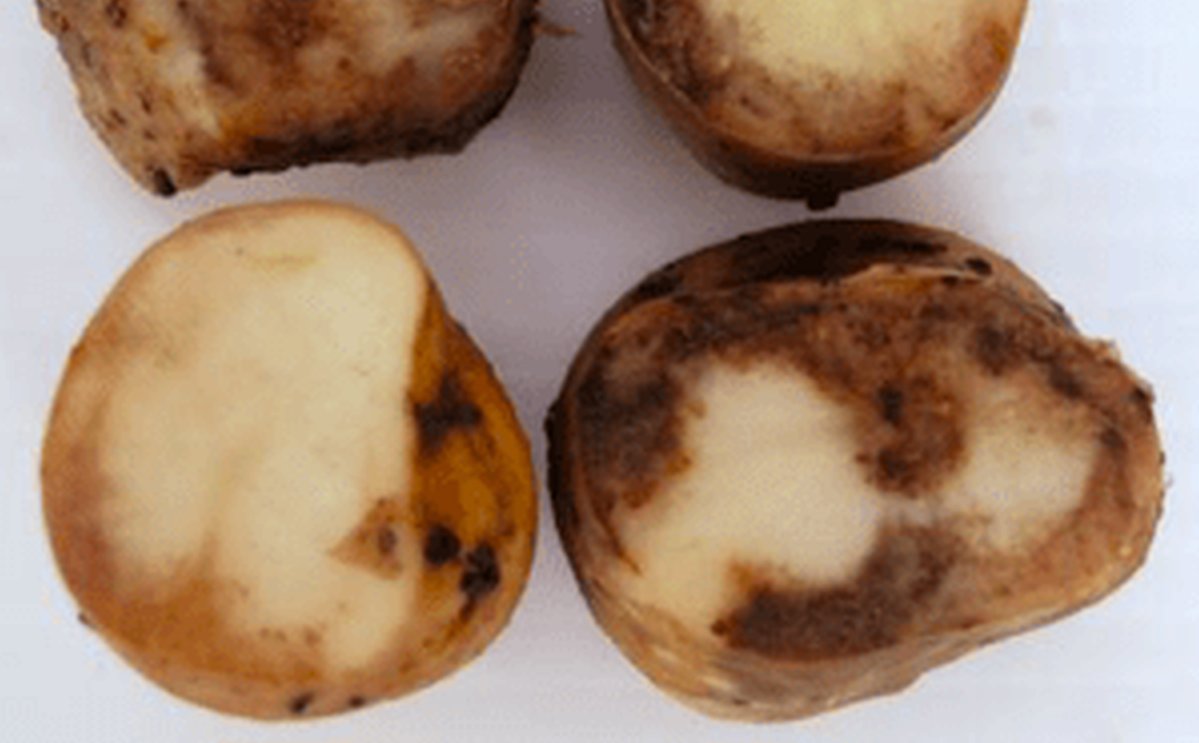
Late blight
Harvest
Harvest should start as soon as the tuber skin is set but be mindful that some varieties are taking 3-4 weeks post topkill to setup enough for long term storage success. Do not harvest under wet conditions, especially at higher pulp temps, even above 18C disease spreads rapidly.
Ensure you have a bruise free program setup and all equipment is set to avoid drops, reduced conveyors speeds and full flow to reduce bruise. Wounded and bruised tubers are readily attacked by soft rot bacteria. Tuber pulp temperature should be between 110C and 180C when digging the crop.
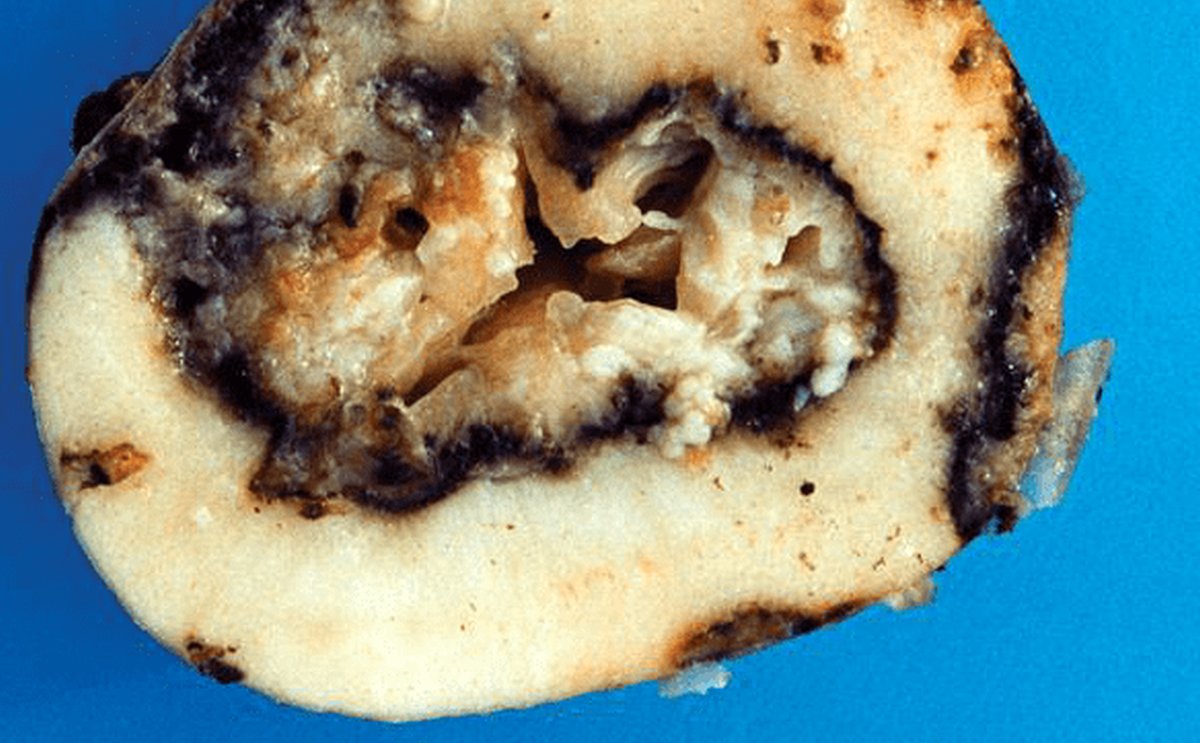
Soft rot
Post harvest treatment
Phosphorous acid products (Rampart, Confine*, Phostrol) applied as post-harvest treatments reduce the incidence of late blight and pink rot in storage. Tubers should be rolling when they pass under the spray bar to ensure uniform coverage.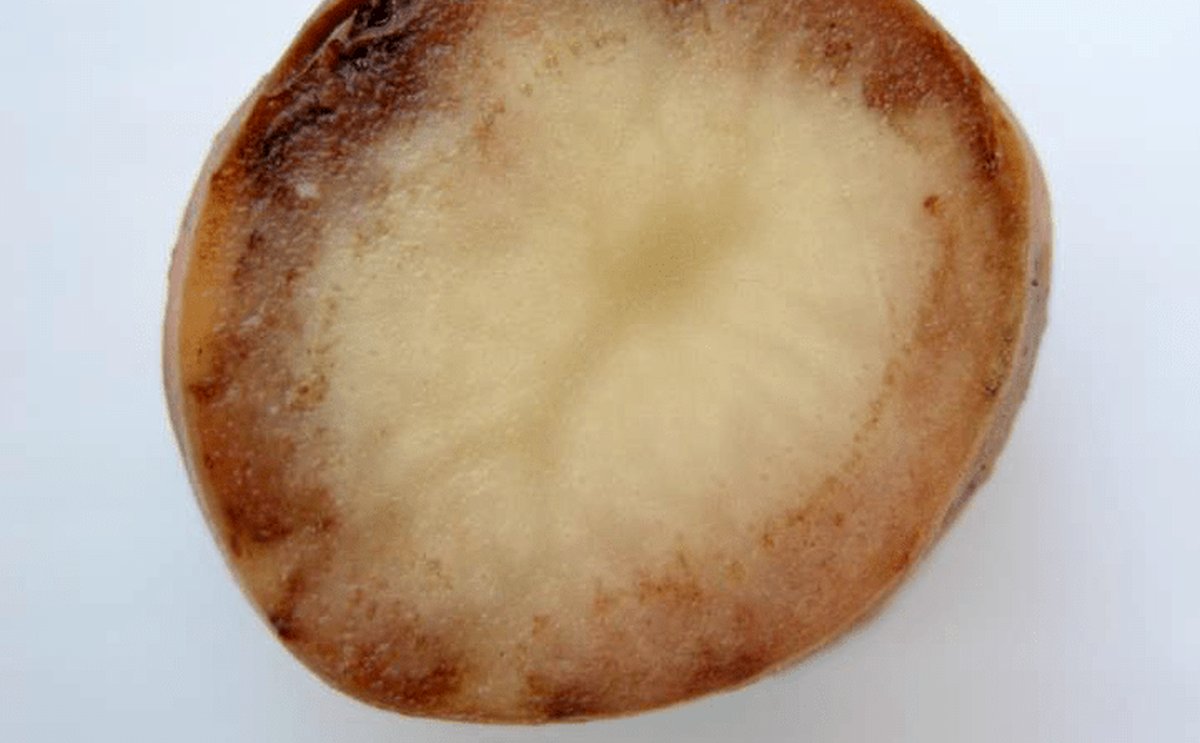
Late blight
Storage Management: Curing period – Cooling period – Holding period
A clean, sanitized storage is a must before storing potatoes. Grade out suspicious tubers and remove debris, clods, and dirt before putting the potatoes into storage. The three-basic storage management tools available are temperature, humidity, and airflow. One of the toughest situation potato storage managers face is when they realize that a potato crop in storage is at risk of deteriorating due to diseases. The critical point is to limit pathogen spread from diseased to healthy potatoes and to keep the problem from getting worse.
Curing period
Proper curing is necessary to heal cuts and bruises produced during harvest, to reduce pathogen spread, and to keep shrinkage losses at a minimum. The recommended storage temperature for curing potatoes at risk of wet rots is 100C for 2 to 3 weeks with continuous ventilation to dry out wet tubers.
The pile should be ventilated with dry air (humidifier off) until there is no further risk of breakdown. In some cases, this may take several weeks. If ‘hot spots’ begin to develop during curing, supply higher airflow to the area to help prevent additional pathogen spread.
Supplemental ventilation can be added by auxiliary fans on top of the pile or in the ducts below trouble spots. Some storage treatments are available to apply in through the humidification that could help reduce disease spread.
Cooling period
After the required curing period, adjust the storage temperature to the holding temperature. Slow and steady rates of 0.3F per day.
Holding period
Lower holding temperatures decrease the rate of disease progression. Any storage decision involving temperature adjustments must take into consideration the end-use of the potatoes.
Processing potatoes need to be stored at higher temperatures than the seed and fresh-market crop; therefore, the option of low storage temperatures is not available.
Depending upon the nature and percentage of wet rot in the storage, the pile may need additional drying ventilation with reduced-humidity air during this period.
However, reduced humidity results in additional shrinkage and delays wound healing, which can increase the incidence of Fusarium dry rot.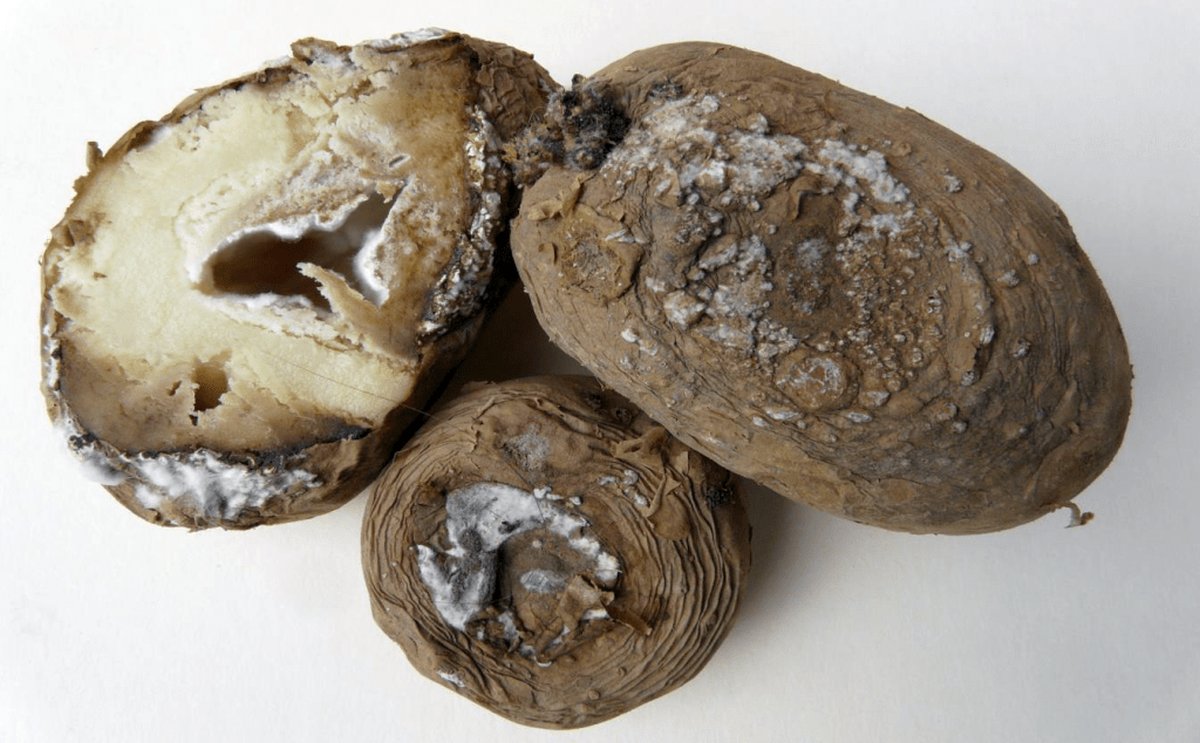
Fusarium dry rot
Decreasing relative humidity in storage to 85% or less can also decrease the secondary spread of the silver scurf pathogen. Still, evaluate other management strategies before reducing relative humidity.
Monitor the storages daily. Thermometers suspended at various depths in the pile provide a good indication of the average temperature.
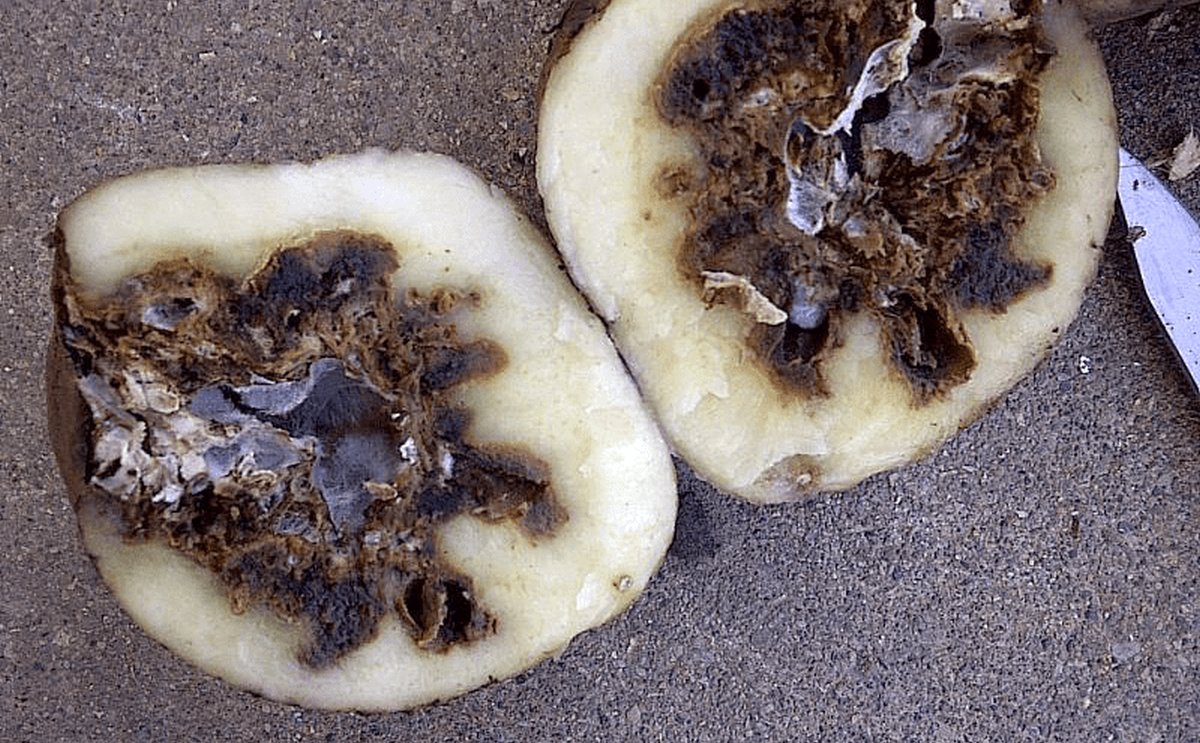
Fusarium dry rot
Infrared guns are helpful in locating hot spots before they begin to sink and spread. Processing growers may want to measure carbon dioxide levels. If carbon dioxide builds up in storage, fry colour can be variable. Carbon dioxide sensors help to maintain desired CO2 levels.
Authors:
Dr Eugenia Banks (Potato Specialist, Ontario Potato Board) –EugeniaBanks@onpotato.ca
Mark VanOostrum (WD Potato Ltd) –mark@wdpotato.caSourceDr Eugenia Banks (Ontario Potato Board) | Mark VanOostrum (WD Potato Ltd)