Potato 2.0: Cedric Porter on the Global Potato Market and the World Potato Congress in Kenya
Key takeaways
- Cedric Porter edits World Potato Markets
- 50 reports a year on production, trade, pricing
- Readers include processors, traders, banks, retailers
- Europe hit by drought, North America by heat
- Kenya will be his sixth World Potato Congress
Why it matters
- For traders
- A market analyst reading Chinese and Indian export growth as a structural shift, not a cycle, is worth noting.
- For investors
- Investment banks among the subscribers says something about who now treats potato pricing as tradeable information.
60-second summary
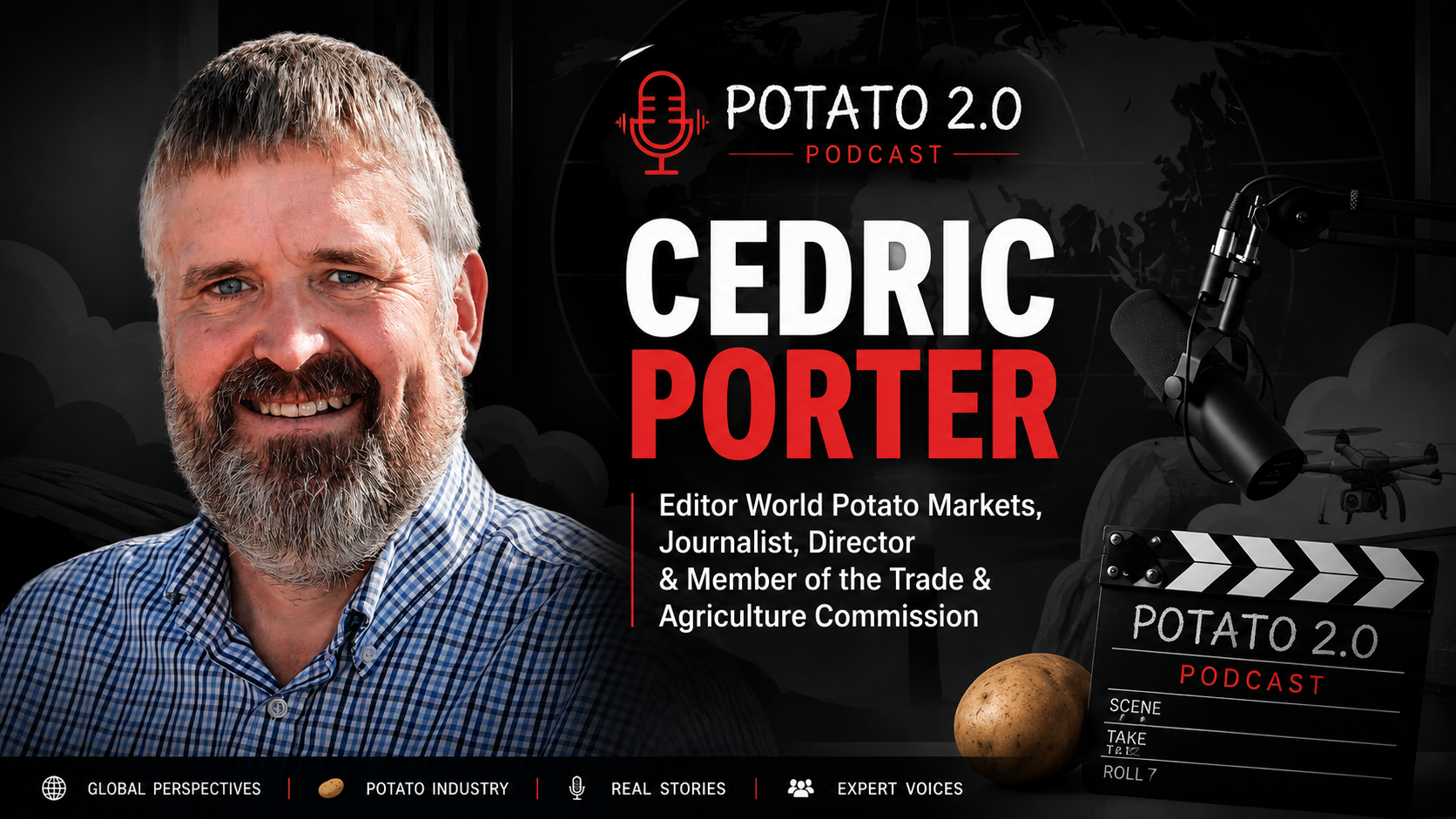
In this episode of the “Potato 2.0” podcast, Victor Kovalev spoke with Cedric Porter, editor and owner of World Potato Markets, a weekly briefing covering production, trade and pricing of potatoes and potato products. Porter has analysed agricultural markets for more than 25 years, chairs and speaks at conferences in the UK and abroad, comments on food and farming for the BBC, contributes to Farmers Guardian, Arable Farming and Dairy Farmer, belongs to the British Guild of Agricultural Journalists and serves as Vice Chairman of LEAF. World Potato Markets publishes 50 reports a year and is read not only by growers but by processors, traders, investment banks and retailers. Porter described a market constantly reshaped by weather and politics — drought in Europe this summer, intense heat in North America, El Niño on top — and pointed to a shift over the past four to five years, with exports from China and India growing enough to alter the balance across the industry.
The international potato tour continues — in the latest episode of the “Potato 2.0” podcast, host Victor Kovalev spoke with Cedric Porter, editor of the weekly briefing World Potato Markets.
Who is Cedric Porter
Cedric Porter is the editor and owner of World Potato Markets, a weekly briefing on the global potato market covering production, trade, and pricing of potatoes and potato products. He has been analyzing agricultural markets for more than 25 years, regularly speaks at and chairs conferences in the UK and abroad, and comments on food and farming issues on the BBC. Besides World Potato Markets, Porter contributes to Farmers Guardian, Arable Farming, and Dairy Farmer, is a member of the British Guild of Agricultural Journalists, and serves as Vice Chairman of LEAF (Linking Environment And Farming).
What the guest talked about
World Potato Markets comes out every week — 50 reports a year covering the production, trade, pricing, and consumption of potatoes worldwide. According to Porter, the publication isn’t aimed only at growers: its readers include processors, traders, investment banks, and retailers — essentially anyone connected to the potato industry in some way.
Weekdays. Unsubscribe in one click.
Porter noted that the potato market is constantly shifting under the influence of weather and political factors: this summer Europe was hit by drought, North America saw intense heat, and El Niño is adding to the overall picture. He also pointed to a shift in the market’s key players over the past four to five years — exports of potatoes and potato products from China and India have grown significantly, affecting the balance of power across the industry.
The conversation also turned to the World Potato Congress — for Porter, the upcoming trip to Kenya will be his sixth Congress. He said the event’s real value lies in bringing people from around the world together around a single shared interest: over three to four days, participants cover everything from market conditions to agronomy and potato consumption, while also getting out to see the fields and meet local farmers. Porter also has a personal tradition — taking photos with a potato with a drawn-on face (his “Spudy Buddy”) alongside delegates from different countries.
To get in touch with the World Potato Markets team or request sample issues of the briefing, visit worldpotatomarkets.com.
World Potato Congress 2026: Kenya to Host the WPC for the First Time
The 13th World Potato Congress will take place from October 26–30, 2026 in Naivasha, Kenya, on the shores of Lake Naivasha in the Great Rift Valley — the first time in the Congress’s more than thirty-year history that it will be hosted by a country in Sub-Saharan Africa. The venue will be the Sawela Lodges Convention Centre.
Organizers expect more than 1,000 delegates from over 60 countries — representatives from science, business, policy, and trade — while other estimates put the total number of participants, including local farmers, above 2,500. The theme of the 2026 Congress is “Global Potato Partnership for Enhanced Food Systems, Nutrition Security and Trade.”
The program will cover five key areas: potato production and trade, variety development and seed systems, pest and disease management, post-harvest processing, and technology, mechanization, and climate-smart agriculture. Alongside the business program, delegates can expect field visits to Kenyan potato farms and a trade exhibition, plus a cultural component — a taste of local cuisine, where potatoes hold a special place (dishes such as waru, mukimo, and viazi karai).
Kenya is East Africa’s strategic agricultural hub: potatoes remain one of the country’s key food crops, grown by more than 8,000 farmers nationwide, with the sector actively developing seed systems and agri-technology focused on climate resilience.
For details and registration, visit www.wpc-2026kenya.com.
Watch the Video
The full video version of the interview with Cedric Porter is available in a short clip from the “Potato 2.0” podcast — subscribe to the podcast so you don’t miss new episodes about the global potato industry.
Global Potato Brief
Top five stories, prices, disease alerts and events. Weekday mornings, no advertising.
Sources
- Cedric Porter, editor of World Potato Markets — interviewed in the Potato 2.0 podcast
Linked in this material
- Country
- United Kingdom
- Companies
- World Potato Markets; LEAF
- Events
- World Potato CongressKenya
- Sections
- IPTPOTATO 2.0
Related stories
From a Garage Startup to an Agricultural Holding: How Central Asia Grows the Perfect Chipping Potato
229 Countries in Three Months: Who Reads POTATOES NEWS, and Why We’re Opening Partnerships for 2026–2027