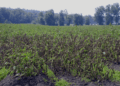
Abnormally hot weather that has gripped Russia’s Altai Krai for nearly two months is endangering the region’s potato crop – the “second bread” of local residents. According to Mikhail Krainyansky, an agronomist and founder of the farming enterprise “Agrosnab,” the situation is critical: only 20 mm of precipitation has fallen since planting, and during the crucial flowering and budding phase, there was no moisture at all. As a result, the plants have set very few tubers, and if rain does not arrive soon, they will drop even more. While home gardeners can water their plots, industrial-scale irrigation is impossible due to the lack of nearby water sources. Farmers are resorting to anti-stress and amino-acid preparations to help potatoes retain some yield, but these cannot replace water – without moisture, the tubers simply will not fill out and will remain small. The agronomist sadly concludes that even if downpours start now, no miracle will happen: the yield potential has already been irreversibly lost.
Ironically, the extreme heat and drought have suppressed Colorado potato beetles and fungal diseases like late blight, which thrive in cool, damp conditions. However, bacterial diseases have become more active in the heat. The biggest concern for consumers is the price. Krainyansky predicts that wholesale prices will reach 40–50 rubles per kilogram, while retail chains may charge 50–60 rubles or more – a significant increase driven by poor yields and high demand from both private buyers and large processors who fear a looming shortage. The agronomist notes that calls are already pouring in from buyers asking about volumes and prices, but he cannot offer any encouraging forecasts. According to Lyudmila Syrykh, head of the hydrological and meteorological department at the Altai Center for Hydrometeorology, only brief, localized summer showers are expected in the coming week, with no prolonged downpours like those currently flooding European Russia and the Southern Urals. The outlook for spring crops is equally bleak, with winter crops faring slightly better – but across the board, good harvests are not anticipated this year.