Poland: Zamarte Breeder Marks 80 Years With 125 Varieties; Purple Provita Yields About 23 t/ha
Polish potato breeder HZ Zamarte, founded in 1946, has released 125 varieties and tests 75,000 seedlings a year. Its purple-fleshed Provita matures in about 90 days and gives about 23 t/ha in the field.
Hodowla Ziemniaka Zamarte, the first potato breeding company set up in Poland after the Second World War, marks its 80th anniversary in 2026. The company was founded in 1946 and has introduced 125 varieties since then, according to two reports in the Polish farm magazine top agrar Polska in September.
“Introduction of a new variety is a process lasting 10–11 years. We start with 75,000 seedlings,” said Piotr Kamiński, president of HZ Zamarte. Breeders assess about 70 traits during selection. Sales director Marcin Piekarski said the company competes with about 170 breeding programmes across Europe. Known Zamarte varieties include Denar, Lord, Bielik, Gardena, Impresja, Jurek, Olga and Widawa. After a poor 2025 season, the company expects stronger demand for quality seed potatoes.
Purple flesh for a niche market
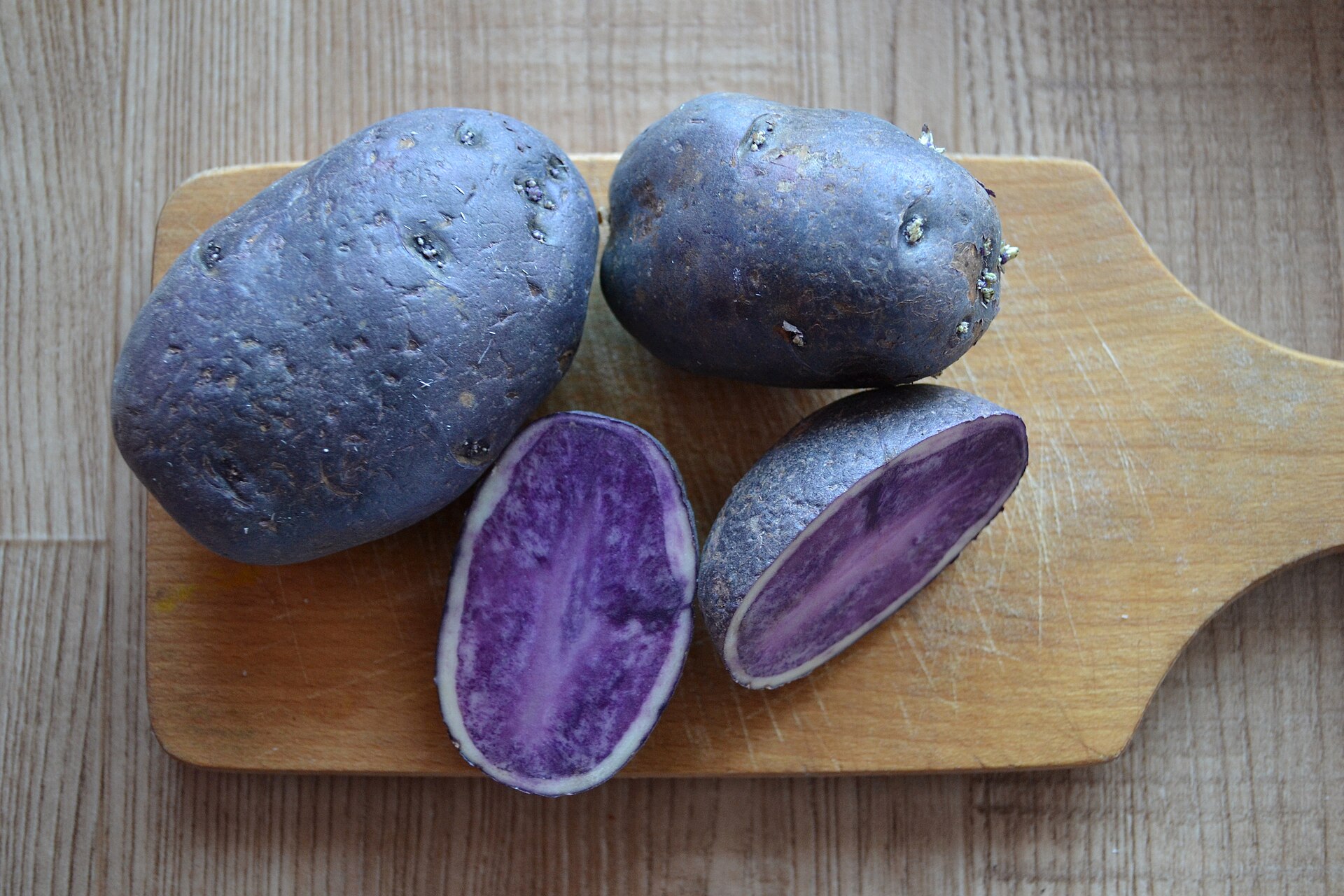
A report published on 17 September presents Provita. It was registered in 2021 as the first Polish variety with purple flesh in the national register, said Aleksandra Bech of Zamarte. The variety comes from an old German breeding line.
Weekdays. Unsubscribe in one click.
Provita is an early variety. It reaches full maturity in about 90 days and is planted in the second half of April. In trials with full irrigation the maximum yield was about 30 t/ha. In normal field conditions growers can expect about 23 t/ha, the report says. This is much less than for standard varieties. Provita needs a lot of water and gives poor tuber size in dry conditions. It stores very well and does not sprout until spring. Its main weakness is high susceptibility to potato virus Y, so growers must renew seed often.
The purple colour comes from anthocyanins, natural pigments. Their content rises in sunny weather.
Why it matters
Domestic breeding gives Polish growers varieties adapted to local soils and climate. With 75,000 seedlings a year and a cycle of more than a decade, breeding is a long-term investment. The competition with about 170 European programmes is strong.
Coloured varieties like Provita target a premium market. The lower yield must be paid back by a higher price. Growers need irrigation and clean seed to manage the risks of drought and virus Y.
Photo: Purple-fleshed potatoes of the Vitelotte type (not the Provita variety) (illustrative). Blanka Luppová / Wikimedia Commons, CC BY-SA 4.0