Hungary: Potato Area Falls to About 5,065 ha, a Tenth of 1990s Levels
Hungary grows potatoes on only about 5,065 hectares in 2026, a tenth of the 1990s area. The national potato board now backs an end to the state cap on retail margins.
Potato growing in Hungary has hit a historic low. The planted area in 2026 is about 5,064 to 5,065 hectares. Farm outlet Agrárágazat reported the figure on 14 September 2026. Business daily Világgazdaság gave the same area of about 5,065 hectares earlier in September.
In 2025, Hungary grew potatoes on 7,800 hectares, according to Agrárágazat. The crop reached 221,000 tonnes. In the 1990s the area was 50,000 to 60,000 hectares. It peaked at 63,000 hectares in 1997. In 2000, Hungary produced 863,500 tonnes, based on data from the statistics office KSH.
Harvest may fall below 100,000 tonnes
Agrárágazat estimates the 2026 crop at 87,000 to 100,000 tonnes. The outlet multiplied the area by last year’s average yield of 24.6 tonnes per hectare. It then deducted losses of 20% to 30%. May frosts and summer drought caused those losses in early potatoes.
Weekdays. Unsubscribe in one click.
Imports fill the gap in winter and spring. Egypt and Israel are important suppliers. Zsolt Polgár heads the potato research institute of MATE university in Keszthely. He said irrigation is key for competitive production in the long term.
Prices have moved sharply. In late August, Hungarian potatoes sold for 160 to 200 forints per kg on wholesale markets. Polish potatoes cost about 220 forints per kg, according to Világgazdaság.
Growers back an end to margin caps
On 22 September, the National Potato Association and Product Board joined eight other farm groups in a joint statement. They support ending the state cap on retail margins. The board said prices must reflect real production costs. There is no room for further artificial market limits, it said. Agrárszektor reported the statement on 24 September.
Why it matters
Hungary is turning into a structural importer of potatoes. With a tenth of the old area, domestic growers cover a shrinking share of demand. Frost, drought and weak prices have driven many out of the crop.
The margin cap debate matters for the growers who remain. If retailers can pass on costs, producer prices may better reflect higher input costs. Without irrigation and stable prices, the decline in area is likely to continue.
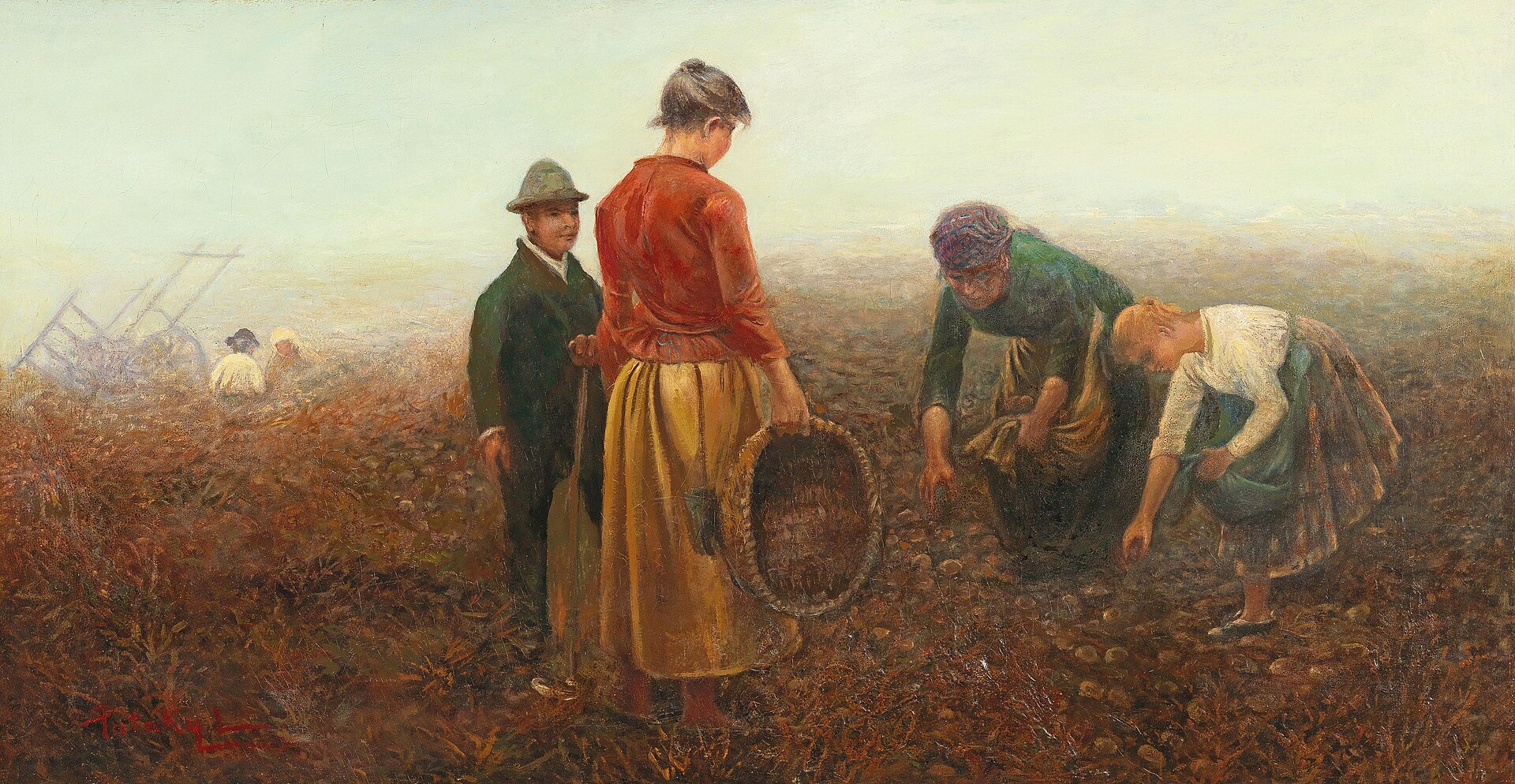
Photo: The Potato Harvest, a painting by the Hungarian artist László Pataky (illustrative). László Pataky / Wikimedia Commons, public domain