Europe: EU_36 Late Blight Clone Falls to 34% of Samples as Resistant EU_43 Rises to 12%
EuroBlight early 2025 data show EU_36_A2 down to 34% of samples, while EU_43_A1, resistant to CAA and OSBPI fungicides, rose to 12%. France has the highest share.
The late blight population in Europe is changing again. EuroBlight early data for 2025 show that genotype EU_36_A2 made up 34% of all early samples. In 2024 it was 52%. The fungicide-resistant genotype EU_43_A1 rose from 9% to 12%.
The EuroBlight network of European scientists monitors Phytophthora infestans. Its early 2025 release, dated 15 December 2025, covers about 1,250 results. Blight pressure was low in 2025. Only 166 samples came from the Netherlands, Germany and Belgium, against more than 1,000 in 2024.
Where EU_43 is spreading
The share of EU_43 differs by country. It reached 25% in France (n=345) and 20% in the Netherlands (n=69). It was 13% in Belgium, 12% in Germany and 4% in Denmark. Another clone, EU_46_A1, rose from 4% to 7% of all samples. In Great Britain it formed 20% of 278 samples.
Weekdays. Unsubscribe in one click.
The final 2024 data, released on 28 May 2025, give the longer view. Teams in 27 countries genotyped 2,914 samples. EU_43 fell from 23% in 2023 to 9% in 2024. The EuroBlight database now holds more than 21,000 samples from 37 countries for 2013–2024.
What resistance means in practice
EU_43 is resistant to mandipropamid and other CAA fungicides. It also shows resistance to the OSBPI fungicide oxathiapiprolin, according to EuroBlight. The UK Fungicide Resistance Action Group (FRAG-UK) confirms this profile. Its June 2025 guidelines say the strain emerged in Denmark in 2018 and spread into northern continental Europe.
EU_46_A1 has a different profile. All strains found in Great Britain so far are insensitive to oxathiapiprolin but sensitive to CAA fungicides, FRAG-UK says. EU_36_A2 is still the dominant clone in Great Britain and Northern Ireland. FRAG-UK reports no documented fungicide resistance for it. EuroBlight notes a low frequency of EU_36 samples resistant to oxathiapiprolin.
Why it matters
Two important modes of action are now under pressure in parts of Europe: CAA and OSBPI. Growers in France, the Netherlands and Great Britain see the highest shares of the problem clones. Spray programmes that rely on one of these groups alone carry growing risk.
FRAG-UK advises never to exceed label limits for the number of applications. Knowing which clones are present locally is essential before choosing products. The 2026 EuroBlight data will show whether EU_43 and EU_46 keep gaining ground.
Prevention & control · Editorial note
Late blight (Phytophthora infestans): what growers can do
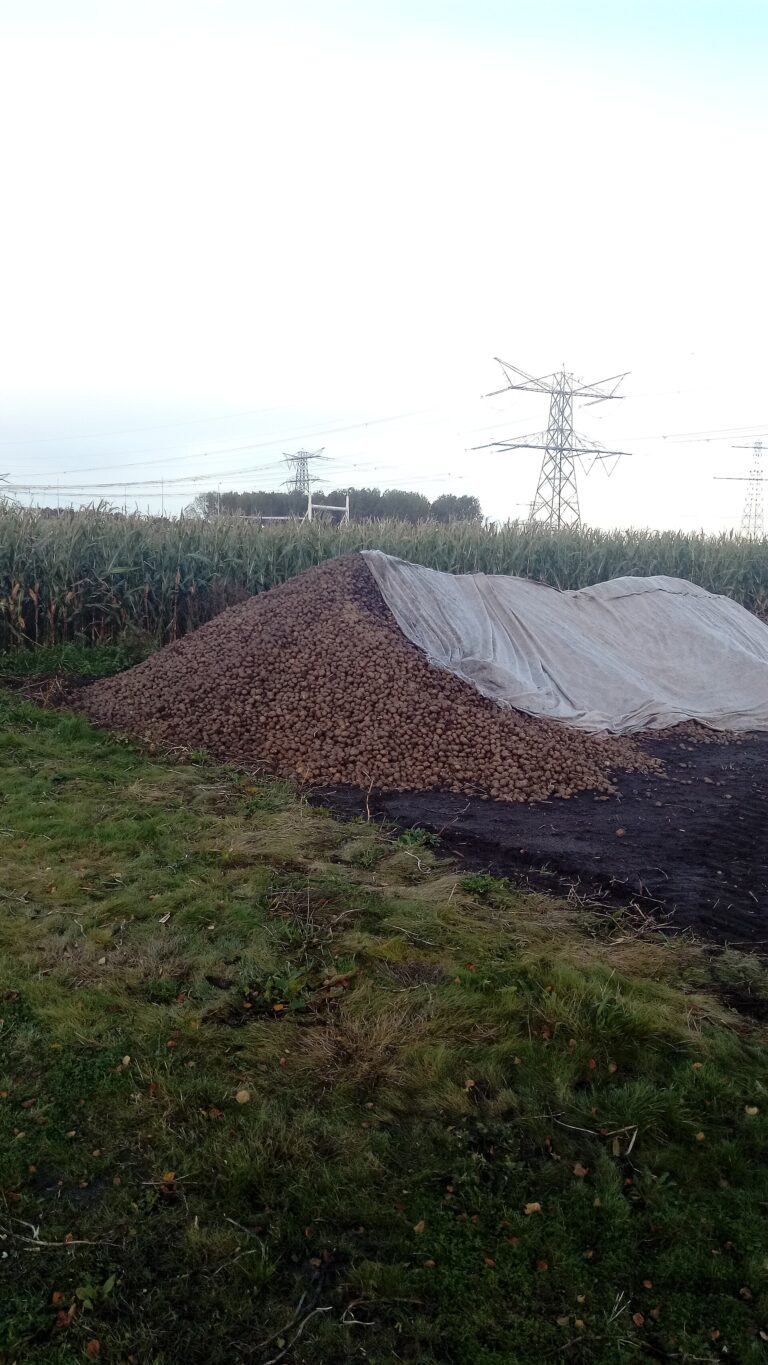
- Prevention: plant healthy seed, remove cull piles and volunteer plants, and choose less susceptible varieties.
- Monitoring: follow a local blight warning system and send samples for genotyping when control fails.
- Chemical protection in Europe: fluazinam (FRAC 29), cyazofamid (FRAC 21), propamocarb (FRAC 28), cymoxanil (FRAC 27), copper (FRAC M1) — check the national register of your country.
- Resistance management: alternate or mix FRAC groups. Use phenylamides (FRAC 4) only preventively and in a mixture. EU_43_A1 is resistant to FRAC group 40.
This note is provided by the potatoes.news editorial team for information only. It is not a recommendation of any company and is not mandatory. Use only plant protection products authorised in your country and follow the label. Product names and registrations differ between countries; consult a local agronomist.
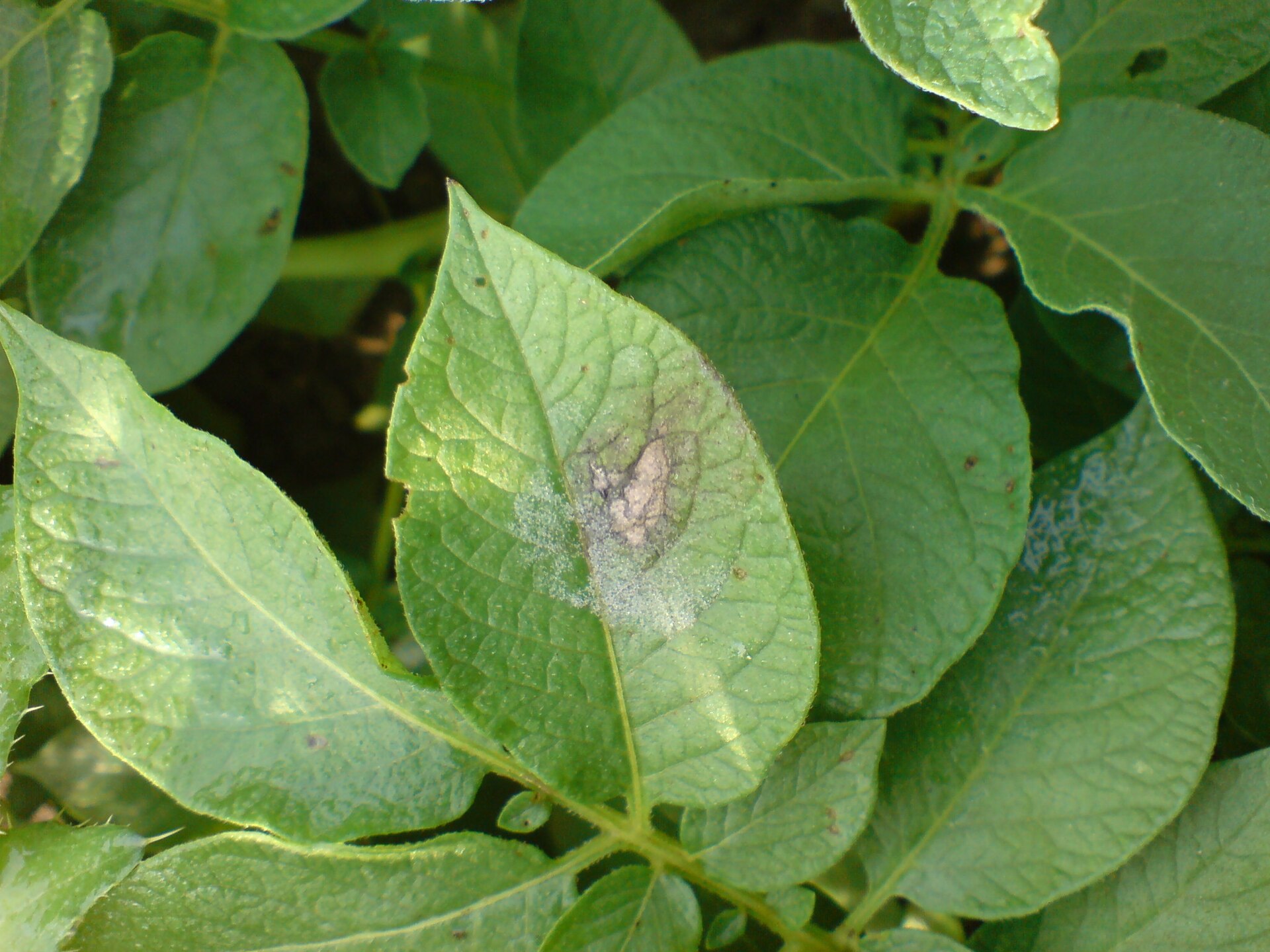
Photo: Late blight on a potato plant (illustrative). Björn Andersson (SLU) / Wikimedia Commons, CC BY-SA 4.0