Honduras moves to tighten potato import controls as 2,200 growers receive fertiliser
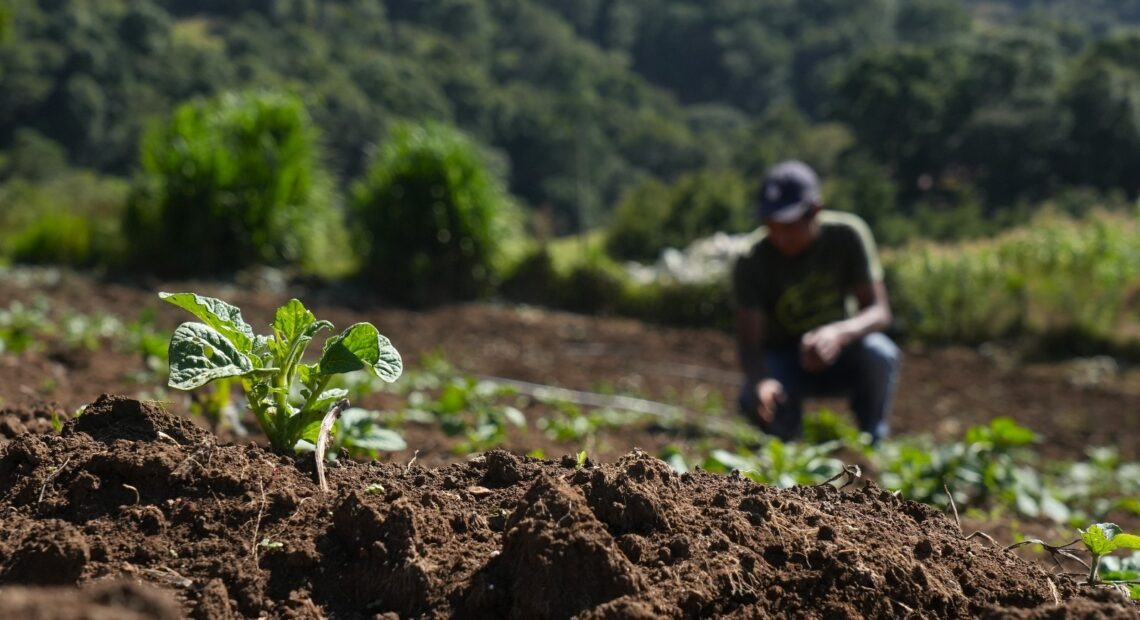
Honduran potato growers are pressing the government to rein in imports and smuggling, and the authorities are starting to respond. The national agri-food health and safety service, Senasa, is to review the country’s potato import ceiling and how monthly volumes are allocated among importers. A legal instrument governing imports of seed and fresh potatoes is also in the works. Alongside these steps, the Ministry of Agriculture and Livestock (SAG) has distributed fertiliser to 2,200 growers in Intibucá, the country’s main potato-producing department.
Market pressure from abroad
The import commitments were agreed recently between growers and the authorities, according to Honduran outlet El Informativo. Senasa will revisit both the overall import cap and the monthly quota per importer. A separate legal framework is to cover the entry of seed potatoes and potatoes for the fresh market.
The move follows mounting frustration in the sector. At a meeting with SAG officials in early September, potato and onion producers named smuggling as one of the main factors depressing prices and making it harder to sell domestic produce. They said the problem is worst in periods when Honduran supply alone is enough to meet local demand. Potato grower Héctor Hernández said that the planned regulation would protect farmers at the marketing stage and help curb contraband from other countries. SAG is drafting a single regulation for potatoes and onions that would set rules for both the production and the marketing of the two crops.
Weekdays. Unsubscribe in one click.
Honduras already applies a quota to planting material. On 31 May 2026, SAG and the National Potato Chain Committee set a ceiling on imports of certified seed potatoes for the 2026–27 season. The ceiling is 84 containers, or roughly 2,000 tonnes, which works out at about 24 tonnes per container.
Fertiliser for the planting window
Deputy Agriculture Minister Ricardo Peña said on 13 September 2026 that each of the 2,200 beneficiaries had received four quintals of fertiliser. The Honduran quintal is 100 lb, or about 45.4 kg. That puts each allocation at around 181 kg and the total at 8,800 quintals, or roughly 400 tonnes. These conversions are our own calculations. The fertiliser formulation was not disclosed. For comparison, in November 2022 SAG gave around 1,000 Intibucá growers five quintals each of a 12-21-12 NPK compound.
The handout delivers on a pledge Peña made a week earlier, when he urged potato and onion growers to take advantage of the current planting window and promised fertiliser support. Intibucá grower Margarito Vásquez said that the aid was significant because many farmers lacked the money to buy fertiliser themselves.
How big is the Honduran crop?
According to SAG, Honduras produces about 1.3 million quintals of potatoes a year, equivalent to roughly 59,000 tonnes. Most of the crop goes to the domestic market, and some is sold to El Salvador and Nicaragua. Production is concentrated in the highlands of Intibucá, Ocotepeque, Francisco Morazán and La Paz.
Growers argue that the country can meet domestic demand on its own. They cite yields of 300–350 quintals per manzana. The manzana is a Central American land unit of about 0.7 ha, so these yields equate to 19.5–22.7 t/ha. These figures come from industry representatives, not official statistics.
Some caveats apply to these numbers. At those yields, 1.3 million quintals would require around 2,600–3,000 ha under potatoes (our estimate). At a typical seeding rate of 2–2.5 t/ha, the 2,000-tonne seed import quota would plant only about 800–1,000 ha, a third of that area or less. The remainder is presumably planted with locally multiplied seed. SAG has described the 84-container quota as underpinning “a production capacity of over 1.3 million quintals”. That phrasing is best read as a benchmark rather than a direct link between imported seed and national output.
Honduras’s self-sufficiency is also open to question. A 2023 report carried by PotatoPro put the planted area at about 2,900 manzanas (around 2,000 ha). The same report said Honduras remained a net importer because the domestic harvest did not cover demand. [VERIFY: 2023 data may be outdated]
Jobs and rural livelihoods
Industry representatives say the potato chain supports more than 20,000 direct and indirect jobs. They add that the income helps farming families pay for food, education, irrigation systems and equipment, and service their loans. The 2023 report cited a much lower figure of 5,800 permanent jobs. The two measures are not directly comparable, but the gap is wide. [VERIFY]
Sources
- El Informativo (Honduras), 13 September 2026 (primary source): https://www.elinformativo.hn/archivos/135625
- Argenpapa, 13 September 2026: https://www.argenpapa.com.ar/noticia/17718-honduras-2-200-productores-de-papa-reciben-fertilizantes-y-el-gobierno-revisara-las-importaciones
- SAG press release on the seed potato import quota, 31 May 2026: https://prensa.sag.gob.hn/2026/05/31/gobierno-y-productores-fortalecen-la-sostenibilidad-y-produccion-de-papa-en-el-pais/
- Infobae, 9 September 2026 (growers’ meeting with SAG on smuggling): https://www.infobae.com/honduras/2026/09/09/productores-de-papa-y-cebolla-en-honduras-llaman-a-frenar-el-contrabando/
- El Informativo (SAG meeting with potato and onion growers): https://www.elinformativo.hn/archivos/135569
- TNH, 16 November 2022 (fertiliser distribution in Intibucá): https://tnh.gob.hn/nacional/sag-entrega-mil-bonos-a-productores-de-papa-en-intibuca/
- PotatoPro, 2023 (planted area and employment): https://www.potatopro.com/news/2023/honduras-cosecha-de-papa-mueve-la-economía-en-intibucá