Global: Irrigation Raised Nitrate Leaching Under Potatoes by 52% in a Canadian Study
On sandy soil in Quebec, irrigation increased nitrate leaching under potatoes by 52%, and coated urea leached more than a split programme. Extension advice links nitrogen timing to crop uptake.
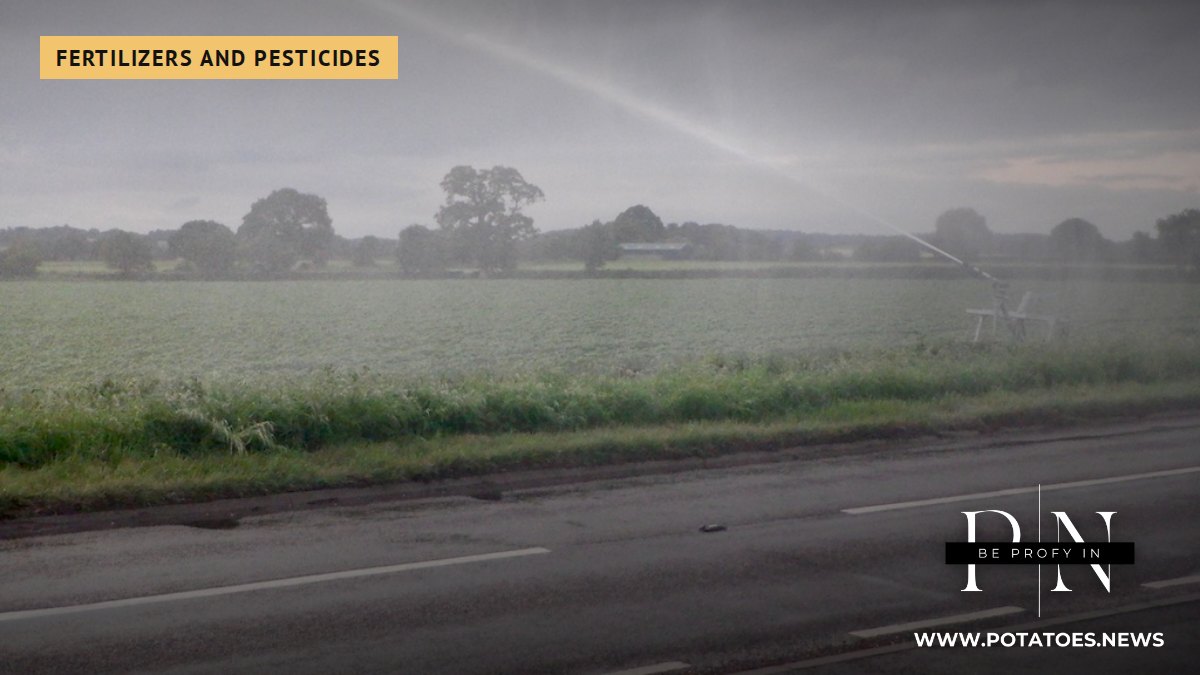
Potatoes have shallow roots and are often grown on sandy, irrigated soils. This makes nitrate leaching a common problem. Nitrogen that moves below the roots is lost for the crop and can reach groundwater. Recent field research shows that timing matters as much as the nitrogen rate.
Irrigation raised leaching by 52%
A three-year study on a sandy soil near Quebec City, Canada, published in Agronomy in 2021, compared single applications of polymer-coated urea (PCU) at 100, 150 and 200 kg N/ha, a mix of 75% PCU and 25% urea, and a conventional split application of 200 kg N/ha. The split programme gave half the nitrogen as ammonium sulphate at planting and half as calcium ammonium nitrate at hilling.
Fertiliser nitrogen increased nitrate leaching during the season only under irrigation. On average, irrigation raised seasonal nitrate leaching by 52%. Even plots without nitrogen fertiliser lost 40 kg of nitrate-N per hectare under irrigation, against 17 kg without irrigation. At 200 kg N/ha, both coated-urea products leached more nitrate than the split programme. The authors linked this to the timing of nitrogen release and deep water movement. Yields of the split programme and PCU at the same rate were similar. Coated products also left more mineral nitrogen in the soil after harvest, which can leach later.
Weekdays. Unsubscribe in one click.
Match nitrogen to crop uptake
The University of Minnesota Extension gives similar advice for irrigated sands. Peak nitrogen uptake in late-season potatoes occurs between 20 and 60 days after emergence. Starter fertiliser for full-season varieties should contain no more than 40 lb N per acre, about 45 kg/ha (our calculation). Most nitrogen should go in split doses starting about 10 days before peak uptake. Fertigation doses are 10 to 30 lb N per acre each time for mid- and late-season varieties. Nitrogen applied more than 10 weeks after emergence is rarely useful and can build up nitrate in the soil.
In Brazil, a study in Field Crops Research, summarised by USDA ARS, found that split applications of stabilised ammonium sulphate nitrate with the inhibitor DMPP raised fresh tuber yield by an average of 15% compared with conventional urea on tropical sandy soils, including at 75% of the recommended rate.
Why it matters
Nitrate lost to drainage is lost money and a pollution risk. On irrigated sands, growers can cut losses by splitting nitrogen, following crop uptake and avoiding heavy irrigation that pushes water below the roots. Slow-release products are not automatically safer: their release must match rainfall and irrigation.
Photo: Irrigation of a potato field (illustrative). Richard Webb / Wikimedia Commons, CC BY-SA 2.0