Global: Extra Phosphorus Raised Potato Yields in Only 33% of Trials on High-Phosphorus Soils
Eleven on-farm trials near the Great Lakes found that potato response to phosphorus falls as soil phosphorus rises. An earlier Minnesota study showed that phosphorus adds tubers, but many of them are too small to sell.
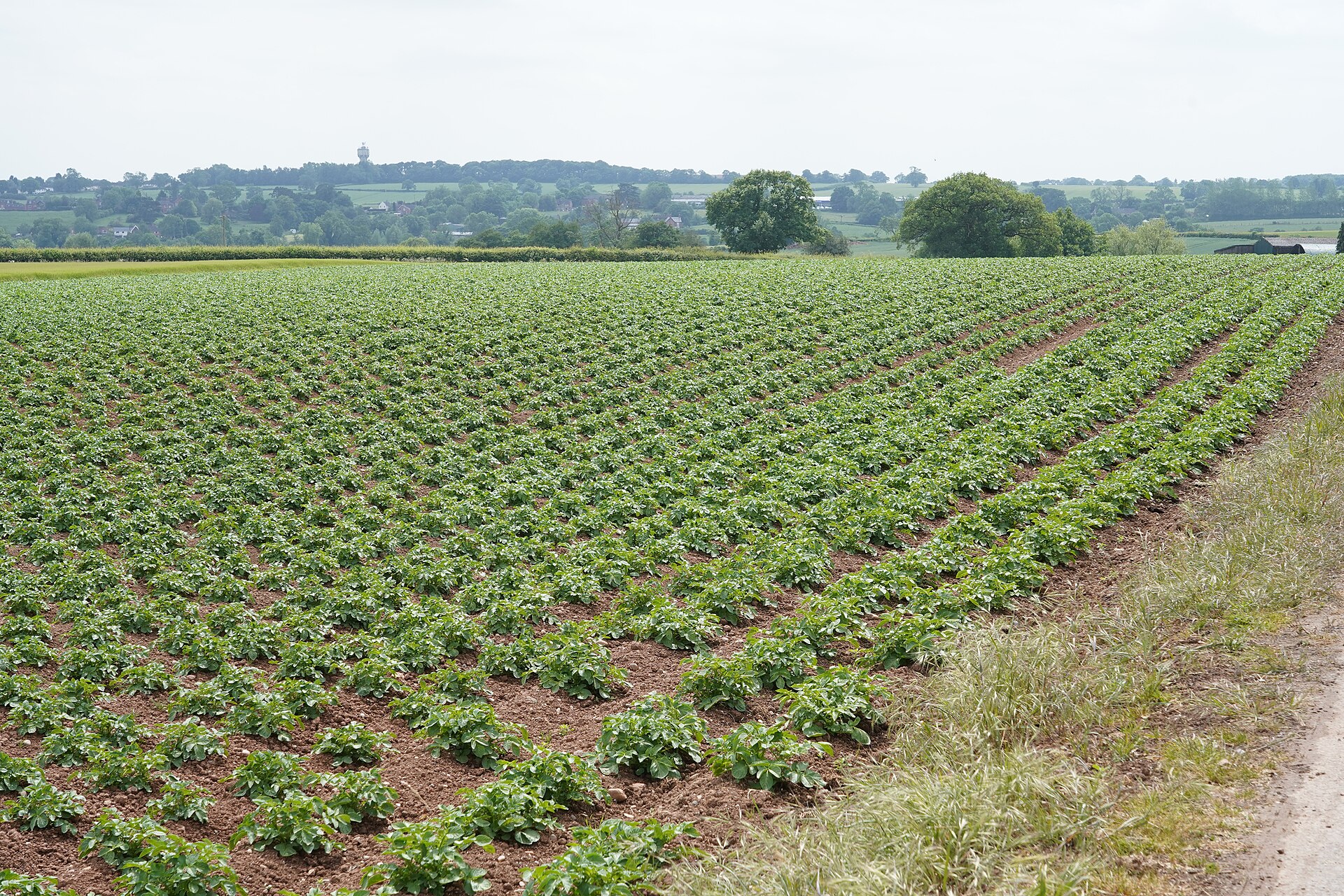
Phosphorus is one of the most used fertilisers in potatoes, and growers often apply it to push early growth and tuber set. Two North American field studies show that the benefit depends strongly on the soil test.
The newest study, published in February 2026 in the European Journal of Agronomy by J. Rutan and K. Steinke, ran eleven field trials over two years on mostly coarse-textured soils. Soil test phosphorus ranged from 64 to 210 mg/kg (Bray-P1). Six rates, from 0 to 224 kg P2O5 per hectare, were banded in the furrow at planting.
Potato yield responded to added phosphorus in 50% of cases when soil phosphorus was deficient (below 75 mg/kg), in 75% of cases when it was optimal (75–150 mg/kg) and in only 33% of cases when it was above 150 mg/kg. The authors found that growers may apply up to 45 kg P2O5/ha as a banded starter at planting whatever the soil test. They also found that plant biomass 30 days after emergence matched the final yield response. Phosphorus removed with the tubers was 1.13 kg P2O5 per tonne, 13.3% less than the 1.30 kg value used in current guidelines. The work was driven partly by concern about Great Lakes water quality.
Weekdays. Unsubscribe in one click.
More tubers, not more saleable tubers
An earlier three-year study by Carl Rosen and Peter Bierman of the University of Minnesota, published in the American Journal of Potato Research in 2008, tested banded rates of 0, 37, 42 and 74 kg P/ha on Russet Burbank. The loamy sand already had medium to high phosphorus (25–33 mg/kg Bray-P1).
Phosphorus increased the number of tubers per plant and total yield. But the extra yield came as undersized tubers below 85 g, while the share of large tubers above 285 g fell. As a result, phosphorus had no significant effect on marketable yield. The source of phosphorus (MAP or DAP), the timing and the starter nitrogen rate gave inconsistent results.
The Great Lakes study agreed in one key point: yield, not tuber set, was the better basis for phosphorus rate guidelines.
Why it matters
Phosphorus fertiliser is costly, and surplus phosphorus can run off into lakes and rivers. The two studies suggest that on soils that already test high, large phosphorus doses rarely pay. They may even shift the crop towards small tubers, which suits seed growers but not growers of large processing potatoes.
A soil test before planting, a modest banded starter and a check of early biomass give a better basis for the phosphorus rate than a fixed habit.
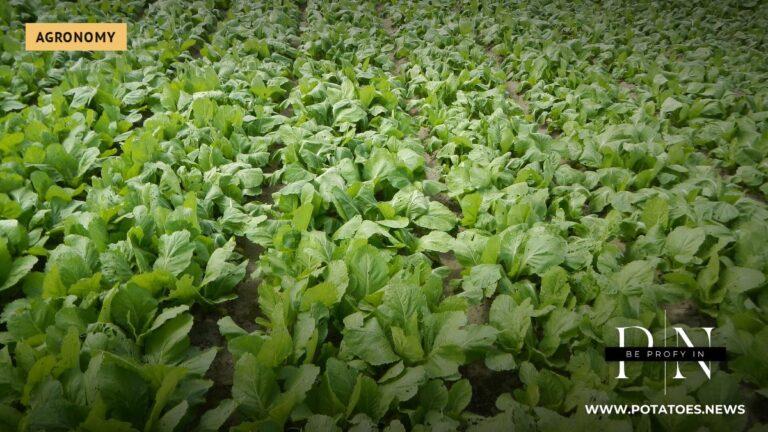
Photo: Rows of potato plants (illustrative). Malcolm Neal / Wikimedia Commons, CC BY-SA 2.0