Germany grows most of its potatoes in one state. In 2025 Lower Saxony harvested 6.6 million tonnes on 139,900 hectares, with a yield of 472.3 decitonnes per hectare, according to final data from the Federal Statistical Office (Destatis) reported by FreshPlaza. This was about 47.5% of the national crop of 13.87 million tonnes. North Rhine-Westphalia followed with 2.5 million tonnes and Bavaria with 1.9 million tonnes.
The national potato area in 2025 was 301,800 ha, up from 282,200 ha in 2024. The average yield was 459.6 decitonnes per hectare, against 450.2 dt/ha a year earlier. The statistics portal of the federal agriculture ministry (BMEL-Statistik) gives the same 13.9 million tonnes and 139,900 ha for Lower Saxony. It lists 47,600 ha in North Rhine-Westphalia and 41,300 ha in Bavaria, and 25,370 farms that grew potatoes in 2025.
Six decades of change
The long FAOSTAT series, published by Our World in Data, shows how the crop changed. In 1961 Germany produced 29.9 million tonnes of potatoes at 18.1 t/ha. In 2000 it produced 13.2 million tonnes at 43.3 t/ha, and in 2024 12.7 million tonnes at 45.0 t/ha. This means the area fell from about 1.66 million hectares to about 282,000 ha, a drop of about 83%. Yields went up about 2.5 times.
Most of the fall happened before 2000. Since then the crop has changed much less: 13.2 million tonnes in 2000, 12.7 million tonnes in 2024 and 13.9 million tonnes in 2025.
Production is now concentrated. Lower Saxony, North Rhine-Westphalia and Bavaria together grew about 11 million tonnes in 2025, or about 79% of the German crop, on about 76% of the area. North Rhine-Westphalia had the highest yield of all states, at about 52 t/ha, according to BMEL-Statistik. In 2015 the Lower Saxony statistics office said that two thirds of the state’s potato area was used for industrial and seed potatoes, and one third for table potatoes.
For 2026 BMEL-Statistik shows a smaller potato area of 268,300 ha, or 2.3% of German arable land. This is 33,500 ha less than in 2025.
Why it matters
German potato supply now depends mainly on the weather and water in the north-west. A dry summer in Lower Saxony changes the national balance more than a good year in the south. Because the state also grows much of the industrial and seed crop, its harvest matters for starch, fries and seed buyers far outside the region.
The smaller area in 2026 comes after a large 2025 crop. Processors and traders who plan volumes for 2027 should follow the regional data, not only the national total.
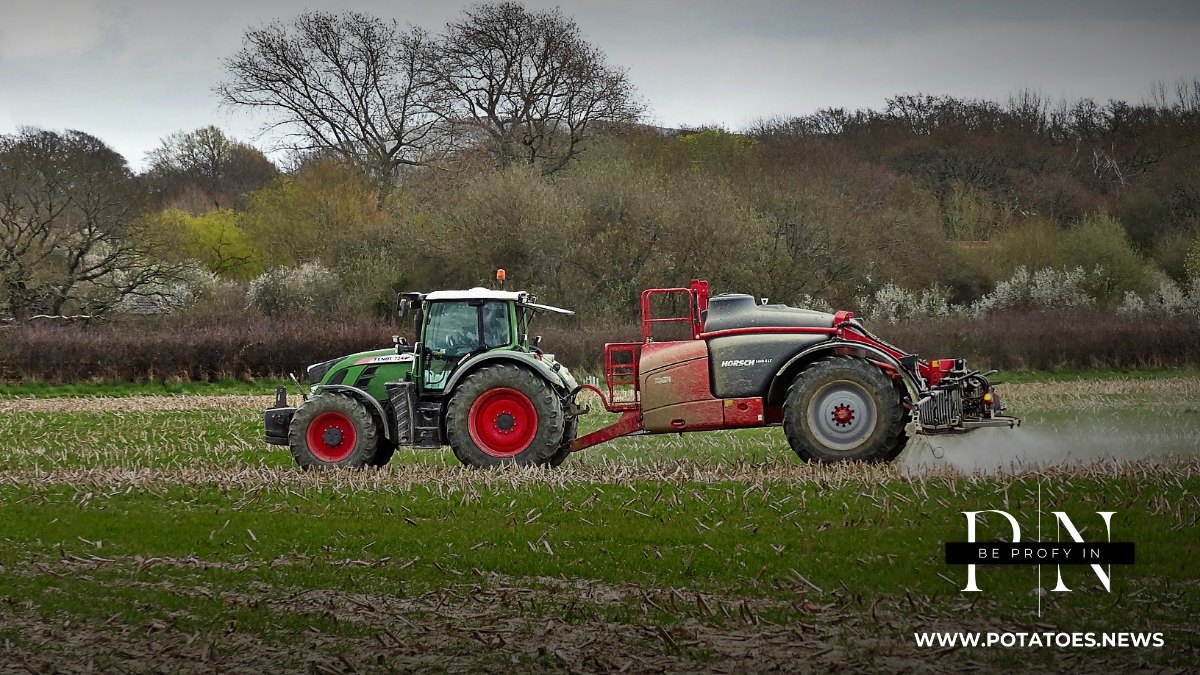
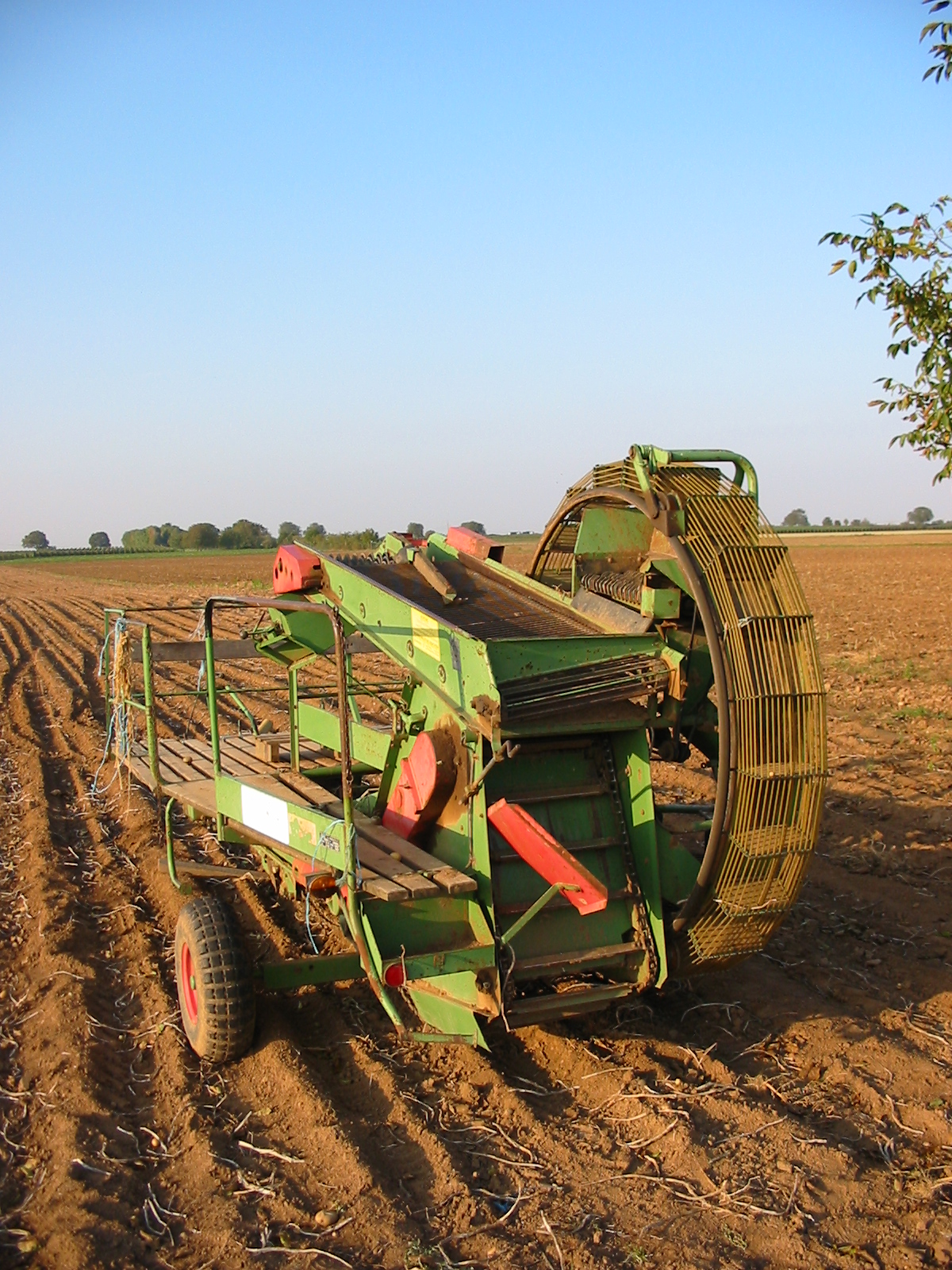
Photo: A potato harvester on a harvested field in Haßloch, Palatinate, Germany (illustrative). Georg Slickers / Wikimedia Commons, CC BY-SA 3.0