

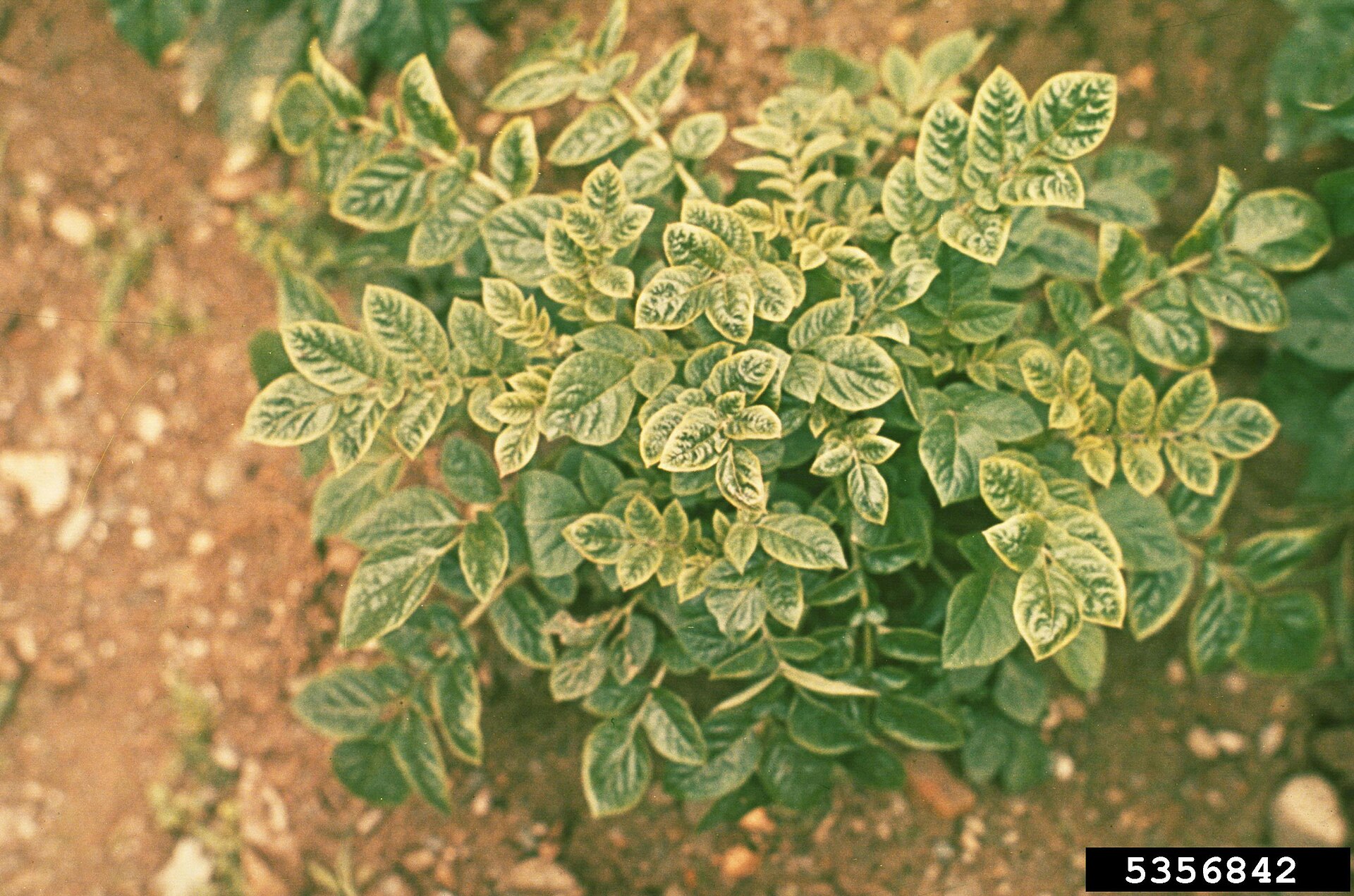
Potato leafroll virus (PLRV) is the classic persistent virus of potato: aphids acquire it, retain it for life and transmit it through many feedings, with the green peach aphid (Myzus persicae) as the dominant vector worldwide. That persistence makes PLRV the one major potato virus where insecticide programmes genuinely work — and where seed certification delivers its clearest economic return.
Symptoms are distinctive once you know them: infected plants stand erect and pale, with lower leaves that roll thickly and dry at the margins, leathery to the touch, while upper leaves roll lightly and develop a reddish or yellowish blush. The rolling is a carbohydrate blockage — the virus plugs the phloem, sugars accumulate in the leaves and tuber initiation suffers. Yields from infected plants drop sharply, and the effect compounds when infection arrives before tuber set.
In the tuber, current-season infection shows as net necrosis: a fine brown web of dead phloem visible when a fried or boiled slice is held to the light — a processing rejection in North America and a seed-certification failure everywhere. Plants grown from an infected tuber show the full syndrome; plants infected during the season may carry the virus into storage without visible tuber symptoms at harvest, revealing themselves only in the net necrosis test or in the next crop.
The disease cycle links seed, aphids and volunteers. Infected seed plants serve as the season’s reservoir; winged aphids spread the virus field-wide during summer; and volunteer potatoes in following crops bridge the gap between seasons. Because transmission is persistent and circulative — the aphid must feed for hours to acquire the virus and then remains infectious for weeks — timing of vector control matters enormously: protecting the early-season crop from the first aphid flights is worth more than any late-season spraying.
Management is a three-layer system. The base layer is certified seed, produced under aphid monitoring with post-harvest testing. The second layer is vector control in the ware and seed crop: systemic aphicides at planting or at first aphid catch, followed by monitoring through the season; in some systems, mineral oil and reflective mulch reduce probing. The third layer is hygiene — destroying volunteers, managing weed hosts and roguing early symptomatic plants before aphids move virus out of them.
Resistance breeding has produced durable results: the Rl gene and quantitative tolerance in many modern varieties reduce plant symptoms and virus titer. But resistance does not replace seed health, because even tolerant varieties can carry and transmit PLRV from infected seed. The practical benchmark remains the seed lot’s test result — PLRV is a disease you buy or avoid at planting, and fight with aphid calendars afterwards.

