Colombia: Government and Fedepapa Draft Plan to Cut Small Potato Growers’ Costs by Up to 50%

Colombia’s potato sector — built overwhelmingly on smallholders — is getting a state-backed cost-cutting program. The Ministry of Agriculture and the Federación Colombiana de Productores de Papa (Fedepapa) have agreed a joint roadmap targeting production costs, marketing and profitability, Argenpapa reports, citing Infobae.
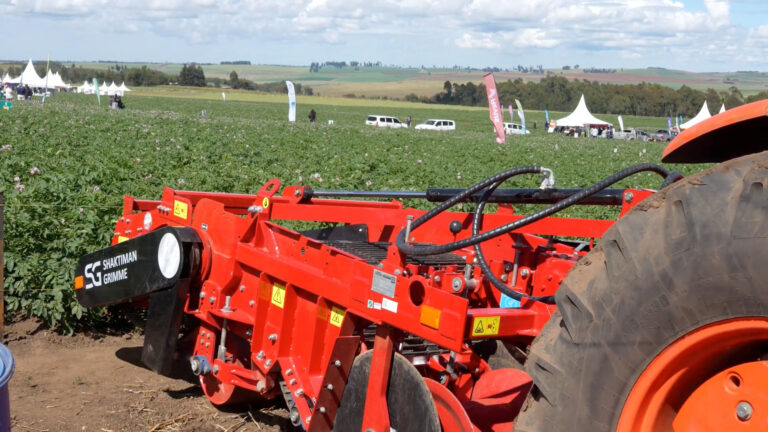
The roadmap concentrates on four areas: efficient irrigation systems, use of certified seed, knowledge transfer and crop mechanization. On the last of these, the ministry is unusually specific about the prize: the plan will examine simple machinery options adapted to small producers’ needs, and the incorporation of such tools could cut some production costs by up to 50% — particularly those tied to labour, the dominant cost line on small Andean farms.
The second pillar aims at the marketing chain, where intermediaries erode grower income. The proposal envisions Fedepapa itself receiving potatoes from producers, then brushing, washing, packing and selling them directly to supermarkets, retail chains and other large buyers — a federation-run packing and marketing operation that would internalize the margins currently captured by middlemen. For a crop where farm-gate prices routinely bear little relation to retail tags, a working direct-sales channel would be a structural change, not a pilot.
Weekdays. Unsubscribe in one click.
The government’s side of the bargain is financial. The ministry committed to structuring a financing package with long-term credits, agricultural insurance and incentives designed to facilitate the investments needed — tools aimed at modernizing farms, improving productivity and reducing the economic risks growers face. Implementation begins on 25 October with working sessions alongside producers in Villapinzón, in the department of Cundinamarca — the high-altitude heartland of Colombian potato production — where the agenda will be tested against concrete field conditions.
The social stakes behind the plan are considerable. Colombia counts approximately 90,000 direct potato producers distributed across more than 39,000 agricultural production units. Fedepapa estimates that the crop, the producers’ family environment and the wider production chain together benefit more than 350,000 families — figures that make potato cost structures a rural-development issue rather than a niche commodity question.
The stated objective of the Villapinzón working sessions is to identify concrete solutions that lower costs, raise productivity, improve grower incomes and move the sector toward what the ministry and Fedepapa describe as a more competitive and sustainable potato activity. Notably, the agenda pairs each technical track with a commercial or financial counterpart: irrigation and mechanization are matched with direct marketing, seed and training with credit and insurance — an architecture that acknowledges that agronomy alone does not fix farm economics.
The test will be execution. Colombian potato policy has seen repeated initiatives on seed quality, mechanization and marketing; what distinguishes this one is the combination of a named federation operator for direct sales, a dated start (Villapinzón, 25 October) and a quantified cost target. The first marker comes within days: whether the Villapinzón sessions produce specific machinery lists, credit terms and a functioning purchase offer to growers — or another communiqué.
Source: Argenpapa