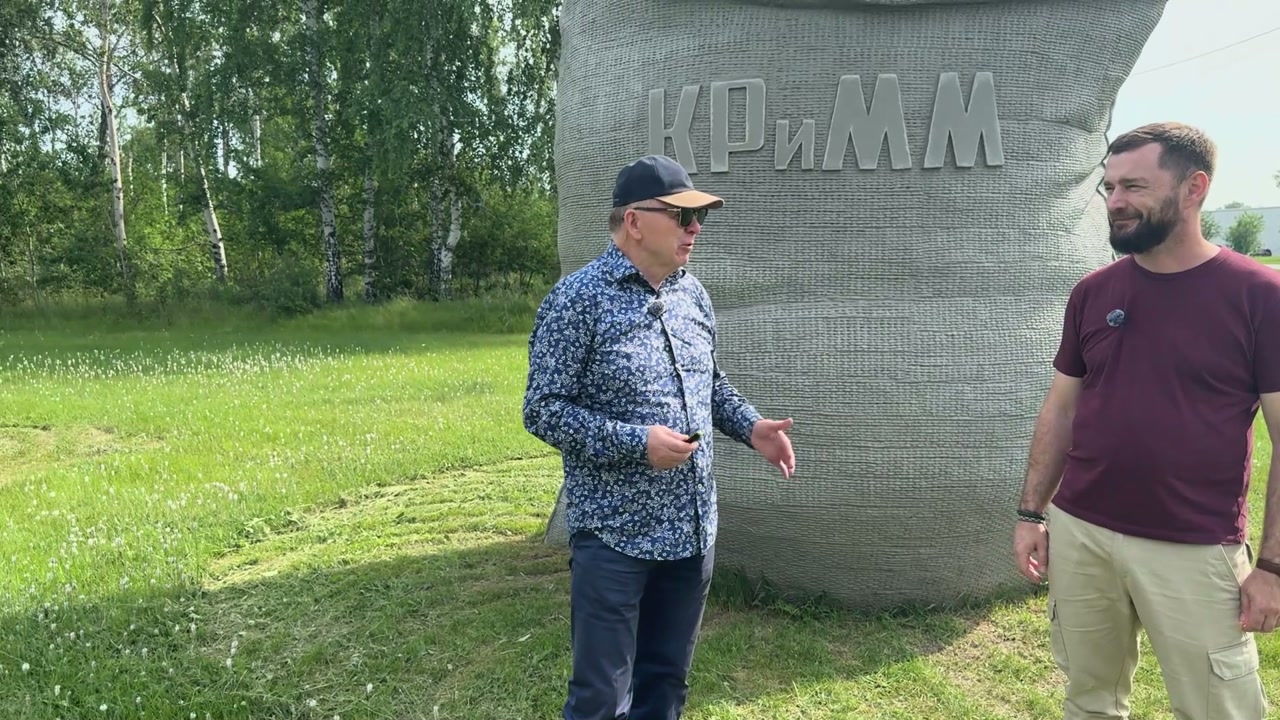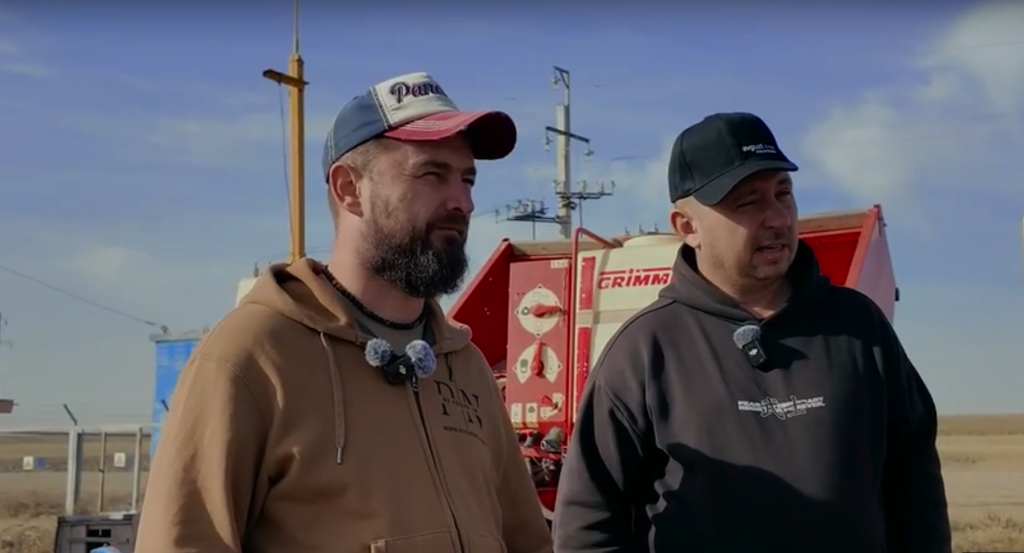
In 2025, the International Potato Tour visited Baimurza Agro 2018 in Kazakhstan’s Karaganda Region. Farm director Maksim Bukayemsky explained how the business plans around a limited water supply, grows seed potatoes and organizes harvest. Kazakhstan’s public procurement register confirms the company name and director.
Watch the visit overview. This public edit runs 15:46. The Part 1 timecodes below refer to the separate 24:46 archive recording.
How the farm budgets irrigation water
Bukayemsky said that all the farm’s potato fields are irrigated and that its irrigation water comes from snowmelt. He put the reservoir’s capacity at 5 million cubic metres and estimated the farm’s own water limit at about 2.2 million cubic metres. He said that amount was enough to irrigate 300–400 hectares of potatoes as well as areas of oilseed rape, wheat and flax. Archive Part 1, 01:53–03:16.
Weekdays. Unsubscribe in one click.
Two routes for seed potatoes
Gala was the farm’s largest potato variety by area and volume, Bukayemsky said. The farm had planted 76 hectares of VR808 for seed that season. The variety is used for chips. He also described two routes for Gala. The farm multiplies elite seed supplied by Eurasia Crop Care to the first field generation for the supplier to market, and it buys elite seed separately for its own production. Archive Part 1, 03:53–05:33.
One field gives a concrete example of the rotation. It entered irrigation in 2021 with barley, followed by seed potatoes in 2022, ware potatoes in 2023, irrigated wheat in 2024 and flax in 2025, according to the grower. Archive Part 1, 06:11–06:35.
From the field to storage
Watch Part 2. This episode follows the conversation out to the harvest equipment and covers storage cooling.
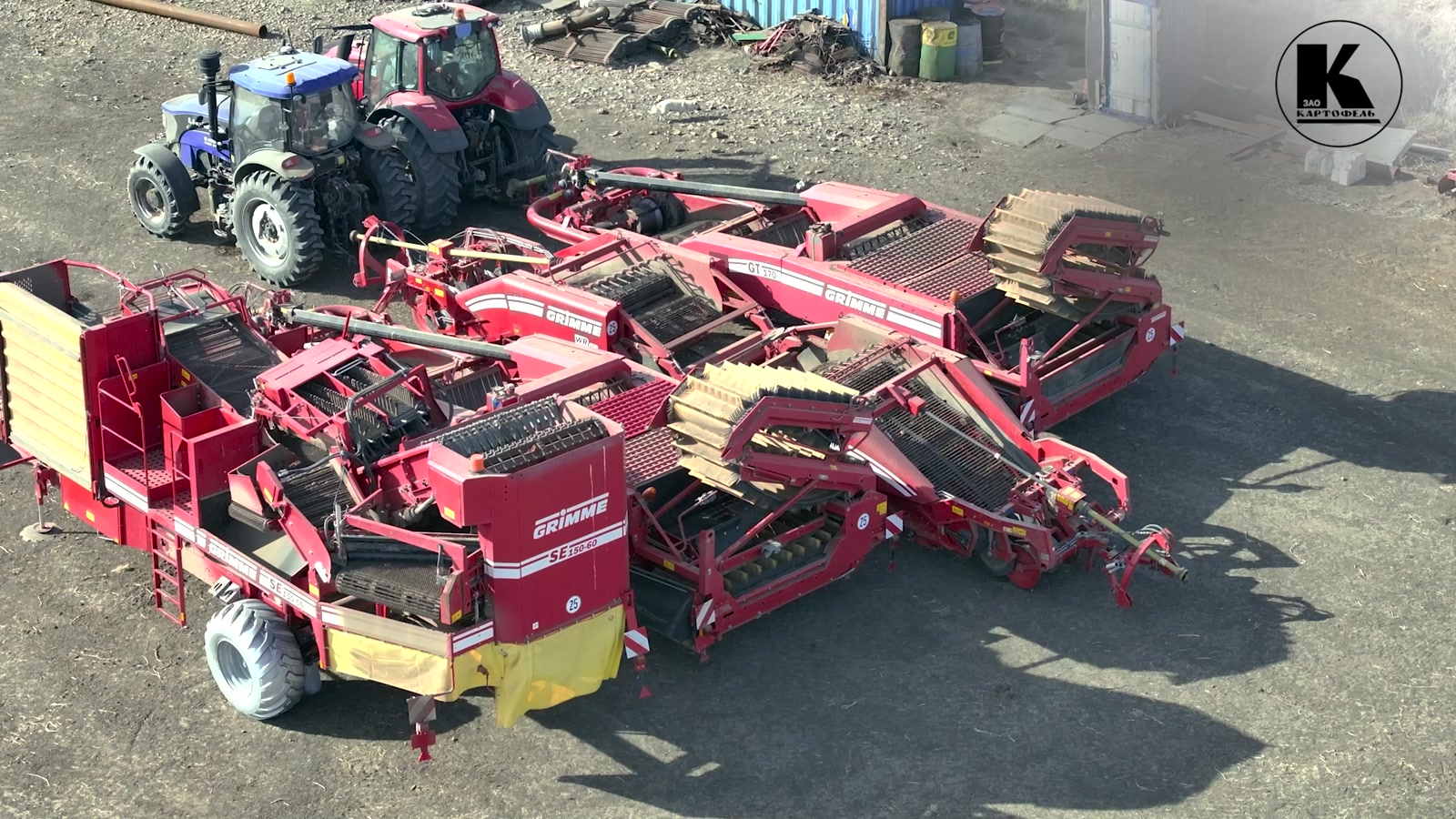
In the field, the grower described running a digger ahead of the harvester and collecting four rows at a time in a two-plus-two setup. He said the elevator harvester was his main workhorse and that the bunker harvester had only been added that season. Archive Part 2, 10:06–10:49.
The storage discussion turned to tuber respiration and how much harder it can be to bring a pile back down to temperature after it warms. That observation came from the farm conversation about its own cooling setup. Archive Part 2, 12:25–12:56.