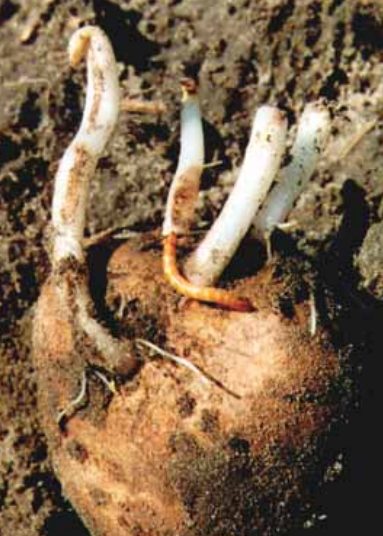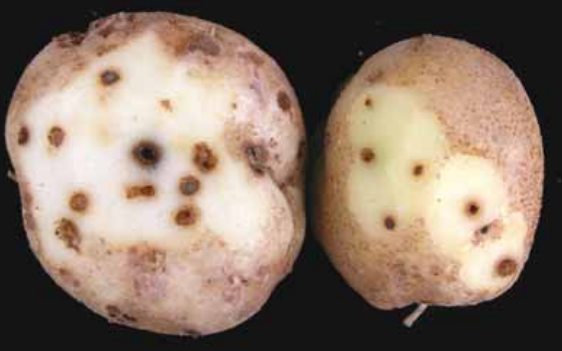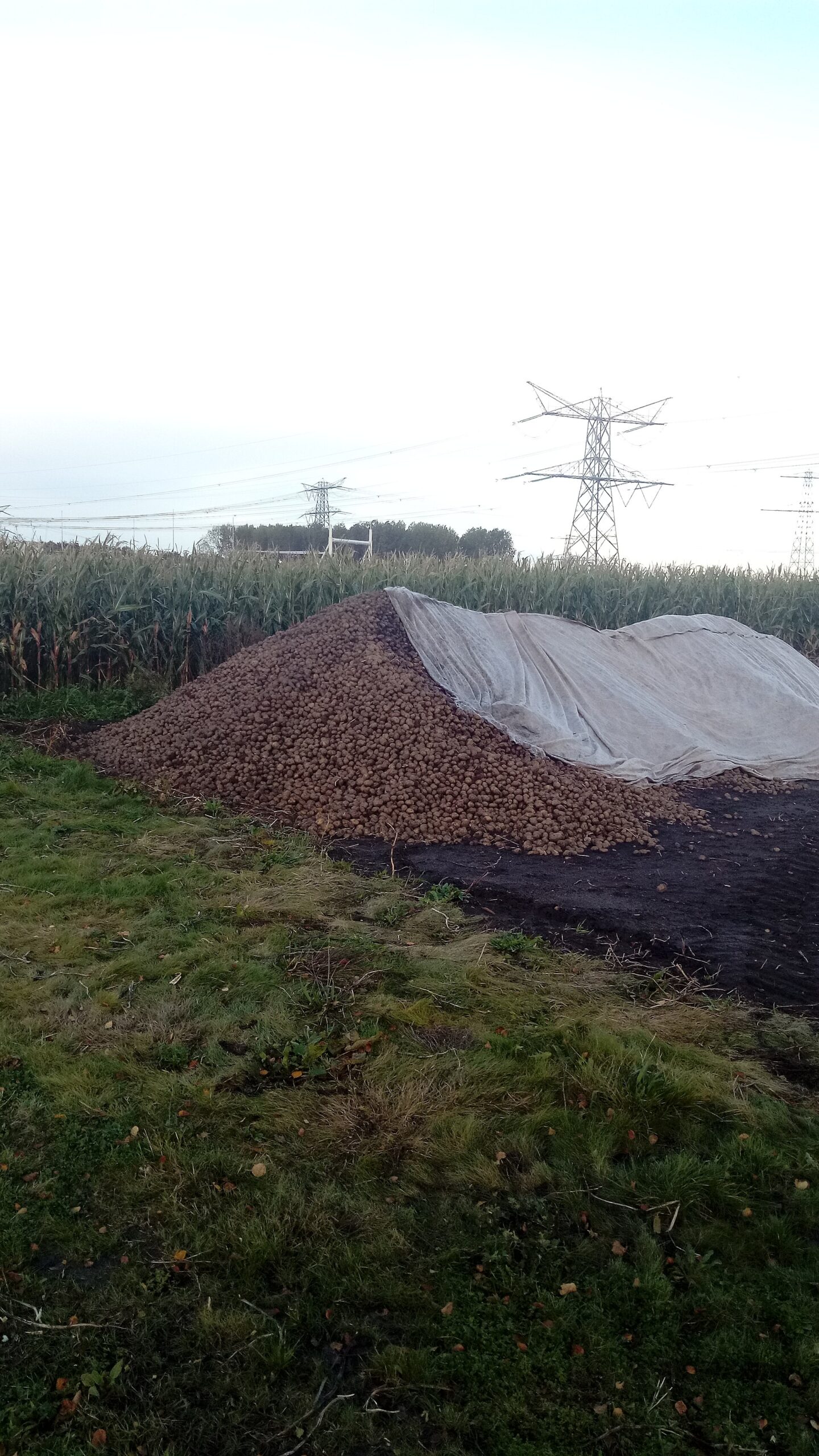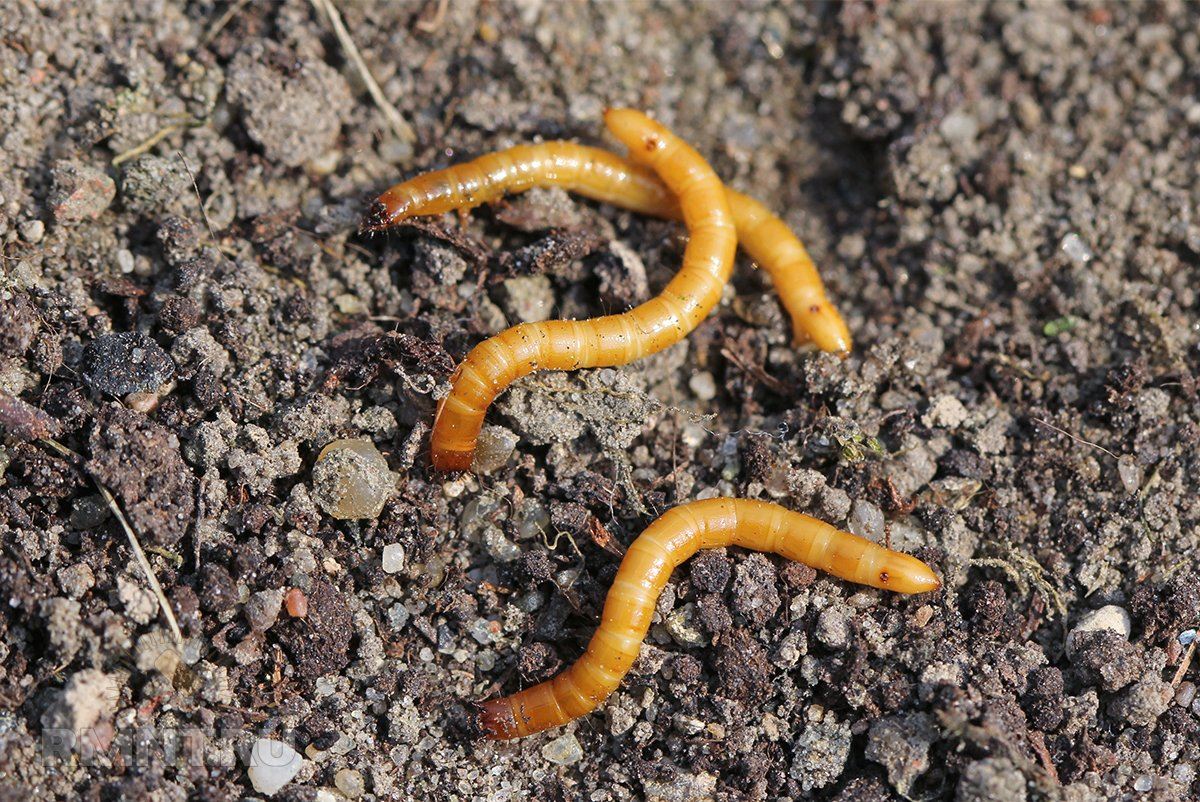
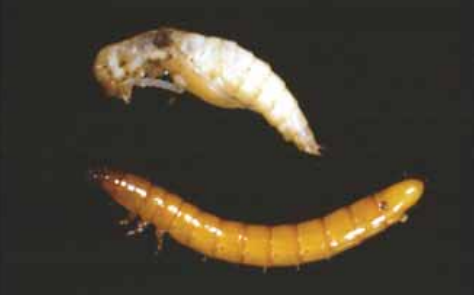
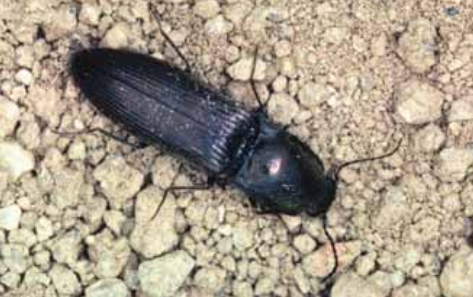
Life stages: eggs, larvae, pupae, adult beetles.
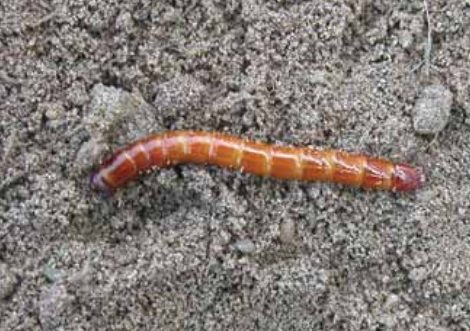
Wireworms are the larvae of click beetles. Female click beetles lay eggs in late spring in fields of hay, forage legumes such as red and sweet clover, or small grains. Larvae hatch in 3–7 weeks. Depending on the species, it takes 2–5 years for the larvae to reach maturity. In the spring, wireworms move upward or downward in the soil in response to moisture, temperature and the availability of food. If temperatures exceed 27°C in the summer, wireworms move downward into cooler soil.
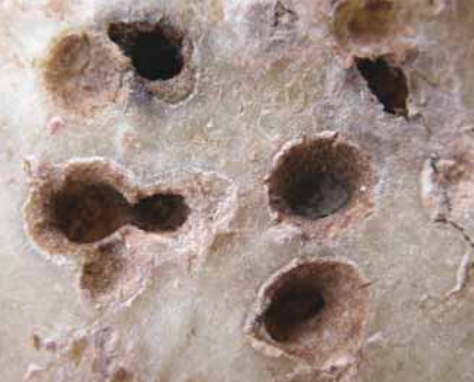
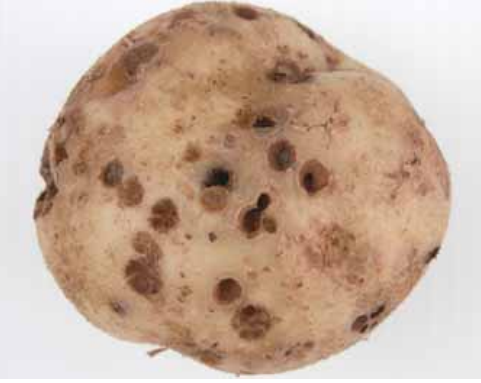
In the spring, wireworms tunnel into seed pieces or feed on sprouts; if populations are high, the stand may be reduced. Later in the growing season, wireworms feed on developing tubers, producing tunnel-like holes that make the crop unmarketable. Wireworms generally overwinter deep in the soil to avoid freezing.
❚ Adults. Click beetles are 1–1.5 cm long with “hardshelled” brown or black bodies. The beetles snap themselves into the air, making a clicking sound, in
an attempt to right themselves after being placed or falling on their backs.
❚ Larvae. They have elongated, nearly cylindrical bodies with three pairs of short legs just behind their heads.
❚ Pupae. They are white and inactive
3 cm deep.