
Winter Wheat as a Soil Savior: How One Farm Protects Sandy Soils and Boosts Yields
Key takeaways
- Sandy soils give clean, uniform potatoes
- Same soils lose topsoil to steppe winds
- Winter wheat planted after potatoes, held 4 years
- Average 3.5 t/ha of grain from the rotation
- Per-hectare subsidies make the rotation viable
Why it matters
- For farmers
- A four-year cereal phase is only affordable with per-hectare support — that subsidy is what buys the erosion protection.
- For investors
- Sandy ground that grows premium-grade potatoes carries a land-maintenance cost that has to be financed between crops.
60-second summary
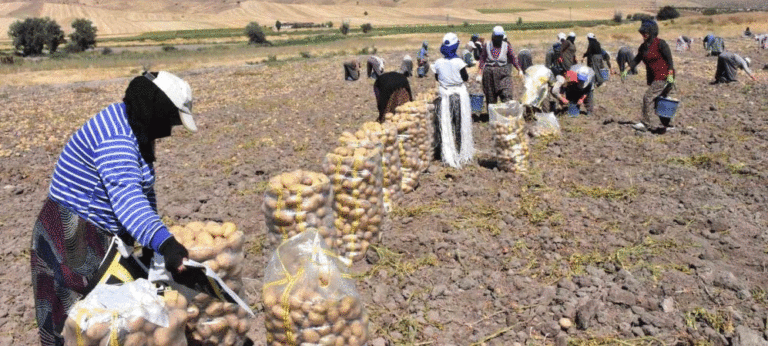
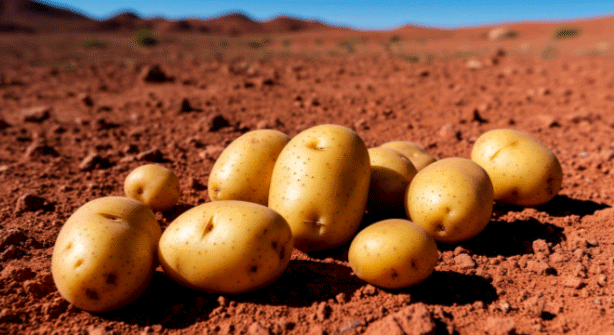
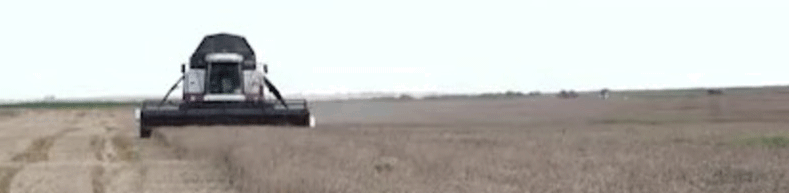
In the Limansky district, farmer Pavel Androsov is harvesting fields that grew potatoes two years ago and now carry winter wheat — a rotation chosen for the soil rather than the grain. Sandy soils produce clean, uniform potatoes but are highly vulnerable to steppe winds that strip the fertile top layer. Androsov plants winter wheat after the potato harvest and leaves it in place for four full years, using it as a living shield against wind degradation. The rotation restores soil health and still returns an average 3.5 tonnes of grain per hectare; this season, with unusually abundant rainfall, he expects a record. Per-hectare subsidies through the Ministry of Agriculture and Fisheries are what make a four-year commitment economically viable. Alternating deep-rooted potatoes with dense, soil-holding wheat preserves the nutrient-rich layer and keeps the land productive for future cycles.
In the Limansky district, farmer Pavel Androsov is in the midst of harvest—but his fields tell a story of strategic crop rotation rather than just grain production. Two years ago, these same plots grew potatoes; today, they are covered with winter wheat. The reason goes beyond the grain yield: sandy soils, while excellent for producing clean, uniform potatoes, are highly vulnerable to steppe winds that blow away the fertile top layer. To prevent nutrient depletion and soil erosion, Androsov plants winter wheat after potato harvest and lets it grow for four full years, acting as a living shield against wind degradation. This rotation not only restores soil health but also delivers solid returns, with an average of 3.5 tons of grain per hectare—and this season, thanks to unusually abundant rainfall, he expects a record-breaking harvest.
The farm benefits from government support through the Ministry of Agriculture and Fisheries, including per-hectare subsidies that make such long-term rotation economically viable. Androsov’s approach highlights a practical solution to a common problem in arid regions: using winter cereals not just as a cash crop, but as a tool for sustainable land management. By alternating deep-rooted potatoes with dense, soil-holding wheat, he preserves the nutrient-rich layer, reduces wind erosion, and maintains the land’s productivity for future cycles. His optimism is grounded in both tradition and innovation—proof that thoughtful rotation can reconcile high-value vegetable farming with long-term soil conservation.
Global Potato Brief
Top five stories, prices, disease alerts and events. Weekday mornings, no advertising.
Sources
- Pavel Androsov, farmer — featured in the article
Linked in this material
- Country
- Russia