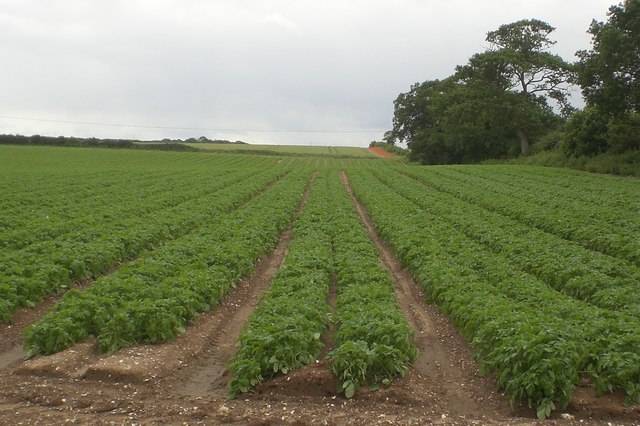
Width between rows from 28 to 38″ – how best?
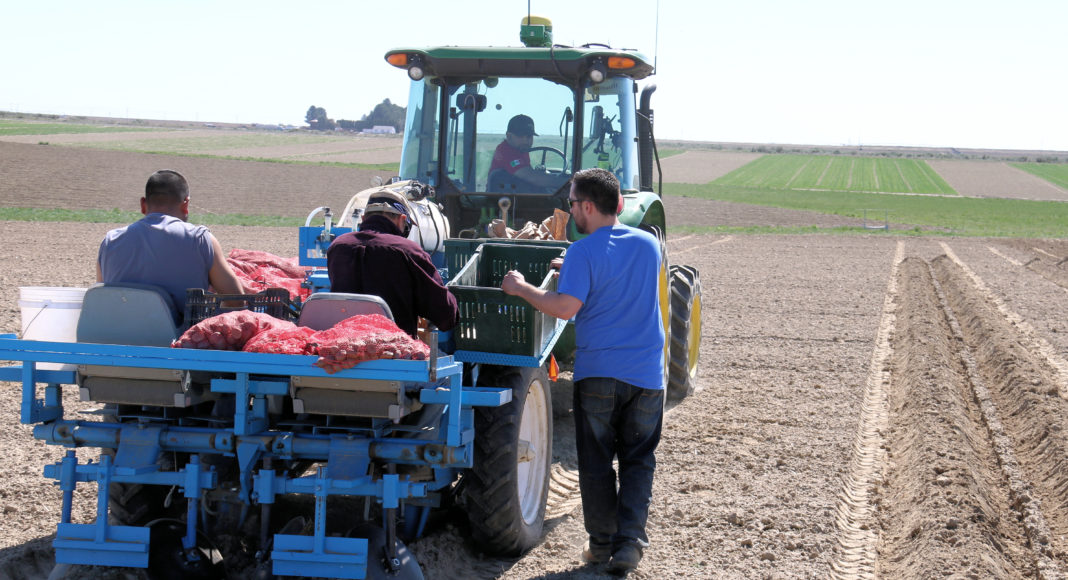
Just how much does the space between your rows affect your potatoes?
For more than a century, potato growers around the world have planted their crops in rows. The widths between those rows have varied due to the space between horses, tire widths, soil conditions and irrigation or dry fields.

“Why don’t we just plant them like wheat and spread them across the field? This is an important consideration. Traditionally, there are actually quite a few reasons why we plant in a row, efficiently order use of space, guide equipment to avoid smashing potatoes,” Mark Pavek explains during a presentation on row withs as the virtual Canadian Potato Congress on Feb. 24.
Pavek is a professor in the department of horticulture at Washington State University. As part of a five-year study on potato between rows in the Columbia Basin in Washington, he experimented with various row widths to find out what widths are best for potato crops and why, in order to maximize production.
Weekdays. Unsubscribe in one click.

There are some things that are known about how between row width affects potatoes, Pavek says. If rows are narrower there will be more tubers per acre, but per plant each may produce fewer tubers because of the competition for space. The tubers may also be smaller in size.
“What we want to do in all potato production systems is optimize our maximum return, not necessarily our yield. If you’re interested in only maximizing your yield, you might miss the boat because your size profile again is very important because potatoes are bought sold mainly on size,” Pavek explains.
Row width also varies depending on where you grow potatoes. In Washington, rows are between 32 to 34 inches, the rest of the northwest United States varies between 34 to 36 inches. In Canada, row widths are around 34 inches, while in Europe most between rows 30 inches. The United Kingdom is unique as they usually plant one row at 38 inches, followed by two 34-inch rows and then a 38-inch row again. This is because they have large tires for destoning and decloding the land, so they need room for the tires.
For Pavek’s study they planted nine different potato varieties including Russet Burbank, Umatilla Russet, Ranger Ranger, Clearwater Russet and Alturas, over the course of five years. They moved the rows closer together or further apart ranging from 30 to 36 inches over the course of the study. It was found 36 inches was too wide for the Columbia Basin and 28 inches was added to the study instead after the first year. The same level of inputs, fertilizers, fungicides, pesticides, and irrigation was used.
“What we found was as your rows move closer together, the plants grow longer vines. And the reason for that, I believe is because the plants sense the competition. They’re trying to get their vines longer so they can gather more sunlight,” he says.
Average tuber weight didn’t vary much as the plants adjusted to the competition, Pavek explains. Tuber number per plant shifted around, with narrow rows producing fewer tubers per plant due to increased competition and vice versa.
“To some degree these plants sense the competition, and in this case, they produce almost the same number of tubers per acre, even though the row width had changed,” Pavek says.
It was discovered all varieties performed well with 32-inch between row widths with yields and grower return increasing. At 30 inches results were similar but yields and economic return didn’t increase as much. At 28 inches some varieties such as Russet Burbank, Umatilla and Norkotah didn’t do well. Pavek suspects this was partially due to lack of water, because when plant population per acre is increased, a higher volume of water is required.
“What we see is tuber size profile really didn’t change as we planted closer together. Plants are adjusting tuber number per plant. And what we saw is actually at 32 inches a little more of a bump in size profile for greater than six-ounce yield. But the greater than 16-ounce tuber yield really didn’t change much at 28 inches,” he explains.
Pavek’s study found potatoes planted in tighter row widths didn’t always see a reduction in the yield per plant. If potatoes are planted at a closer row widths, there will be more plants per acre which will cause a higher yield per acre, if individual plant yield stays the same. Pavek believes based on the study results that reducing row widths in Washington is feasible, however it still won’t work for everyone, especially dryland growers who are unable to provide irrigation to densely planted potatoes.
“When considering row width changes, you need to consider equipment needs on other crops. Your tractor width and tire width may be affected possibly, and you may have to change things. One size does not fit all, row width and spatial configurations vary by growing region and market, and may be dependent on the variety you’re growing,” he says.

Global Potato Brief
Top five stories, prices, disease alerts and events. Weekday mornings, no advertising.
Linked in this material
- Sections
- AGROTECHNOLOGY
Related stories

Beyond Breeding: Resource-Saving Technologies and Biological Inputs in Polish Potato Production
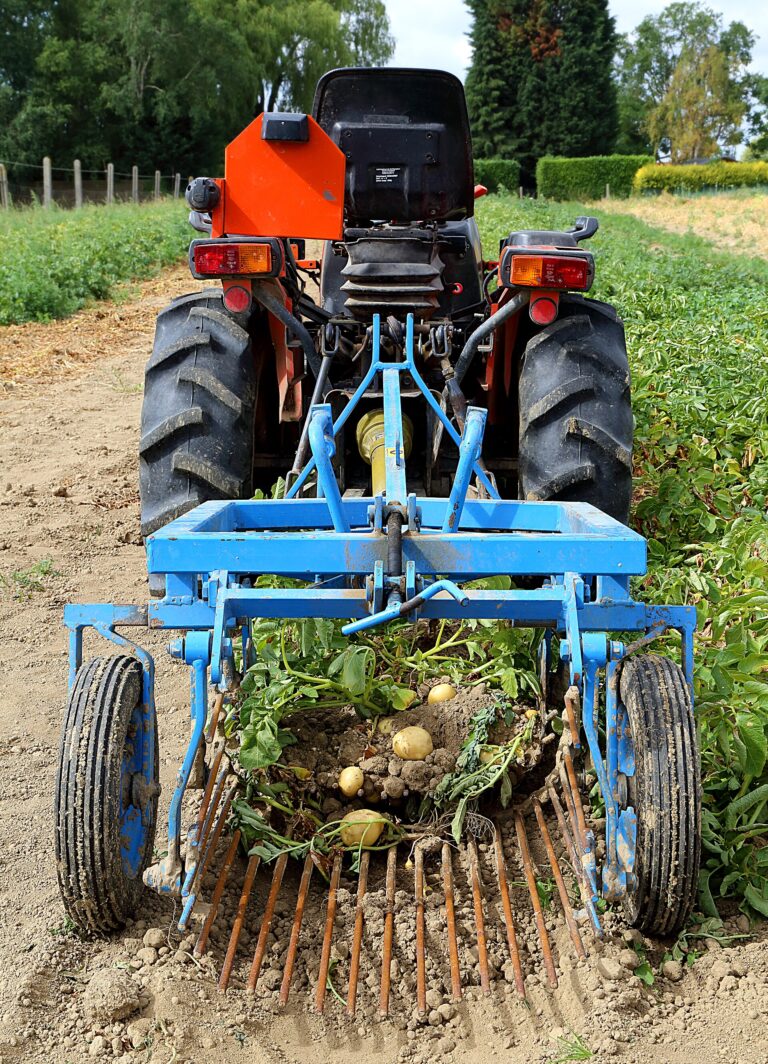
Separation Settings on a Potato Harvester: How Webs and Agitation Protect the Crop