White Mold (Sclerotinia sclerotiorum)
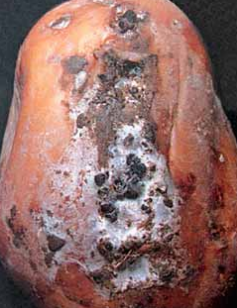
Pathogen. The white mold fungus persists in the soil as sclerotia. Sclerotia are black, hard, irregular structures that may survive in soil for at least 3 years. They range in size from 1 mm to over 1 cm in diameter.
The fungus attacks many other vegetables, legume crops and weeds.
Disease development. Sclerotia near the soil surface germinate to form structures called apothecia that release spores.
Occasionally, sclerotia near the soil surface germinate by producing mycelium that penetrates the stems at ground level. Low to moderate temperatures and high relative humidity favour the development of white mold.
Disease incidence is higher if potatoes are planted after susceptible hosts such as beans or soybeans.
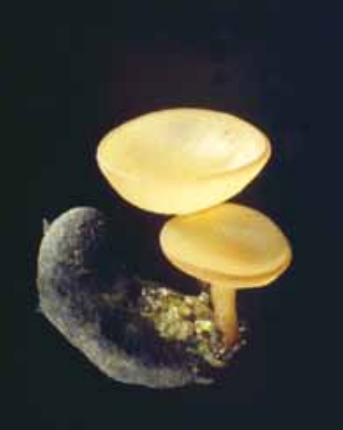
that eject spores called ascospores.
Ascospores infect plants if they land and germinate
on potato leaves, stems or blossoms
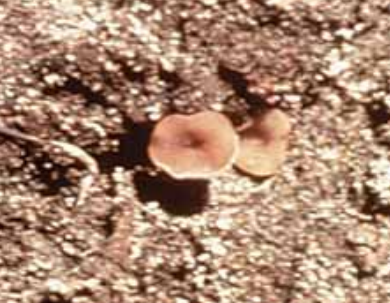
producing apothecia when the
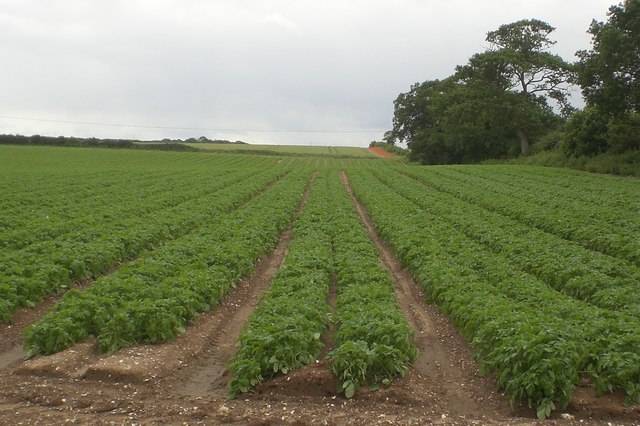
rows close and soil moisture
remains high for several days.
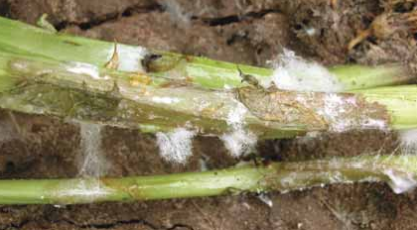
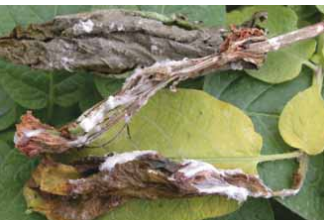
surface. Lesions may girdle the stems, causing the leaves to wilt above the infected area.
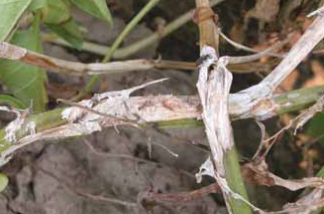
stems become hollow and break easily.

infected stems
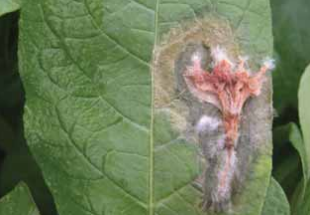
blossoms fell or at the base of the leaflets. Young
lesions have a water-soaked appearance and are
pale green and of irregular shape.