Uzbekistan: Potatoes Get New Crop Insurance as 2.7 Trillion Som Subsidies Shift to Results
Uzbekistan plans new insurance products for potatoes and onions. Farm subsidies worth 2.7 trillion som this year will move to a results-based model from next year.
Uzbekistan plans to introduce new insurance products for potato growers. President Shavkat Mirziyoyev reviewed the proposals on 25 September. The news sites Kun.uz and Spot.uz reported the presentation on the same day.
The new products will cover livestock, poultry, melons and gourds, potatoes and onions. Cover will also expand to seedlings, orchard trees, vineyards and imported livestock.
Insurance targets for 2027
By 2027, the government aims to reach these goals:
Weekdays. Unsubscribe in one click.
- insurance for 45,000 agricultural enterprises
- 60% insurance coverage of agricultural output
- 500 trained independent experts
- fully digital insurance services
According to Spot.uz, 3–5% of insurance premiums will go to a special prevention fund. The fund will pay for measures such as biological crop protection in cotton and grain. The Agrosafe system will handle the whole process, from application to compensation.
Subsidies tied to results
The insurance plan is part of a wider subsidy reform. Agriculture now receives support in 29 areas through 91 types of subsidies. This year, 2.7 trillion som is allocated for them.
From next year, the government plans to move from covering costs to paying for results. Subsidies will be linked to crop yield, water efficiency and energy savings. Data will come automatically from state systems. Each recipient will have an electronic profile.
The model will first be tested on water-saving technology. Recipients will be assessed over two to three years. If they miss the targets, they will have to repay the support.
No decree has been published yet. The reports do not give premium rates or cover terms for potatoes.
Why it matters
Potato growers in Uzbekistan have few tools to protect income against hail, frost or drought. A dedicated product could make bank loans for seed and irrigation easier to obtain.
The results-based model also changes the logic of support. Growers who invest in drip irrigation will need to show real gains in yield and water use. Weak performers may have to return subsidies.
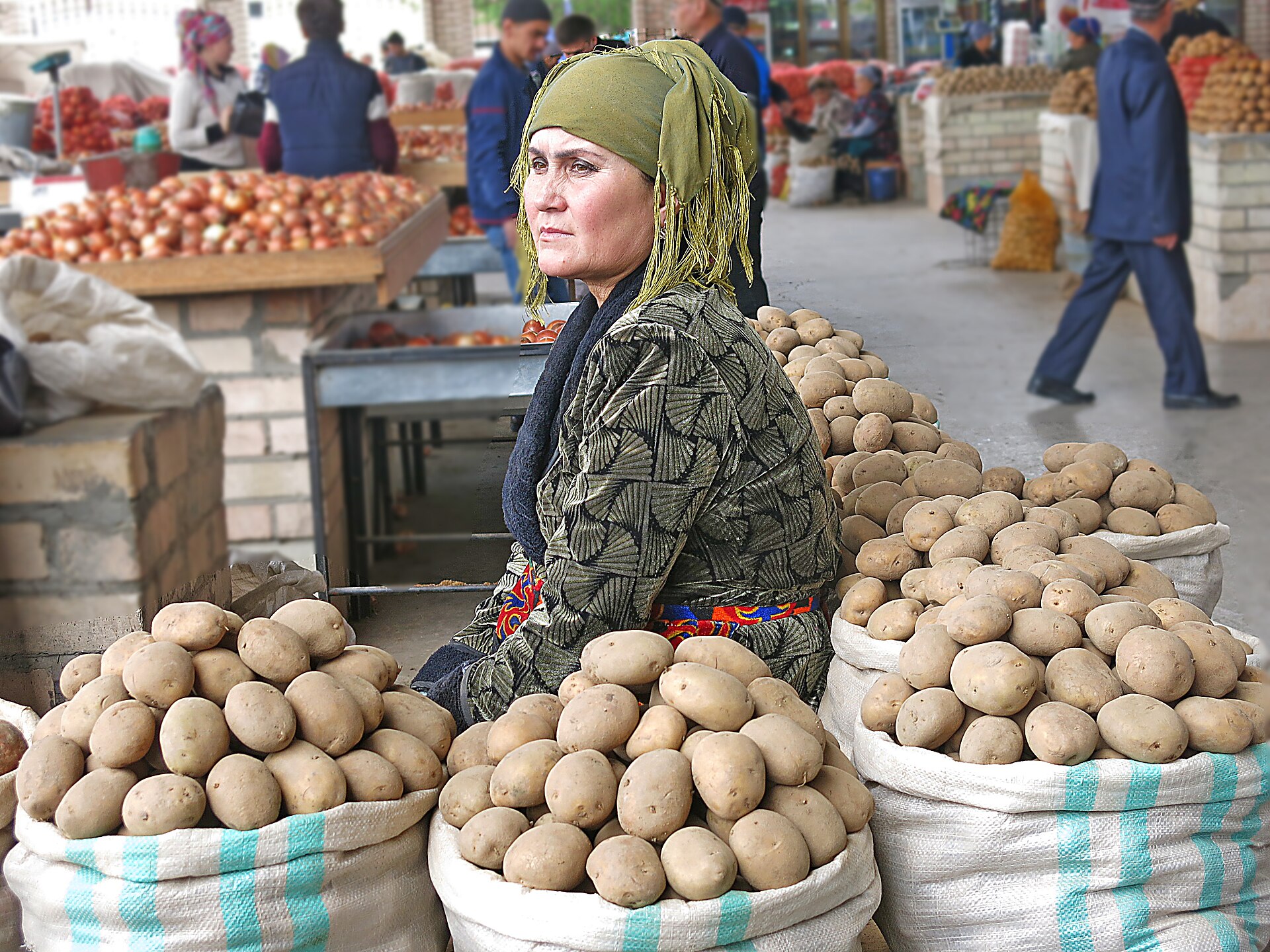
Photo: A potato seller at the farmers market in Margilan, Uzbekistan (illustrative). Enric / Wikimedia Commons, CC BY-SA 4.0