Uzbekistan: Dutch Elite Seed Yields 40–50 t/ha in Samarkand’s First Domestic Seed-Potato Cycle
A Samarkand company imported 6,000 tonnes of elite seed from Agrico of the Netherlands. The first crop yielded 40–50 t/ha and will be multiplied further in Kashkadarya.
A seed-potato project in Samarkand region has harvested its first crop grown from Dutch elite seed, with yields of 40–50 tonnes per hectare, according to the news site nuz.uz and the state news agency UzA.
The company Bulungur-Agro Star imported 6,000 tonnes of elite seed potatoes from the Dutch breeding and seed company Agrico, both sources report. The varieties are Esma, Arizona, Alouette, Picasso and Agata. According to nuz.uz, which quotes the company’s director, 40 hectares in Bulungur district yielded 40–50 t/ha, while private household plots reached about 60 t/ha.
The harvested seed will be planted again in Nishon district in Kashkadarya region, where the Uzagrostar holding is running a project, nuz.uz reports. UzA adds that the wider project includes a 300-hectare seed-potato site, 10 centre-pivot irrigation systems worth 7.6 billion som, and the reclamation of 2,500 hectares of desert land.
Weekdays. Unsubscribe in one click.
Discrepancies
The two sources give different areas: 40 hectares in nuz.uz and 300 hectares in UzA. They may refer to different sites or stages of the project. The yields are figures from the company and state media and have not been independently verified. The UzA report was published on 14 September, nuz.uz on 17 September.
Context
The programme follows a government decree of 8 September 2025 on the development of seed-potato production. Uzbekistan relies heavily on imported potatoes and seed; this season Kazakhstan displaced Pakistan as its main potato supplier. The government has also set a target to expand potato areas to 135,000 hectares.
Why it matters
Domestic multiplication of imported elite seed is the step Uzbekistan needs to cut its dependence on imported seed and table potatoes. If yields of this level hold in the next generation, the model could be copied in other regions. For European seed exporters, projects like this are a new sales channel for elite classes, while demand for lower-class imported seed may shrink over time. Local growers should look for certified seed from these programmes in the coming seasons.
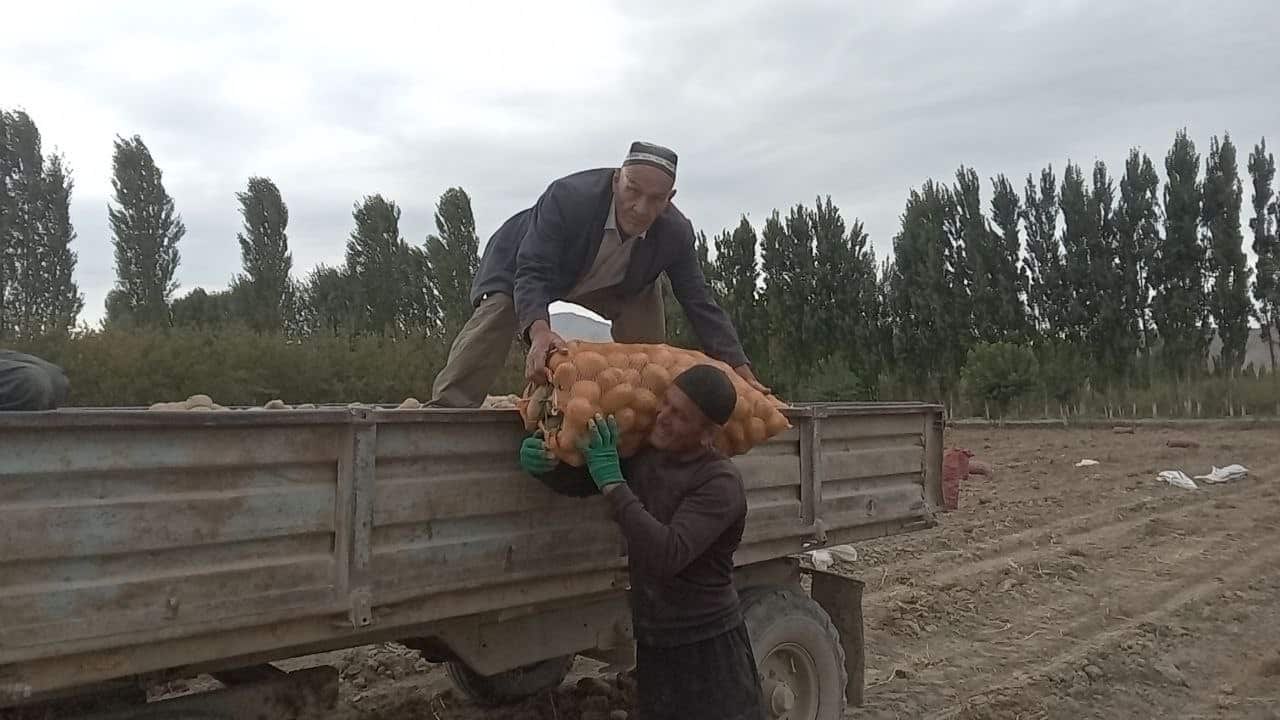
Photo: Potato harvest in Sokh district, Uzbekistan (illustrative). Shoh17 / Wikimedia Commons, CC0