The US Environmental Protection Agency (EPA) has granted federal registration to a new soil product for insects and nematodes. The product is Bifender Duo, developed by the Canadian firm Vive Crop Protection. The company announced the registration on 23 September 2026. The potato trade magazine Potato Grower carried the news on 24 September.
The product combines two active ingredients. The first is bifenthrin, a synthetic pyrethroid insecticide. The second is a biological active ingredient from the company ProFarm. According to Vive, the EPA registered this biological as a new active ingredient in 2025.
Two modes of action in one product
According to the company, the product controls soil insects and nematodes with two distinct modes of action. The formulation uses the company’s own technology for combining active ingredients. Vive says the combination performs better than either ingredient alone. This claim has not been confirmed by independent trials.
Marie Yeager, senior product manager at Vive, said growers asked for broad protection against soil insects and nematodes in a single product. Doug Baumann, chief technology officer, said growers get two modes of action in one easy application.
State approvals still needed
Federal registration is only the first step. Products must also be registered in each state before sale. The company expects key state approvals by 1 February 2027. That timing would allow use in the 2027 planting season.
The announcement does not list the crops on the label. Growers should check the final label for potatoes and for specific pests before planning use.
Why it matters
Soil insects and nematodes cause quality and yield losses in many potato regions. Growers have few tools that act on both groups at once. Resistance management also calls for more than one mode of action. A product that combines a synthetic and a biological ingredient may help reduce reliance on single chemical options. Its value in potatoes will depend on the final label and on independent field results.
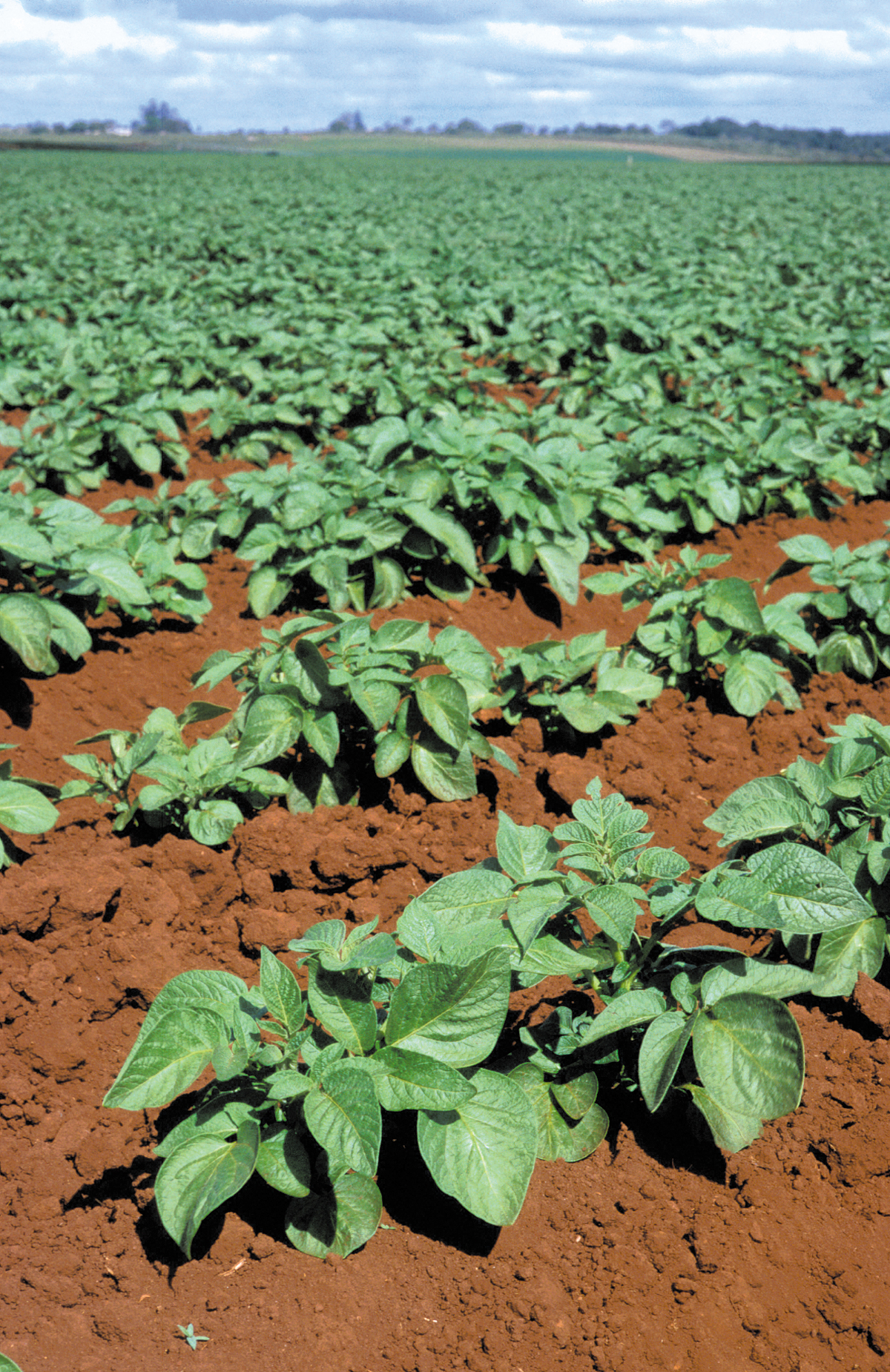
Photo: A potato crop on a farm (Queensland, Australia; not the United States) (illustrative). Willem van Aken, CSIRO / Wikimedia Commons, CC BY 3.0