US: Texas A&M Breeders Target Heat Tolerance and PVY Resistance in New Russet Varieties
The Texas A&M AgriLife potato programme has released 14 commercial varieties since 1998, licensed by nearly 150 companies, and is focusing on russets that cope with heat and potato virus Y.
The potato breeding programme at Texas A&M AgriLife Research is concentrating on russet varieties that tolerate heat and resist potato virus Y (PVY), according to a university report published on 21 September and summarised by FreshPlaza the next day.
Since 1998 the programme has released 14 commercial varieties, licensed by nearly 150 companies in the United States and Canada, and has earned more than $11 million in licensing revenue. It currently holds more than 245 advanced lines. Developing a new variety can take more than a decade, the report says. The programme is led by Isabel Vales.
Several recent releases target specific problems. Duncan Russet is resistant to PVY, a virus that, according to the report, can cause yield losses of up to 80% if left uncontrolled. Vanguard Russet and Reveille Russet are fresh-market russets bred for heat tolerance, and the university says the area planted to Reveille Russet continues to expand commercially.
Weekdays. Unsubscribe in one click.
For processing, Dune Russet is described as keeping a light french-fry colour after months of cold storage. Cold storage normally raises the sugar content of tubers, which darkens fries, so a variety that stays light can be stored longer at low temperatures. Dune Russet’s cultivar description was published in 2026 in the American Journal of Potato Research.
The figures on licensing revenue and advanced lines are reported by the university itself. The FreshPlaza article is a rewrite of the university release rather than independent reporting, so the story rests on one primary source, supported by the peer-reviewed cultivar paper for Dune Russet.
Interest in such traits is not limited to the southern United States. This summer’s heat and drought cut potato yields in several European countries; potatoes.news has reported that French yields are heading for their lowest level in more than 30 years (read more).
Why it matters
Heat tolerance and virus resistance are two of the traits growers most often ask breeders for as seasons get hotter. Public breeding programmes such as Texas A&M’s license varieties widely, so their releases can reach commercial fields across North America relatively quickly — though, as the programme notes, the path from cross to variety still takes more than ten years.
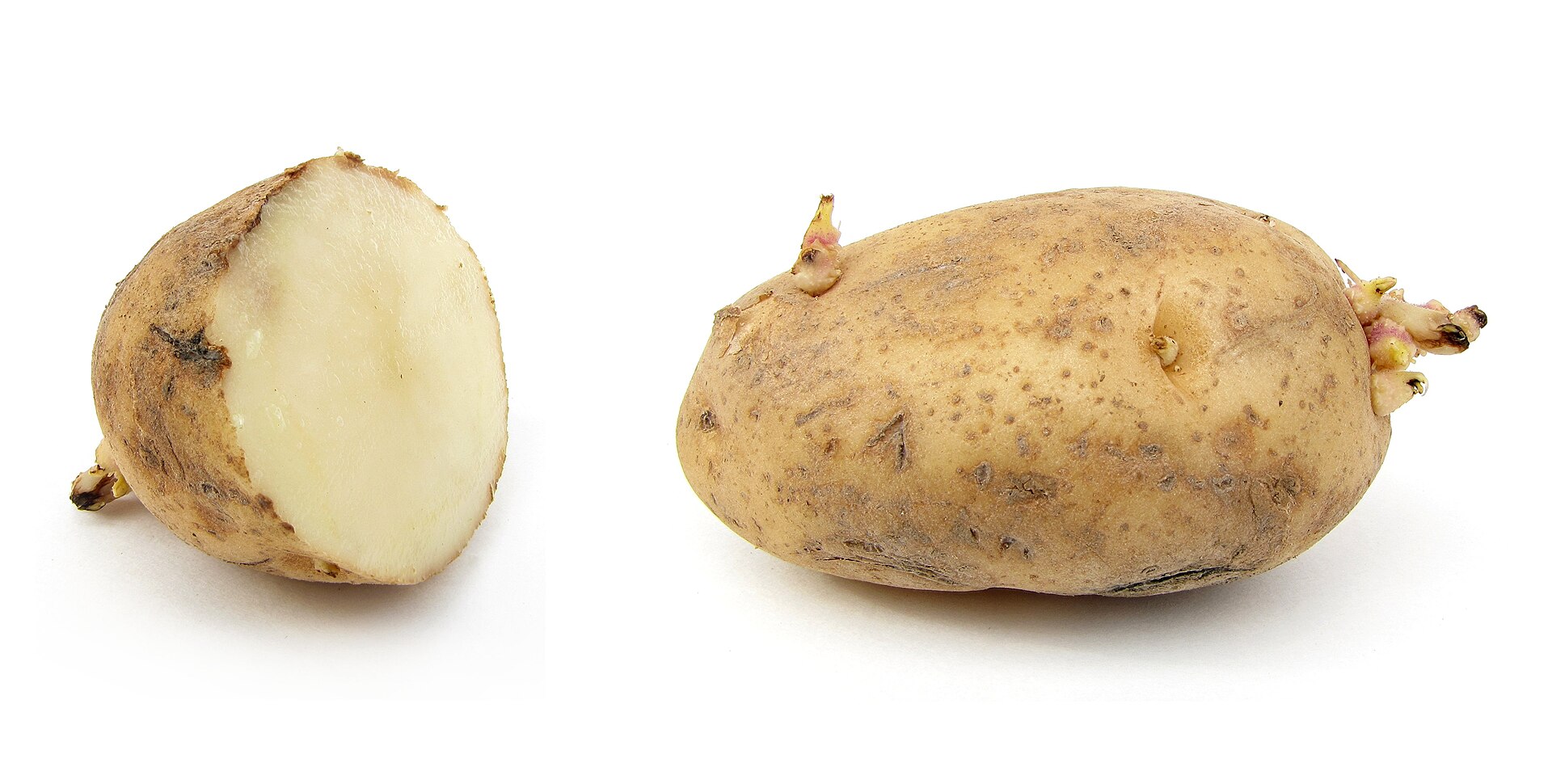
Photo: Russet-type potato tubers (illustrative). ZooFari / Wikimedia Commons, Public domain