Tunisia: Up to 90% of Potato Seed Imported for a Crop of About 350,000 Tonnes
Tunisia grows potatoes on about 25,000 hectares and imports 80–90% of its seed, the farmers' union UTAP says. It wants a national plan for local seed production.
Tunisia produces on average more than 350,000 tonnes of potatoes a year on about 25,000 hectares, according to the Tunisian Union of Agriculture and Fisheries (UTAP). Between 80% and 90% of the seed is imported. UTAP president Moez Ben Zaghdane gave these figures on 24 June 2025 and called on the government to activate the national plan for local seed production.
At the same event, Rachid Khalifa, director of the Potato Technical Center, said climate change makes it necessary to test more varieties. Since early 2025, 43 varieties had been tested: 29 from the Netherlands, 11 from France, 2 from Germany and 1 from Tunisia. The Dutch variety Spunta is well adapted to local conditions.
Three seasons, many regions
Tunisia plants potatoes in several seasons. An analysis by agronomist Ridha Bergaoui for the magazine Leaders (September 2021) described the structure. At that time the country grew about 27,000 hectares and about 400,000 tonnes. The main season crop gave about half of output: 230,000 tonnes on 10,200 hectares in 2020–21. The late-season crop gave about 40%.
Weekdays. Unsubscribe in one click.
The main regions are Cap Bon, Bizerte, Jendouba, Gafsa, Kasserine and Sidi Bouzid. The Nabeul governorate, which includes Cap Bon, produced nearly half of the national crop. Yields rarely exceeded 25 tonnes per hectare, the article said.
The south is growing in importance for the late-season crop. In Gafsa, about 850 hectares were planted for the 2026 late-season campaign, with expected output of about 13,500 tonnes and an average yield of 16 tonnes per hectare. About 90% of the plots use drip irrigation, AgriTunisie reported in January 2026. In the previous campaign, Gafsa harvested more than 13,000 tonnes, La Presse reported.
Seed and consumption
The 2021 analysis put certified seed imports at 25,000–30,000 tonnes a year, paid in foreign currency. It estimated consumption at about 30 kg per person per year and the monthly need at about 30,000 tonnes. In December 2025, a local farmers’ union leader in Cap Bon told La Presse that national consumption reaches about 1,200 tonnes a day at peak season.
Why it matters
Tunisia’s potato sector depends on foreign seed and on scarce water. Both are costly. Local seed production could reduce the import bill, but it needs certified multiplication and storage.
For European seed exporters, Tunisia remains a steady market. The variety trials show that Dutch and French suppliers are the main partners. For growers, drip irrigation in the south shows one way to keep output stable in dry years.
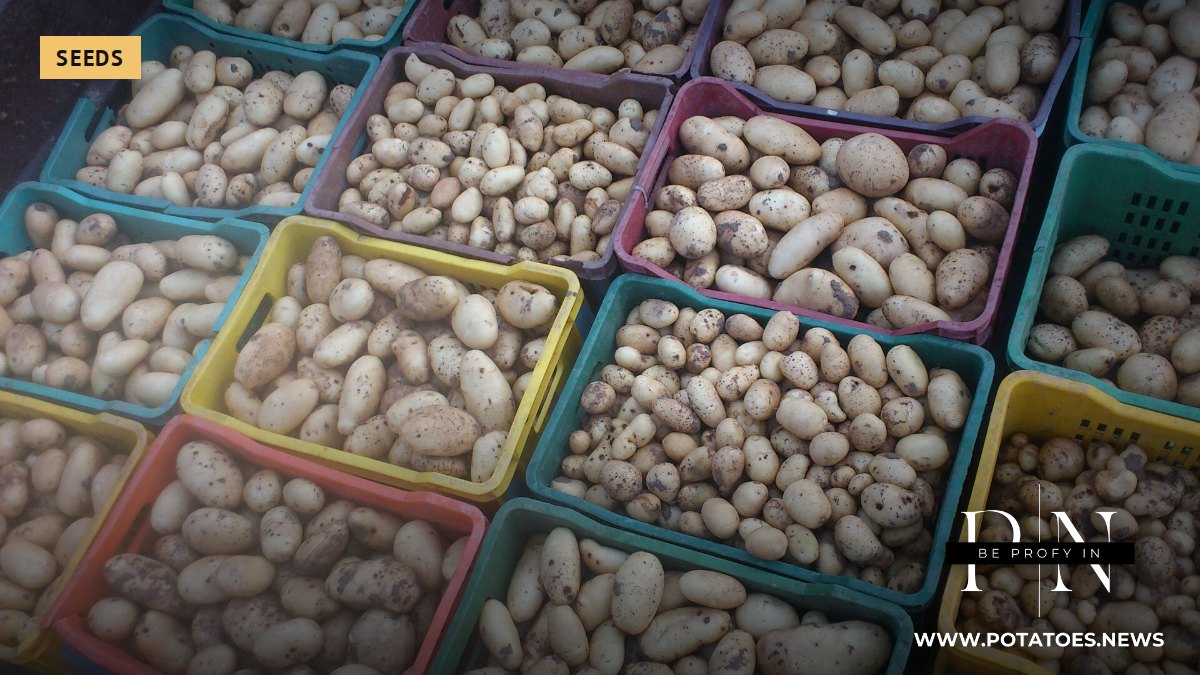
Photo: Potato harvest at Chott Mariem, Tunisia (illustrative). Mahmoud.Lad / Wikimedia Commons, CC BY-SA 3.0